 Debby Wijaya
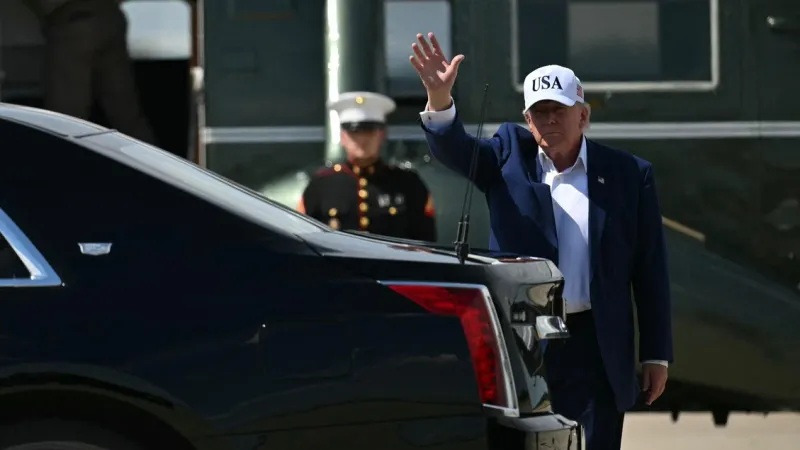
President Donald Trump openly conveyed profound disappointment with NATO member states and their leaders, including Italian Premier Giorgia Meloni, during a recent interview with Italian broadcaster Tgcom24. The President questioned the future of US involvement in the Atlantic Alliance and specifically accused Meloni of failing to defend American interests.
President Trump articulated his frustration, stating, "I am disappointed not only by Italy, but by all NATO leaders." This blanket condemnation signals deep-seated concerns within the White House regarding the alliance's collective efforts and perceived contributions.
The President further escalated his rhetoric by directly addressing the possibility of US withdrawal from the transatlantic defense pact. "I do not know whether to withdraw from the Atlantic Alliance," Trump declared, casting a significant shadow over the foundational security architecture that has underpinned Western stability for decades.
Italian Premier Giorgia Meloni became a specific focus of President Trump's criticism. He directly accused her, stating simply, "She did not defend us." This comment echoes previous allegations from President Trump regarding Meloni's actions or inaction. A related article, President Trump Alleges Meloni Failed US, Italian Premier Silent, chronicled earlier instances of such grievances.
These latest remarks align with President Trump's consistent skepticism concerning NATO, a stance he has maintained throughout his political career. He has frequently pressed member nations to increase their defense spending to meet the alliance's 2% of GDP target, arguing that the United States bears a disproportionate share of the financial and military burden.
NATO, established in 1949, operates on the principle of collective defense, enshrined in Article 5 of its treaty. This provision dictates that an attack on one member is considered an attack on all, requiring mutual assistance. President Trump's questioning of US commitment challenges the very core of this foundational agreement.
The implications of a potential US withdrawal from NATO would be vast and far-reaching. Such a move could significantly destabilize European security, embolden adversarial nations, and force a dramatic re-evaluation of defense strategies across the continent. It would likely precipitate an unprecedented geopolitical shift.
European leaders, many of whom have privately or publicly expressed concerns over President Trump's previous criticisms of NATO, will undoubtedly scrutinize these new comments closely. The remarks could intensify calls within European capitals for greater strategic autonomy and increased indigenous defense capabilities.
The timing of President Trump's interview also warrants consideration, occurring amidst a complex global landscape marked by ongoing conflicts and shifting geopolitical alliances. His statements could be interpreted as a strategic maneuver to pressure allies into greater contributions or as a genuine reflection of his administration's foreign policy trajectory.
Italy, a founding member of NATO, plays a crucial role in Mediterranean security and broader European defense efforts. President Trump's direct critique of Premier Meloni underscores specific grievances that could strain bilateral relations between Washington and Rome, potentially impacting joint initiatives and diplomatic cooperation.
This is not the first instance where a US President has voiced concerns about allied contributions, but President Trump's open contemplation of withdrawal represents a significant departure from traditional American foreign policy rhetoric. His approach consistently prioritizes national interests and a transactional view of international agreements.
The economic and strategic ramifications of any substantial alteration to US NATO policy extend beyond military considerations. Trade relations, intelligence sharing, and diplomatic coordination could all be profoundly affected, creating ripple effects across the global economy and security apparatus.
Immediate diplomatic fallout is expected, with various NATO members likely seeking clarification or reassurance from the White House regarding the US commitment. The alliance's cohesion and its ability to present a united front against global challenges could be severely tested by these pronouncements.
Ultimately, President Trump's latest remarks underscore persistent tensions within the Atlantic Alliance and signal an ongoing debate about its future structure and the allocation of responsibilities among its members. The coming months will likely see intensified discussions and strategic maneuvers as leaders navigate these critical questions.