 Debby Wijaya
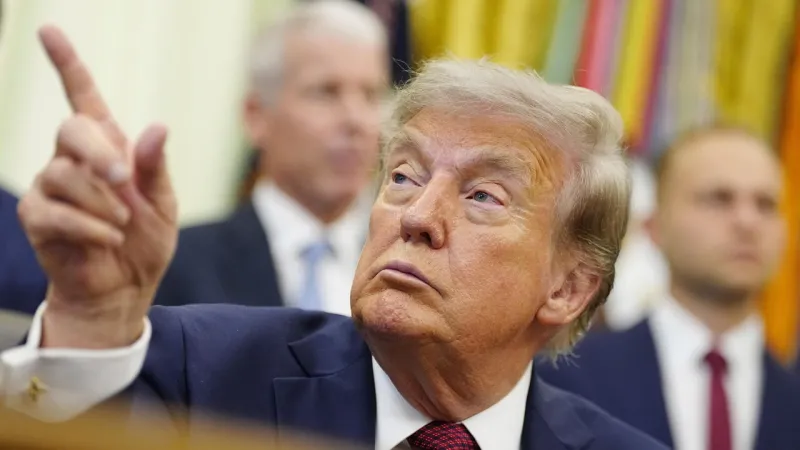
WASHINGTON - President Donald Trump has reportedly paused plans for potential military escalation against Iran, a decision driven by urgent warnings from the nation's top military leadership concerning the critical state of United States Patriot missile defense system stockpiles. The surprising halt underscores a strategic recalibration in the face of dwindling resources and heightened global defense commitments.
The warning originated from General Dan Caine, Chairman of the Joint Chiefs of Staff, who conveyed his deep concerns directly to the President. General Caine underscored that prolonged and widespread deployment, coupled with ongoing demands from international allies, has significantly strained the availability of these crucial air defense assets.
This revelation, first reported by The New York Times, suggests that the administration has had to weigh the immediate geopolitical imperative of responding to Iranian provocations against the long-term readiness and defensive capabilities of the US military. The Patriot system remains a cornerstone of air and missile defense for US forces and allies across volatile regions.
Tensions between Washington and Tehran have remained consistently high throughout President Trump's administration, marked by periods of increased rhetoric and military posturing. Past incidents, including attacks on Saudi oil facilities and maritime disruptions, have repeatedly pushed the two nations to the brink of direct conflict.
The importance of Patriot missile stockpiles cannot be overstated. These advanced surface-to-air missile systems are designed to intercept tactical ballistic missiles, cruise missiles, and advanced aircraft, providing vital protection for military installations, population centers, and critical infrastructure. Their depletion poses a significant vulnerability.
Military analysts suggest that the existing strain on these stockpiles is a multifaceted problem. Continuous deployments in regions like the Middle East to deter adversaries, combined with the substantial provision of such systems to allies involved in other active conflicts, have collectively stretched the US defense industrial base.
The decision by President Trump to prioritize missile readiness over immediate escalation highlights a pragmatic shift, acknowledging that a robust defense posture requires not just intent, but also tangible assets. This strategic pause aims to prevent further depletion of these critical interceptors, ensuring the US can effectively respond to future threats.
The implications extend beyond the immediate confrontation with Iran. Allies relying on American security guarantees in other parts of the world will closely observe this development. Questions about the broader availability of advanced defense systems and the US capacity to support multiple theaters simultaneously could arise.
This pivot also reignites discussions about the industrial capacity of the United States to produce advanced weaponry at a pace commensurate with global demand and strategic requirements. Ensuring robust supply chains and increased manufacturing capabilities for systems like the Patriot missile has become a pressing national security concern.
The move could be seen as an effort by the Trump administration to avoid entangling the US in a prolonged conflict without adequate defensive safeguards, a stance that aligns with certain elements of the President's foreign policy doctrine. It underscores a strategic patience, albeit one born of necessity rather than pure choice.
General Caine's candid assessment likely compelled a thorough reevaluation of potential military options against Iran. His advisory role as the highest-ranking military officer means his counsel on operational readiness holds immense weight in the National Security Council deliberations.
Regional stability in the Middle East hinges significantly on the perceived strength and readiness of US forces. Any perceived weakness in missile defense capabilities could embolden adversaries or introduce new complexities into existing diplomatic efforts aimed at de-escalation.
The ongoing threat posed by Houthi missile attacks on Saudi oil infrastructure, as detailed in reports like Houthi Missiles Target Saudi Oil Amid Stalled Iran Raids, Trump Undecided, further illustrates the continuous demand for such defense systems in the region. The interconnectedness of these regional conflicts places immense pressure on US military assets.
This strategic halt will undoubtedly prompt renewed focus on diplomatic channels for resolving tensions with Iran. It may also necessitate a reassessment of US troop deployments and defensive asset allocation across the globe to optimize available resources.
Ultimately, President Trump's decision reflects a complex balancing act between asserting American interests and ensuring the foundational elements of its defense remain uncompromised. The Patriot missile systems, while not always in the public eye, are now central to this high-stakes geopolitical calculus.
The administration has not officially detailed the exact scale of the Patriot missile stockpile reduction or the specific timeline for replenishment. However, the gravity of General Caine's warning indicates the matter is considered urgent and requires immediate attention to national defense posture.
This situation serves as a stark reminder that even the most powerful militaries face logistical and resource constraints, particularly when confronted with multiple, protracted global challenges. Military readiness is not merely about personnel or technology, but also about the depth of critical equipment inventories.