 Stefani Rindus
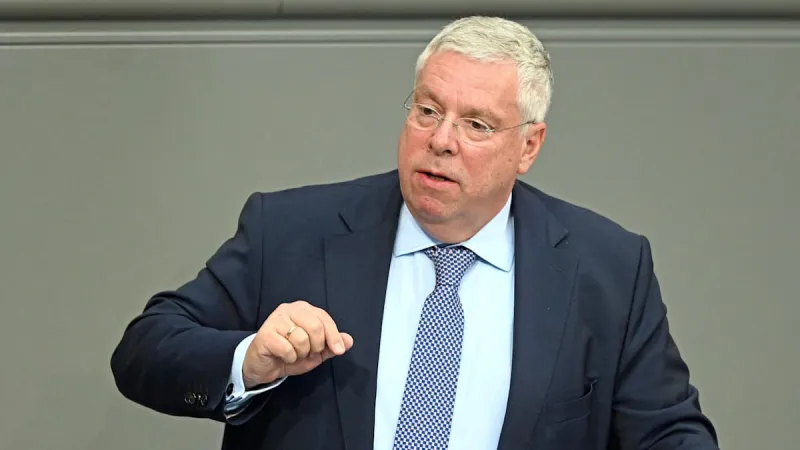
Leipzig, Germany – Jürgen Hardt, a prominent Christian Democratic Union (CDU) foreign policy expert, has issued a stark warning regarding what he perceives as targeted Russian disruptive actions against Germany and Europe. His comments follow the recent discovery of an unauthorized drone at Leipzig Airport, an incident that has amplified concerns over national security and airspace integrity. Hardt contends that Moscow aims to impose a neutral role on the continent, thereby undermining its transatlantic alliances and resolve.
The discovery of the unmanned aerial vehicle at a critical infrastructure hub like Leipzig Airport has raised immediate questions about the origins and intent behind such an intrusion. While specific details about the drone's type or payload remain under investigation, its presence underscores a palpable threat to German sovereignty and operational security.
Hardt articulated his concerns directly, stating, "We must better control drone flights in Germany." This declaration highlights a perceived vulnerability in the nation's airspace monitoring capabilities and a pressing need for enhanced regulatory and enforcement mechanisms to counter such threats effectively.
According to Hardt, President Vladimir Putin harbors ambitions to relegate Germany and the broader European Union to a state of neutrality, thereby weakening their collective defense posture and their support for nations like Ukraine. This alleged strategy aligns with a long-standing narrative of Russian efforts to fragment Western alliances and influence the geopolitical landscape.
The incident at Leipzig is not isolated. Reports of explosive drones found in Leipzig have previously surfaced, coinciding with heightened tensions and military actions, such as the deadly Russian raids in Kyiv. These events collectively paint a picture of an escalating and multifaceted threat landscape.
Germany, a staunch supporter of Ukraine and a key member of NATO, currently stands in direct opposition to any notion of neutrality in the ongoing conflict. Such a stance would represent a significant shift from its post-war foreign policy, which is deeply rooted in multilateralism and collective security. Hardt's warning serves as a reminder of the constant pressure exerted by external actors seeking to alter this trajectory.
The implications of successful Russian interference extend beyond Germany, potentially impacting the cohesion of the entire European Union. A neutral Germany would invariably weaken the EU's capacity for concerted action on foreign policy and defense, creating a vacuum that could be exploited by revisionist powers.
Experts in national security and aviation note the inherent challenges in policing expansive airspaces against increasingly sophisticated drone technology. Miniaturization, enhanced range, and stealth capabilities make unauthorized drones difficult to detect and intercept, necessitating continuous investment in counter-drone systems and intelligence gathering.
Hardt emphasized that the incident mandates a comprehensive review of existing protocols and a significant upgrade to national defense infrastructure. This includes not only technological advancements but also improved intelligence sharing among European partners to preempt future disruptive actions.
The CDU politician's comments echo broader sentiments within German political circles regarding the need for robust deterrence against foreign aggression and covert operations. The push for greater control over drone activities reflects a growing awareness of their potential use for espionage, sabotage, or psychological warfare.
Germany's commitment to its allies and its role in maintaining European stability remains paramount. The perceived attempts to force neutrality upon the nation are seen as an affront to its sovereign decision-making and its strategic partnerships.
As investigations into the Leipzig drone incident continue, the focus intensifies on securing critical national infrastructure and bolstering defenses against evolving threats. The political discourse now clearly reflects a resolve to resist any external pressures aimed at compromising Germany's strategic autonomy or its alignment with democratic values.
This situation further underscores the importance of a vigilant intelligence community and a proactive approach to national security in an era characterized by hybrid warfare tactics. The stakes, according to Hardt, are nothing less than Germany's and Europe's role in the global order.