Dorry Archiles
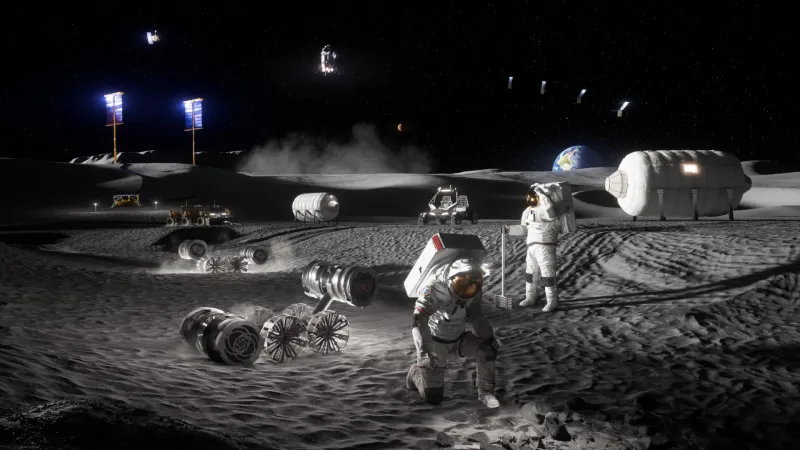
The National Aeronautics and Space Administration (NASA) has initiated its groundbreaking Moon Base Challenge, allocating $1 million to U.S. students tasked with designing innovative solutions for humanity's inaugural permanent lunar outpost. This ambitious program seeks to accelerate the development of critical infrastructure, from robust power systems to advanced astronaut safety protocols, essential for enabling sustained life on the Moon and serving as a crucial stepping stone for future missions to Mars.
The Moon Base Challenge specifically targets a wide array of technical and operational complexities inherent in establishing a self-sufficient lunar presence. Participants are encouraged to explore novel concepts across multiple disciplines, including habitat construction, resource utilization, waste management, and communication networks, all vital components for a truly enduring presence beyond Earth.
This initiative aligns directly with NASA's broader Artemis program, which aims to return humans to the Moon, land the first woman and first person of color, and establish long-term lunar exploration capabilities. The agency envisions a sustainable lunar base as a critical asset, not merely for scientific research but also for developing technologies and operational practices that will prove indispensable for deeper space missions.
Engaging university students in such a high-stakes endeavor underscores NASA's commitment to fostering the next generation of space pioneers and innovators. By tapping into fresh perspectives and diverse academic backgrounds, the agency hopes to uncover disruptive ideas that might bypass traditional engineering approaches, potentially accelerating progress toward complex lunar objectives.
Key areas of focus within the challenge include developing resilient power generation systems capable of operating through extended lunar nights, designing efficient closed-loop life support systems to minimize reliance on Earth-based resupply, and formulating strategies for effectively mitigating the pervasive threat of lunar dust, which poses significant operational challenges to equipment and human health.
Beyond the immediate technical hurdles, participants must also consider the human element of long-duration spaceflight. Solutions for astronaut well-being, including psychological support, emergency response protocols, and even recreational facilities, are integral to creating a viable and productive lunar settlement. The challenge encourages a holistic view of human habitation in an extreme environment.
The Moon is increasingly viewed as a crucial testbed for future endeavors to Mars. Establishing and operating a permanent lunar outpost will provide invaluable experience in mastering long-duration human missions, validating deep-space technologies, and understanding the physiological and psychological impacts of extended extraterrestrial living before embarking on the much longer journey to the Red Planet.
The $1 million prize serves as a substantial incentive, designed to attract the brightest minds from across American academic institutions. While the specifics of prize distribution will motivate competitive innovation, the ultimate reward for participants lies in contributing tangible solutions to humanity's most ambitious space exploration goals.
Historically, lunar exploration has seen periods of intense focus followed by dormancy. The current era, however, marked by renewed international interest and the Artemis program's steady progression, signals a sustained commitment to not just visiting the Moon, but truly making it an extension of human presence. This challenge is a testament to that enduring vision.
Designing for lunar environments requires innovative material solutions. Engineers and researchers are exploring robust options to withstand the Moon's harsh conditions, from extreme temperature swings to micrometeorite impacts. For instance, recent studies have highlighted the unexpected utility of Mylar blankets as a key element in creating durable lunar habitats, offering both thermal insulation and radiation shielding properties.
The call for innovative ideas also resonates with broader national priorities for scientific leadership and technological advancement. President Donald Trump's administration has consistently championed initiatives that strengthen America's position in space, viewing lunar exploration as central to both national prestige and economic opportunity in the nascent space economy.
The insights gleaned from this Moon Base Challenge are expected to influence not only NASA's future missions but also private sector ventures aiming to establish commercial operations on the lunar surface. The collaborative ecosystem fostered by such challenges is pivotal for accelerating the overall pace of space development and bringing innovative concepts to fruition faster.
Ultimately, the initiative underscores a pivotal moment in space exploration: the transition from transient visits to permanent residency. The ideas generated by these students will lay foundational blueprints, shaping the future of off-world living and expanding the boundaries of human presence in the cosmos for generations to come.