Angel Doris
Throughout November 2026, skygazers across the globe are invited to witness a captivating display of celestial phenomena, featuring brilliant meteor showers, a resplendent supermoon, and a notable close approach between Mars and Jupiter. Concurrently, NASAs venerable Voyager 1 spacecraft achieved an unprecedented milestone, venturing one light-day from Earth, underscoring humanitys enduring reach into the cosmos.
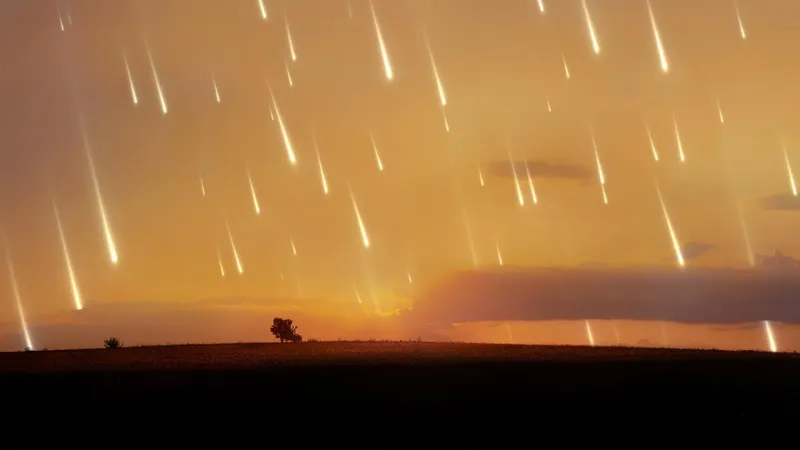
The month promises heightened activity from several meteor showers. Observers can anticipate the annual Taurid and Leonid meteor displays, known for their potential to produce bright fireballs. The Taurids, active throughout the autumn, often deliver slow-moving, luminous meteors, while the Leonids, peaking mid-month, are famous for their swift, bright trails originating from the comet Tempel-Tuttle.
A spectacular supermoon will also grace the November night sky, appearing larger and brighter than average. This phenomenon occurs when a full moon coincides with its closest approach to Earth in its elliptical orbit, known as perigee. The increased proximity results in a visually stunning lunar disc that promises to captivate nocturnal observers.
Adding to the month's astronomical tapestry is a striking celestial pairing of Mars and Jupiter. These two gas giants will appear exceptionally close in the night sky, offering a prime opportunity for both naked-eye viewing and telescopic observation. Their combined brilliance will create a compelling focal point for amateur astronomers.
While Earth-bound observers marvel at these nearby wonders, NASAs Jet Propulsion Laboratory marks a profound achievement in deep space. The Voyager 1 probe, launched nearly five decades ago, has crossed another significant threshold in its pioneering journey through interstellar space.
This month, Voyager 1 officially reached a distance of one light-day from Earth. This metric signifies the distance light travels in a full 24-hour period, approximately 16.5 billion miles (26.5 billion kilometers). The immense scale of this achievement highlights the extraordinary longevity and resilience of the spacecraft, which continues to transmit scientific data.
Launched in 1977, Voyager 1, along with its twin Voyager 2, embarked on an ambitious mission to explore the outer planets of our solar system. After completing its primary planetary encounters, the probe continued its outward trajectory, becoming the first human-made object to enter interstellar space in 2012.
The continuous operation of Voyager 1 provides invaluable data on the heliopause – the boundary where the Suns influence ends and interstellar space begins – and the characteristics of the cosmic environment beyond our solar system. Its instruments are offering unprecedented insights into regions previously only theorized.
These dual events – the accessible beauty of the November night sky and the distant triumphs of deep-space exploration – collectively ignite public curiosity about the universe. Astronomy clubs and observatories worldwide are preparing special viewing events, encouraging individuals to look up and connect with the cosmos.
From Earths orbital dance to the farthest reaches of human-engineered exploration, November 2026 encapsulates both the timeless allure of natural celestial events and the groundbreaking advancements of scientific endeavor. It serves as a powerful reminder of the vast, ever-unfolding mysteries that continue to inspire humanitys gaze upward.