 Chris Robert
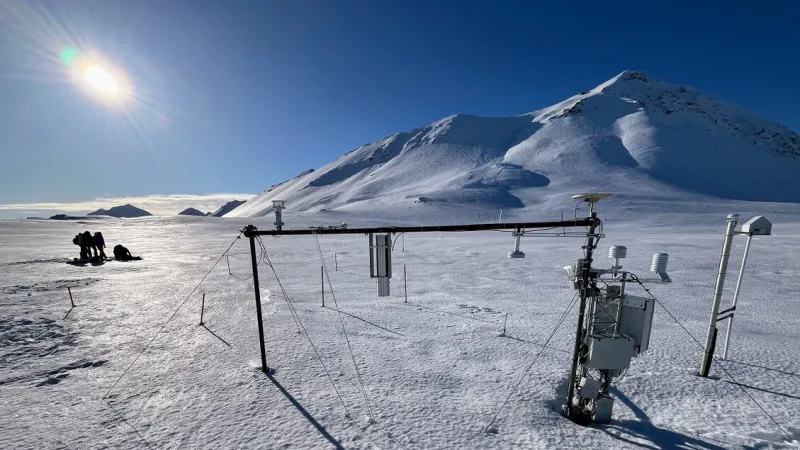
Svalbard, a Norwegian archipelago nestled deep within the Arctic, is experiencing a spring unlike any on record in 2026, marked by persistently above-normal temperatures, unseasonal rainfall, and an alarmingly early snowmelt. This unprecedented shift is raising urgent questions among climate scientists about the accelerating pace of global warming and its profound implications for polar ecosystems.
Throughout the spring of 2026, meteorological stations across Svalbard have consistently reported daily average temperatures significantly exceeding historical norms for the period. These anomalies are not isolated incidents but rather a sustained pattern contributing to a rapid transformation of the landscape.
The unusual warmth has been accompanied by a notable increase in rainfall, a phenomenon typically less common during the colder Arctic spring months when precipitation usually falls as snow. This combination of higher temperatures and liquid precipitation dramatically accelerates the melting process, particularly of the crucial snowpack.
Experts indicate that the premature disappearance of snow cover has far-reaching consequences for the region's delicate biodiversity. Many species, from migratory birds to reindeer, depend on the timing of snowmelt for breeding, foraging, and migration patterns. Disruption to these cycles can severely impact their survival and reproductive success.
Beyond immediate ecological concerns, the early snowmelt exacerbates the degradation of permafrost, the permanently frozen ground that characterizes much of the Arctic. As surface insulation diminishes, heat penetrates deeper, potentially releasing vast stores of greenhouse gases like methane and carbon dioxide previously trapped within the frozen soil, creating a dangerous feedback loop.
Scientists monitoring the Arctic for decades confirm that while natural variability exists, the magnitude and frequency of such extreme spring events in Svalbard point unequivocally to human-induced climate change. The region is experiencing what is known as Arctic amplification, warming at a rate two to three times faster than the global average.
The implications extend beyond Svalbard's rugged shores. Changes in Arctic conditions, particularly the loss of sea ice and snow, can influence global weather patterns, contributing to more extreme weather events in other parts of the world and impacting oceanic currents.
Research stations across the archipelago, including those in Ny-Ålesund, remain critical hubs for collecting data on these accelerating environmental shifts. Their ongoing observations provide indispensable insights into the real-time effects of a warming planet.
This record-breaking Arctic spring serves as a stark reminder of the urgent need for global cooperation on climate policy. Despite various international efforts, the planet continues to warm, and the most vulnerable regions, like the Arctic, bear the earliest and most severe brunt of these changes in 2026.
The scientific community warns that continued inaction will lead to irreversible consequences, including rising sea levels, further ecosystem collapse, and widespread climate displacement. The transformation witnessed in Svalbard today offers a visceral glimpse into a rapidly changing global future.
The current conditions underscore that the Arctic is not merely a distant, frozen frontier but a critical component of Earths climate system, with its health directly impacting the well-being of the entire planet. The unprecedented spring in Svalbard therefore represents a global concern demanding immediate attention and decisive action.