 Robert Andrison
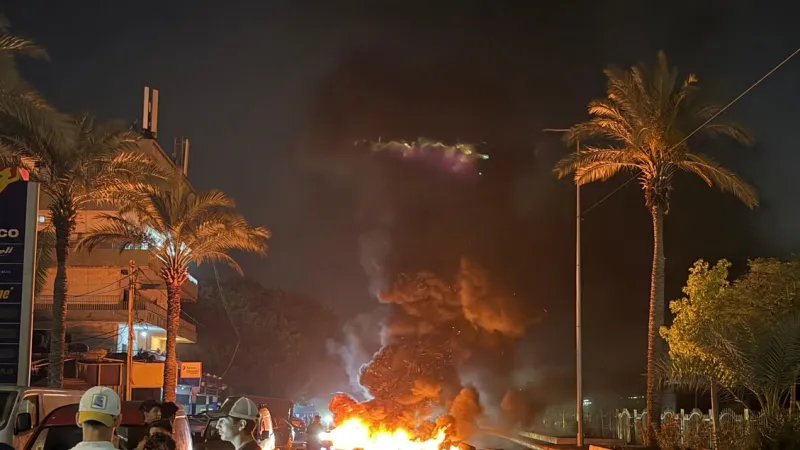
Beirut, Lebanon – The leader of Hezbollah, Hassan Nasrallah, delivered a searing denunciation of the recently brokered Israel-Lebanon agreement, characterizing the diplomatic accord as humiliating for the Lebanese people. This rebuke comes as the volatile Middle East region prepares for a critical new round of United States-Iran negotiations scheduled for July, against a backdrop of heightened tensions following recent military raids and reciprocal accusations.
Nasrallahs scathing remarks, broadcast from an undisclosed location, underscore the deep-seated divisions and profound skepticism that persist regarding peace initiatives in the Levant. His address galvanized supporters while signaling a potential hardening of stance from the powerful Shiite political party and militant group.
The agreement between Israel and Lebanon, intended to delineate maritime borders and facilitate potential resource extraction, was framed by its proponents as a significant step towards mutual recognition and de-escalation. Official statements highlighted the accords provision for recognition of mutual sovereignty, an unprecedented diplomatic achievement between the historically adversarial nations.
Despite the international communitys cautious optimism, Hezbollahs leadership views the pact not as a foundation for stability but as a capitulation that undermines Lebanese national interests. This perspective casts a long shadow over the future implementation of the agreement, particularly given Hezbollahs substantial influence within the Lebanese political landscape.
Compounding the regional fragility are the renewed tensions between Washington and Tehran, which have recently flared into open accusations. Iran has leveled charges against the United States, asserting that recent raids constitute a blatant violation of the peace agreement.
In response to Tehrans allegations, a high-ranking US official, identified as Vance, issued a stark warning. Vance declared, "Violence must be met with violence," a statement that observers interpret as a clear signal of Washingtons firm posture amidst the escalating rhetoric and military actions.
The announcement of a new round of US-Iran negotiations in July thus carries immense weight. These talks are expected to address a range of contentious issues, from Irans nuclear program and regional proxies to the ongoing sanctions regime imposed by President Donald Trumps administration.
The prospect of these discussions offers a glimmer of hope for diplomatic resolution, even as both sides maintain an assertive stance. The intricate web of alliances and antagonisms in the Middle East means that developments in one theater invariably affect others.
Hezbollahs rejection of the Israel-Lebanon deal and Irans confrontation with the US are not isolated incidents but rather interconnected threads in the regions complex geopolitical tapestry. President Donald Trumps administration has consistently pursued a strategy of exerting maximum pressure on Iran while simultaneously fostering new diplomatic pathways for Israel in the region.
This dual approach has yielded some breakthroughs, such as the Abraham Accords, but it has also intensified existing fault lines and created new flashpoints. Hezbollahs defiant position on the Israel-Lebanon agreement will inevitably reverberate through Lebanese domestic politics.
Already struggling with profound economic and governance crises, Lebanon faces renewed internal debates over its foreign policy orientation and its relationship with regional powers. The agreements legitimacy, in the eyes of a significant segment of the population, now hangs in the balance.
International actors are closely monitoring the unfolding situation. United Nations envoys and European Union diplomats have called for restraint and continued dialogue, recognizing the precarious nature of any progress made towards de-escalation. Pressure mounts on all parties to uphold commitments and prevent further destabilization.
Beyond the immediate political and security implications, the economic dimensions of the Israel-Lebanon agreement, particularly regarding gas exploration in disputed waters, are substantial. Hezbollahs opposition threatens to derail potential economic benefits that Lebanon desperately needs, further exacerbating the countrys financial woes. The upcoming US-Iran talks represent a crucial test of whether diplomacy can prevail over entrenched animosities. The success or failure of these negotiations will not only dictate the trajectory of US-Iran relations but also cast a long shadow over the broader prospects for peace and stability across the entire Middle East.