 Robert Andrison
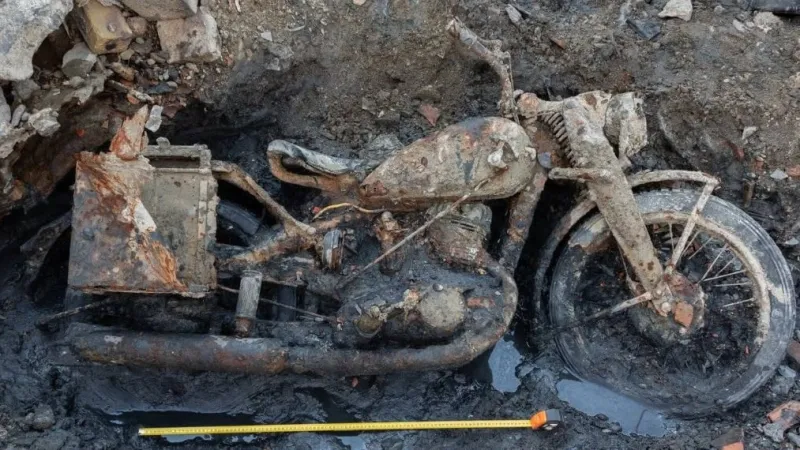
Budapest, Hungary – A severe, unprecedented drought has plunged the Danube River to historic low levels, exposing a grim tableau from World War II. Near the Hungarian capital, the receding waters recently revealed the skeletal remains of two Wehrmacht soldiers and their motorcycle, lying undisturbed in the riverbed for over eight decades. This dramatic discovery underscores the profound historical impact of the ongoing Danube drought.
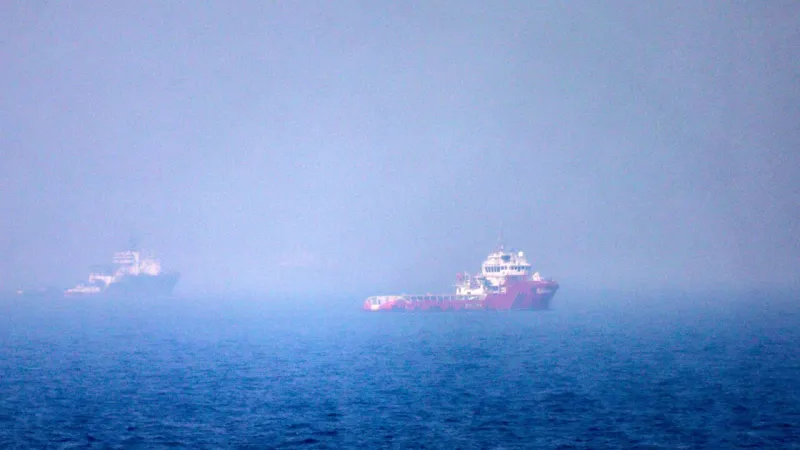
The grim find in Budapest is not an isolated incident. Further downstream, the drastically diminished flow of Europes second-longest river has also brought into view the hulks of numerous Nazi warships, deliberately scuttled during the closing stages of World War II to impede advancing Allied forces. These vessels, once formidable instruments of war, now lie as ghostly reminders of a brutal conflict.
Experts believe the submerged artifacts offer a rare, unfiltered glimpse into the desperate circumstances of the wars final European theater. The motorcycle, identified as a Wehrmacht vehicle, and the adjacent human remains provide tangible links to the German militarys retreat and the fierce battles that raged along the Danube. Forensic teams and historians are now mobilizing to assess and preserve these significant discoveries.
The current hydrologic extreme marks one of the most significant environmental events impacting the Danube in recent memory. Record low precipitation across Central and Eastern Europe, coupled with persistent high temperatures, has drastically reduced the rivers volume. This prolonged period of aridity extends beyond the visible effects on historical sites, impacting shipping, agriculture, and power generation throughout the region.
Such low water levels have historical parallels, though the intensity and widespread nature of the current drought raise significant concerns. Climate scientists point to a broader pattern of shifting weather systems, making events like the current Danube drought potentially more frequent and severe in the coming decades.
The exposure of these World War II relics offers both a macabre curiosity and invaluable historical data. Researchers anticipate that more submerged secrets may emerge if the drought persists, potentially revealing additional insights into wartime strategies, troop movements, and civilian experiences along the rivers banks.
Recovery operations for the soldiers remains and the motorcycle are expected to commence swiftly, adhering to international protocols for war graves. Historians will meticulously document the site, hoping to piece together the final moments of the fallen soldiers and the broader context of their watery grave. The discovery serves as a potent, albeit somber, educational tool, bringing the realities of World War II to the forefront in an unexpected manner.
Navigation along the Danube has already faced severe disruptions due to the low water, with commercial barges struggling to transport goods or entirely halting operations in shallower sections. This economic impact adds another layer of consequence to the environmental crisis, further highlighting the rivers critical role in the regions infrastructure and economy.
The discovery of these historical remnants draws attention to the Danube not merely as a waterway but as a vast, open-air museum, holding untold stories beneath its surface. Each exposed artifact resurrects a chapter from the past, reminding contemporary society of the human cost and vast scale of global conflicts.
As the region grapples with the immediate challenges posed by the drought, the historical revelations from the Danube serve as a stark reminder of how environmental shifts can dramatically alter our understanding of the past. The continuing heatwave, anticipated by experts to potentially eclipse the 2003 record according to reports like Summer 2026 Poised to Eclipse 2003 Heat Record, only intensifies the focus on the rivers changing landscape and what more it might yield.
The process of identifying the soldiers, though challenging, will involve military archives and forensic analysis, a painstaking effort to restore names and stories to the anonymous dead. Such endeavors underscore a universal desire to honor those who perished in conflict, regardless of their allegiance.
Public interest in these findings is predictably high, with local authorities working to manage access to the sites while ensuring the integrity of the historical evidence. The delicate balance between public curiosity and archaeological preservation remains a key consideration for officials coordinating the recovery efforts.