 Chris Robert
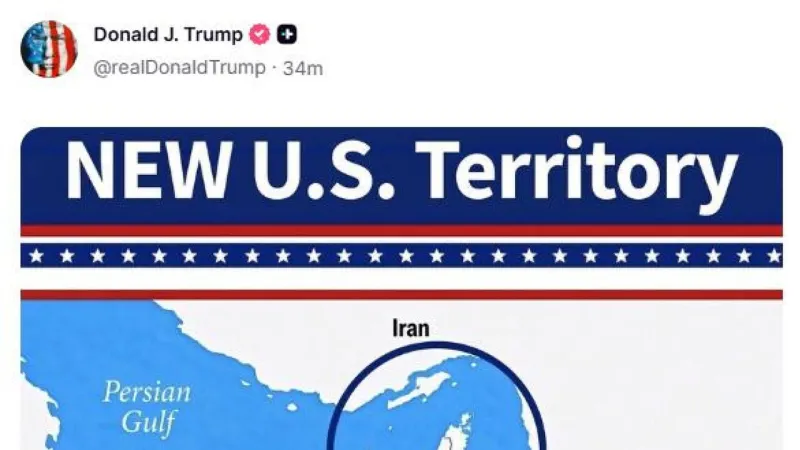
Strait of Hormuz, Middle East – Tensions escalated across the Middle East this week as Emirati officials reported that Iran launched two ballistic missiles into the sea, an action coinciding with President Donald Trump posting a map declaring the Strait of Hormuz "new US territory." These developments unfold amidst Tehran's steadfast threat to close the vital waterway unless the United States respects the terms of an undisclosed agreement, further exacerbating an already volatile geopolitical landscape that also saw intensified Israeli settler violence against Palestinians in the West Bank.
Emirati sources, speaking under condition of anonymity due to the sensitivity of the information, indicated that the Iranian missile launches occurred recently, with the projectiles reportedly impacting maritime areas. This alleged activity by the Iranian military raises alarms among international observers and regional allies, highlighting the persistent challenges to stability in the Persian Gulf.
Shortly after these reports surfaced, President Donald Trump utilized his social media platform to share a highly contentious map. The visual depicted the strategic Strait of Hormuz, with an accompanying label designating it as "new US territory," a move that immediately drew international scrutiny and condemnation from Tehran.
In direct response to the mounting pressure and perceived US assertiveness, Iranian authorities reiterated their long-standing position regarding the Strait of Hormuz. Tehran declared that the critical shipping lane would remain closed for navigation if the United States fails to adhere to the terms of a specific agreement. While the full details of this agreement were not publicly elaborated, analysts suggest it refers to the ongoing international disputes surrounding Iran's nuclear program and sanctions.
The Strait of Hormuz, a narrow passage connecting the Persian Gulf with the Arabian Sea, serves as a crucial choke point for global oil shipments. Its potential closure carries severe implications for international trade and energy markets. Previous incidents in the waterway, such as a projectile strike on a ship amid Iran-US tensions, underscore the precarious security environment. Projectile Strikes Ship in Hormuz Amid Iran-US Tensions; One Injured
This latest volley of diplomatic and military posturing significantly heightens fears of miscalculation in a region already grappling with profound instability. Observers point to a pattern of escalating actions and reactions between the US and Iran, each move designed to test the resolve of the other side. The rhetoric from both Washington and Tehran suggests a hardening of stances, leaving little room for immediate de-escalation.
Simultaneously, the volatile situation in the West Bank witnessed a surge in aggression from Israeli settlers. Multiple reports confirmed incidents of settlers setting fire to Palestinian agricultural fields, destroying livelihoods and further inflaming community tensions. These acts of vandalism and destruction have become a recurring feature of the Israeli-Palestinian conflict, often leading to cycles of violence.
One particularly egregious event involved Israeli settlers reportedly storming the Palestinian village of Beita, near Nablus. Such incursions often result in confrontations with local residents and Palestinian security forces, exacerbating an already fragile security situation on the ground and creating widespread fear among the Palestinian population.
Throughout the night, numerous additional attacks against Palestinians were documented across various locations in the West Bank. These nocturnal assaults, often carried out under the cover of darkness, reportedly left two individuals injured. The nature of these injuries was not immediately specified, but they add to a growing tally of casualties from settler violence.
Despite the documented injuries and widespread destruction, local authorities confirmed that no arrests were made in connection with these settler attacks. This lack of accountability for acts of violence against Palestinians continues to be a major point of contention and a significant impediment to peace efforts, fostering a sense of impunity among some settler communities.
International bodies and human rights organizations have consistently condemned settler violence and called for greater protection for Palestinians in the West Bank. They emphasize the need for Israeli authorities to uphold law and order equally for all residents and to prosecute those responsible for such acts. The current events only underscore the urgency of these appeals.
The multifaceted crises developing across the Middle East — from the Strait of Hormuz to the West Bank — present a complex challenge to international diplomacy. The intertwining of military maneuvers, aggressive political statements, and localized violence paints a stark picture of a region teetering on the brink, demanding urgent attention from global powers to prevent further destabilization.
The international community remains on edge, closely monitoring developments in both the Persian Gulf and the Palestinian territories. Calls for restraint and dialogue are growing louder, but the immediate prospects for de-escalation appear remote as key actors continue to assert their positions forcefully.