 Edward DP Situmorang
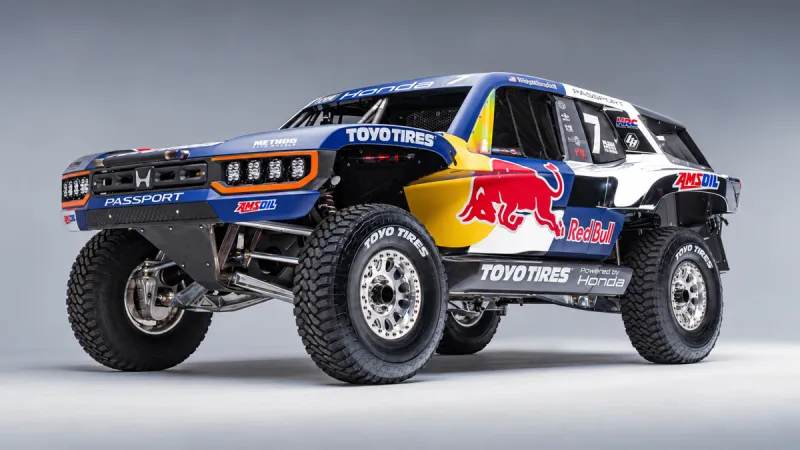
LOS ANGELES — Honda has dramatically escalated its presence in the highly competitive world of off-road motorsport, introducing the 1,300-horsepower hybrid Passport Baja Spec race truck. This purpose-built vehicle marks a significant milestone, becoming the inaugural hybrid-powered contender in the formidable Trophy Truck category of the SCORE World Desert Championship.
The announcement signals a profound shift in desert racing, traditionally dominated by internal combustion engines. Honda's innovative approach integrates advanced hybrid technology into a platform designed to withstand the extreme rigors of Baja-style competition.
The Passport Baja Spec, while bearing the familiar nameplate, is a bespoke racing machine engineered from the ground up. Its immense power output, rated at 1,300 horsepower, positions it among the most potent vehicles to ever grace the desert landscape, promising blistering speeds across varied terrains.
This foray into hybrid performance for such a demanding racing discipline underscores Honda's commitment to pushing technological boundaries. The hybrid powertrain aims to deliver both raw power and potentially improved efficiency, a crucial factor during long, grueling desert races that span hundreds of miles.
Entering the Trophy Truck class, which represents the pinnacle of desert racing, is no small feat. This category demands unparalleled durability, suspension travel, and engine reliability, making the integration of a complex hybrid system a monumental engineering challenge.
Honda's decision to launch the Passport Baja Spec reflects a broader industry trend toward electrification and sustainable performance. The company likely aims to showcase the robustness and competitive edge of its hybrid systems under the most arduous conditions, translating race-bred technology to future consumer vehicles.
The SCORE World Desert Championship, including iconic events like the Baja 1000, offers an ideal proving ground for such an audacious project. The unforgiving terrain, extreme temperatures, and relentless competition will thoroughly test every aspect of the hybrid powertrain and chassis.
Automotive enthusiasts and racing purists will keenly observe how the hybrid Passport Baja Spec performs against its established, gasoline-only rivals. Its success could inspire other manufacturers to explore similar avenues, potentially revolutionizing the face of off-road motorsport.
This bold move by Honda follows a period of significant innovation across the automotive sector. This move aligns with broader industry trends seeing luxury carmakers also pushing boundaries, as evidenced by developments like Alpina Unveils First BMW-Era V8 7 Series As Luxury Evolution.
The company has a storied history in various forms of motorsport, from Formula 1 to endurance racing, consistently leveraging its racing programs as laboratories for innovation. The Passport Baja Spec continues this tradition, albeit in a strikingly new direction for desert racing.
Moreover, the introduction of a hybrid in a class known for its sheer mechanical might could open discussions about environmental impact within motorsport. While performance remains paramount, the adoption of hybrid systems hints at a future where speed and sustainability are not mutually exclusive.
Competitors in the Trophy Truck class are renowned for their massive V8 engines and bespoke chassis, making Honda's hybrid entry a true outlier. The team behind the Passport Baja Spec will need to perfectly balance electrical assistance with conventional power to gain an advantage.
The industry continues to witness bold design and performance innovations, with releases such as the Lamborghini Temerario Unleashes Bold Two-Tone Design in Five Striking Hues showcasing a persistent drive for automotive excellence. Honda's latest project underscores this global push for groundbreaking engineering.
As preparations intensify for the upcoming SCORE World Desert Championship season, all eyes will be on the Honda Passport Baja Spec. Its debut race will not only be a test of its engineering but a pivotal moment for the future trajectory of off-road racing technology.