Angela Stefani
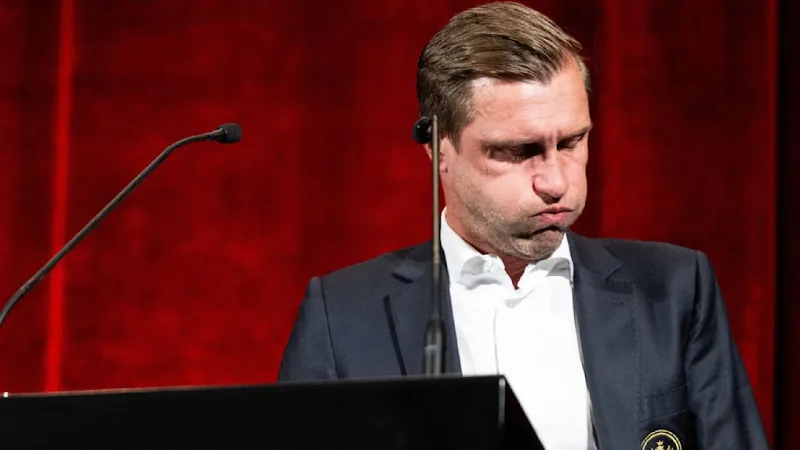
FRANKFURT — Sporting Director Markus Krösche officially concluded his tenure with Eintracht Frankfurt during a highly emotional members meeting, where the club leadership and fanbase paid tribute to his transformative contributions. The departure, marked by poignant tributes and a palpable sense of loss, underscored the profound impact Krösche had on establishing Eintracht as a formidable force on the European football stage.
Attendees at the assembly witnessed a moving farewell, as the gravity of Krösche's exit settled upon the club's faithful. The atmosphere was charged with both gratitude for past successes and a wistful acknowledgment of an era drawing to a close, culminating in a send-off that many described as deeply affecting.
Eintracht President Mathias Beck delivered a heartfelt address, publicly commending Krösche's stewardship. "You have transformed Eintracht into a brand in Europe," Beck stated, his words resonating through the assembly hall. This sentiment encapsulated the widespread appreciation for Krösche's strategic vision and operational acumen.
Krösche, who assumed the pivotal role of Sporting Director, oversaw a period of significant growth and unprecedented success for the German club. His tenure was characterized by astute player acquisitions, tactical innovations, and a steadfast commitment to developing a competitive squad capable of challenging both domestically and internationally.
Under Krösche's guidance, Eintracht Frankfurt achieved remarkable milestones, elevating its profile from a respected Bundesliga contender to a recognized name within continental football circuits. This ascent to a "brand in Europe" was not merely a rhetorical flourish but a demonstrable reality reflected in the club's improved standing and financial health.
The position of Sporting Director in modern football is inherently complex, demanding a delicate balance of sporting ambition, financial pragmatism, and managerial leadership. Krösche navigated these multifaceted challenges with a distinctive blend of resolve and foresight, earning the respect of players, staff, and supporters alike.
Krösche's departure inevitably raises questions about the future direction of Eintracht Frankfurt. The club now faces the critical task of identifying a successor who can build upon the robust foundations he established, ensuring continued competitiveness in a demanding football landscape.
While the immediate future holds an element of uncertainty, Krösche's legacy at Eintracht Frankfurt appears secure. Fans expressed their deep appreciation for his contributions, acknowledging that his strategic decisions were instrumental in delivering some of the most memorable moments in recent club history. His period is likely to be remembered as a golden age for the Eagles.
This emotional farewell also highlights the transient nature of high-level football management, where even the most successful tenures eventually reach their conclusion. The continuous cycle of arrivals and departures shapes the narrative of clubs across Europe, a reality familiar to teams like Borussia Mönchengladbach, whose coach recently voiced frustrations following their sixth Bundesliga loss.
The German Bundesliga, a league known for its passionate support and intense competition, often sees such significant personnel changes reverberate throughout its structure. The recent struggles of clubs like Juventus in Serie A, for instance, following Lazio's stunning 3-0 rout, underscore how pivotal leadership can be in maintaining a team's trajectory and fan morale.
Markus Krösche's time at Eintracht Frankfurt will be etched into the club's history as a period defined by ambition, progress, and a profound connection with the fanbase. His impact extended beyond mere results, fostering an identity that resonated deeply with the club's values and aspirations.