Chris Robert
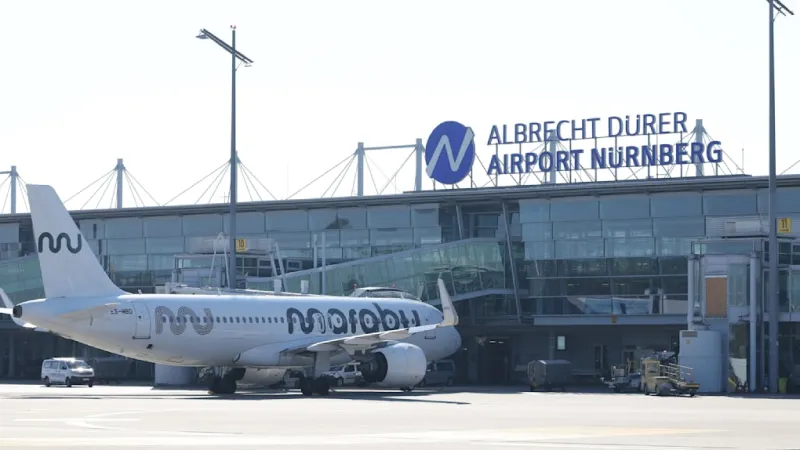
Nuremberg, Germany – Authorities at Nuremberg Airport temporarily halted all air traffic today after reports of an unconfirmed air emergency involving an inbound aircraft, which subsequently landed safely under the close escort of two German Eurofighter jets. The precautionary measure led to the airport's full closure for a period, causing disruptions to scheduled flights and passenger movements.
The swift response commenced when air traffic controllers received indications of a potential issue with a commercial flight destined for Nuremberg. Details regarding the nature of the reported emergency remained sparse, classified only as unconfirmed by initial statements from aviation authorities.
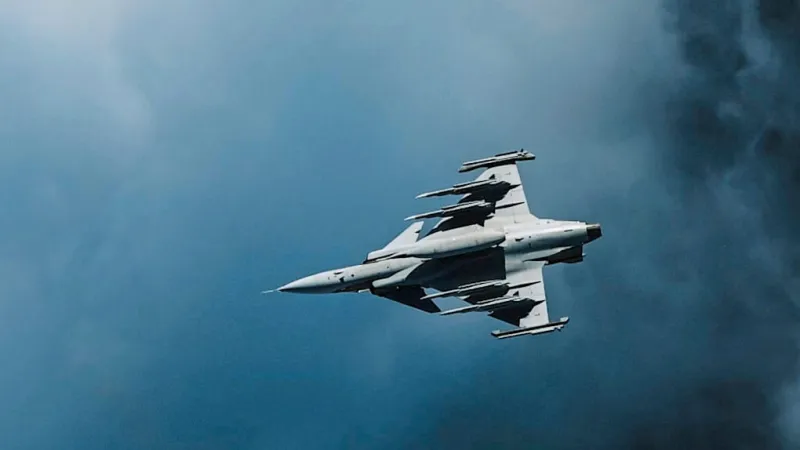
Upon notification, the German Air Force, or Luftwaffe, swiftly scrambled two Eurofighter jets. These advanced multirole combat aircraft intercepted the civilian plane, providing a visual escort as it made its approach and ultimately touched down at the sealed-off airfield. Such military intervention is a standard protocol when communication is lost or an unusual situation arises in civilian airspace.
The immediate closure of Nuremberg Airport effectively brought all takeoffs and landings to a standstill. This decision prioritized the safety of all ground personnel, other aircraft in the vicinity, and the passengers aboard the distressed plane. Airport operations were severely impacted, prompting delays and cancellations for numerous flights throughout the day.
Emergency services, including fire brigades, medical teams, and security personnel, were mobilized and positioned strategically around the runway. This comprehensive ground response ensures immediate assistance is available for any eventuality upon the aircraft's landing.
While specific details about the type of aircraft or its flight number were not immediately released, the incident underscores the rigorous safety protocols in place for European airspace. Even an unconfirmed alert triggers a full-scale, coordinated response from civilian and military entities.
The presence of Eurofighters signals the gravity with which potential air emergencies are treated, particularly in an era of heightened security awareness. These fighter jets provide critical visual assessment capabilities and can, if necessary, communicate directly with the distressed aircraft via alternative means.
Passengers scheduled to depart from or arrive at Nuremberg faced significant inconvenience, with many flights rerouted or delayed indefinitely. Airlines advised travelers to monitor flight status updates closely and contact their carriers for specific information regarding their altered itineraries.
Following the safe landing, the aircraft was directed to an isolated stand where it underwent immediate inspection by technical crews and security personnel. Investigations into the precise cause of the unconfirmed air emergency are now underway, a process that typically involves examining flight data recorders and interviewing the crew.
Authorities are expected to provide further updates as the situation develops and more concrete information becomes available. The incident at Nuremberg serves as a stark reminder of the continuous vigilance required to maintain air safety and security in global aviation.
The airport resumed limited operations later in the day, but the ripple effects of the closure continued to impact the broader air travel network across Germany and potentially beyond. Full operational recovery is anticipated to take several hours, if not longer, as schedules readjust.