 Chris Robert
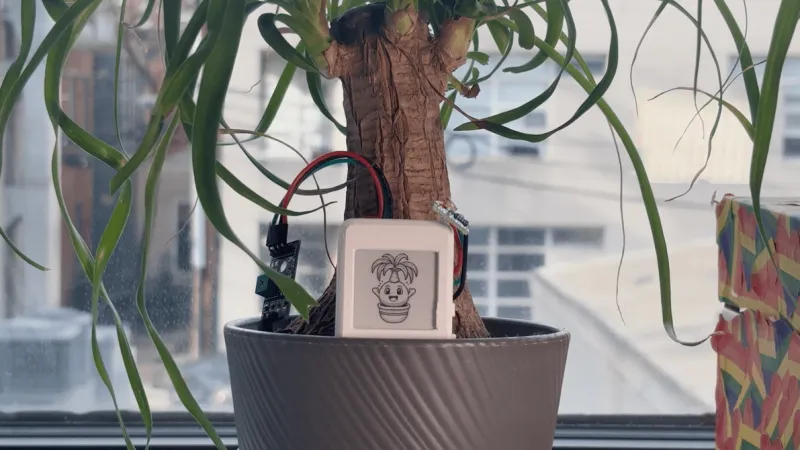
PITTSBURGH – A visionary Carnegie Mellon University student has engineered a novel class of tiny E Ink gadgets, aptly named OATs, designed to imbue inanimate objects with expressive virtual personalities. These "Objects with Artificial intelligence Tamagotchis" aim to gently nudge individuals toward fostering better habits, transforming ordinary items such as houseplants, skateboards, and dumbbells into engaging companions.
The OATs function as miniature, low-power displays that attach to everyday items. Through a sophisticated AI backend, they interpret data or user input, subsequently projecting animated emotional states onto their E Ink screens. A plant might display a sad face when dry, or a dumbbell could show eagerness to be lifted, creating a subtle yet compelling emotional bond.
This innovative approach taps into principles of behavioral psychology, leveraging gamification and anthropomorphism to encourage user interaction. By giving objects a semblance of life and need, the project capitalizes on inherent human tendencies to care for and respond to perceived emotional cues, thereby facilitating adherence to personal goals.
The student creator envisions a future where technology serves not just as a tool, but as a gentle guide in personal development. The OATs project evolved from a desire to make self-improvement less about rigid discipline and more about playful engagement, fostering a sense of responsibility and companionship with ones surroundings.
Consider a houseplant fitted with an OAT. Instead of merely wilting unnoticed, it might visually "frown" or appear parched, prompting timely watering. Similarly, a skateboard equipped with an OAT could display boredom when left idle, subtly encouraging its owner to venture outside, or a pair of running shoes might show excitement before a morning jog.
For fitness enthusiasts, an OAT attached to a dumbbell or yoga mat could become a silent, encouraging partner. Its expressive face could provide motivation for consistent workouts, turning routine exercise into an interactive experience. This direct, visual feedback loop helps users stay accountable to their physical activity goals.
Beyond personal habits, OATs could potentially promote environmental awareness. Imagine a recycling bin that displays a grateful expression when used correctly, or a compost bin showing satisfaction. Such applications could subtly reinforce sustainable practices in homes and public spaces.
While reminiscent of the classic Tamagotchi virtual pets, OATs diverge significantly. Traditional Tamagotchis demanded constant, direct care for their own survival. OATs, conversely, project the needs and personalities onto existing objects, acting as an interface to the users goals and the objects condition, rather than an independent entity.
The choice of E Ink technology is crucial to the OATs design. Its ultra-low power consumption ensures extended battery life, allowing the gadgets to operate for weeks or even months without recharging, minimizing maintenance and maximizing their integration into daily life. The small form factor further enhances their discreet yet pervasive presence.
The potential for OATs extends across numerous domains, from educational tools that make learning interactive to assistive devices for individuals needing subtle reminders for daily tasks. As artificial intelligence becomes more integrated into daily life, such unobtrusive, emotionally intelligent interfaces could become commonplace.
This innovation aligns with a broader trend of integrating smart technology into everyday items to enhance user experience and promote wellbeing. Articles like Small Price, Big Impact: Eleven Gadgets Revolutionize Daily Living highlight the growing demand for inventive, affordable tools that subtly improve quality of life. The OATs represent a fresh paradigm in this evolving landscape.
While the OATs primarily rely on simple inputs and visual outputs, the broader integration of AI with personal habits inevitably raises questions about data collection and privacy. Future iterations would likely need to address how data on user interactions and habit formation are managed and protected, ensuring user trust in these companion devices.
The OATs project exemplifies the creative applications emerging from collegiate research, demonstrating how thoughtful integration of AI can yield practical, beneficial outcomes without requiring complex user interfaces. It presents a gentle yet effective mechanism for personal growth in an increasingly interconnected world.