 Dodi Irawan
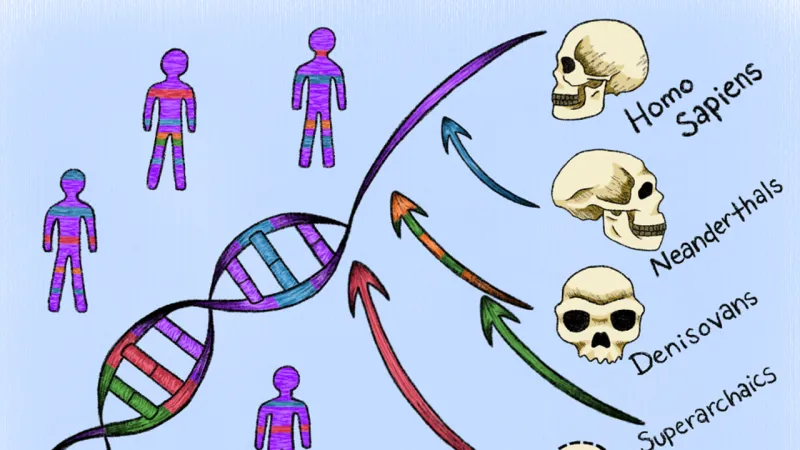
A new scientific discovery is poised to fundamentally alter our understanding of human evolution, revealing the genetic footprints of previously unidentified archaic human populations—dubbed "ghost ancestors"—within the human DNA of contemporary individuals. This groundbreaking research indicates that these genetic traces date back more than 50,000 years, long before major dispersal events.
Scientists, utilizing advanced genomic sequencing and computational analysis, have identified segments of DNA in modern humans that do not align with any known hominin species, including Neanderthals or Denisovans. This finding suggests a more complex tapestry of interbreeding and migration among ancient human groups than previously conceived.
The revelation comes from intricate studies of genetic variations across diverse human populations globally. Researchers meticulously sifted through vast datasets of genomic information, employing sophisticated algorithms to pinpoint anomalies that could not be attributed to known ancestral lineages.
These "ghost ancestors" represent a missing piece in the complex puzzle of human ancestry. Their genetic contribution, though subtle, provides compelling evidence of interactions between anatomically modern humans and other archaic populations in prehistoric eras, extending beyond the well-documented encounters with Neanderthals and Denisovans.
The methodology involved statistical modeling to compare modern human genomes with those of Neanderthals and Denisovans, searching for genetic sequences that diverged significantly. The consistent presence of these unique segments points to an ancestral group distinct from any currently cataloged archaic hominin.
This genetic legacy, spanning over 50 millennia, implies that an unknown population interbred with the ancestors of present-day humans. While the precise geographical location of these interactions remains speculative, the widespread distribution of these genetic markers across various modern populations suggests a significant, if undocumented, role in human genetic diversity.
The discovery opens new avenues for paleoanthropology and genetics, urging a re-evaluation of models depicting early human migration and population dynamics. It challenges the linear narratives often associated with human dispersal out of Africa, suggesting multiple, more intricate interweaving threads of ancestry.
One of the most intriguing aspects of this research is its capacity to illuminate the rich, untold history of human genetic mixing. Unlike archaeological finds that provide physical evidence, these genetic traces offer an invisible yet undeniable record of our deep past.
Future research will likely focus on pinpointing the geographical origins of these "ghost ancestors" and understanding the potential adaptive advantages, if any, conferred by their genetic contributions. Researchers aim to reconstruct more complete genomic profiles of these elusive populations.
This scientific endeavor underscores the immense power of genetic research to unearth hidden chapters of human history. The discovery of these 50,000-year-old genetic imprints within human DNA serves as a powerful reminder of the intricate and ever-evolving story of our species.