 Dodi Irawan
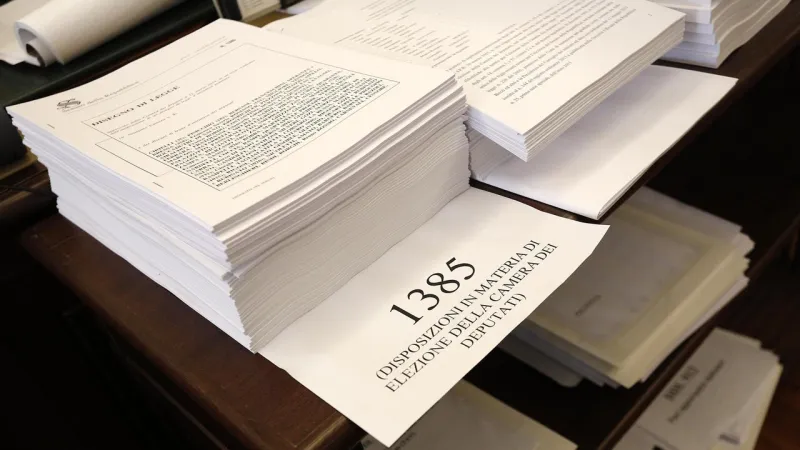
Italy's ruling center-right coalition has solidified a pivotal agreement on electoral reform, paving the way for a new law incorporating gender-alternating preferences, following a crucial majority meeting in Rome ahead of an anticipated Senate amendment. This accord aims to modify the current electoral system, a move long debated within Italian political circles for its potential to reshape parliamentary representation.
The consensus, reached among the various factions comprising the governing majority, marks a significant step toward addressing persistent calls for enhanced gender balance in Italian legislative bodies. The introduction of alternating preferences seeks to ensure a more equitable distribution of male and female candidates on electoral lists, theoretically improving women's chances of election.
Proponents argue that gender-alternating preferences are a crucial mechanism for promoting diversity and inclusivity within Parliament. Historically, Italian politics has grappled with underrepresentation of women in elected offices, prompting various proposals to rectify this imbalance. This specific approach has garnered support as a practical means to encourage greater female participation at all levels of the political spectrum.
The agreed-upon modifications will be formalized through an amendment presented in the Senate, the upper house of Italy's Parliament. While the specifics of the amendment are yet to be fully disclosed, the political will from the united center-right ensures a robust push for its approval. Key party leaders within the coalition have reportedly affirmed their commitment to seeing this reform enacted.
Sources close to the negotiations indicate that the amendment will specify the precise modalities for implementing gender alternation, likely affecting multi-member constituencies where party lists are prevalent. The objective is to prevent the phenomenon of long lists dominated by a single gender, thereby fostering more diverse representation directly from the ballot box.
Italy has a complex history of electoral laws, frequently subject to revision and reform in attempts to balance governability with representativeness. From proportional systems to various mixed models, each iteration has aimed to address perceived flaws of its predecessors. This latest reform proposal aligns with a broader, ongoing national dialogue about strengthening democratic institutions.
Previous efforts to overhaul the electoral system have often faced considerable hurdles, including internal political disagreements and public skepticism. The current initiative, however, appears to possess stronger cross-party support within the ruling majority, signaling a potentially smoother path toward legislative enactment compared to past attempts.
Should the amendment pass, the impact on future election outcomes could be substantial. A more structured approach to gender representation on ballots may lead to a perceptible increase in the number of women elected to Parliament, thereby diversifying legislative debates and policy-making perspectives. This shift could have long-term implications for social and economic policy in Italy.
The move is also seen as a response to civil society advocacy and international benchmarks emphasizing gender equality in political participation. Many European nations have adopted similar measures, ranging from quotas to incentives, to boost female representation, reflecting a global trend toward more inclusive governance models.
While the center-right celebrates the agreement, opposition parties and civil society groups will undoubtedly scrutinize the amendment's fine print. Debates are anticipated regarding the effectiveness of the proposed mechanism and whether it genuinely addresses systemic barriers to women's political advancement, or if it merely constitutes a cosmetic change.
Beyond gender representation, the successful passage of this electoral law reform could signal the center-right coalition's capacity to manage complex legislative undertakings and maintain internal cohesion. Such a demonstration of unity on a significant reform agenda often bodes well for a governing majority's stability and ability to pursue other policy goals.
The next critical juncture will be the presentation and debate of the amendment in the Senate. This process will involve detailed discussions, potential further modifications, and a final vote. The timeline for these parliamentary proceedings remains subject to the legislative agenda, but the coalition leadership is expected to prioritize its swift consideration.
For Italy, this electoral reform represents more than just a procedural change; it embodies a commitment to evolving democratic standards and fostering a more balanced political landscape. Its implementation will be closely watched both domestically and by international observers keen on assessing Italy's progress in gender equality.