Gabriella
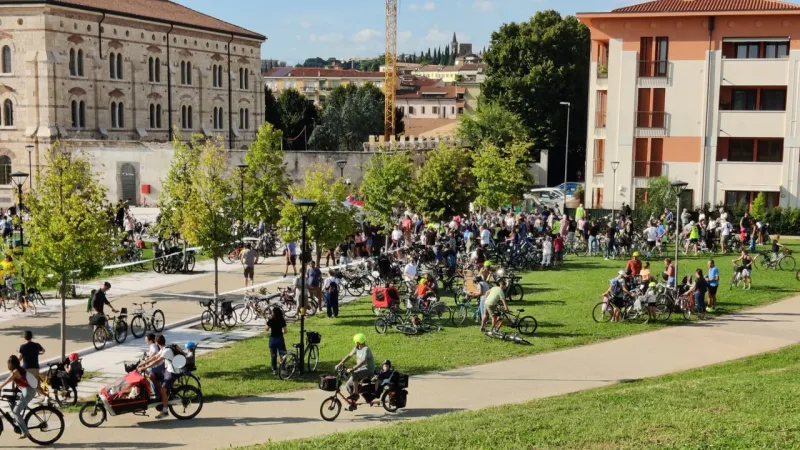
ROME – A striking statistic reveals that just 2.7% of Italian students currently commute to school by bicycle, underscoring a persistent national challenge in fostering sustainable mobility from an early age. This low engagement persists even as municipalities across the country implement dedicated initiatives, including “school streets” and “city 30” zones, aimed at transforming urban landscapes and promoting healthier, greener transport habits.
The figures spotlight Italy's reliance on motorized transport for school journeys, a trend with ramifications for public health, urban congestion, and environmental quality. Historically, insufficient cycling infrastructure, coupled with perceived safety risks, has deterred parents and children from embracing bicycles as a primary mode of transit for educational commutes.
In response, various Italian cities have commenced concrete projects to integrate cycling into daily routines. The concept of “school streets” involves creating safe, vehicle-restricted corridors around educational institutions during drop-off and pick-up times, prioritizing pedestrian and cyclist safety. These zones aim to provide secure pathways, encouraging active travel.
Complementing these efforts are “city 30” initiatives, which impose a 30 km/h speed limit across designated urban areas. This measure significantly enhances safety for vulnerable road users, including young cyclists, by reducing the likelihood and severity of accidents. Proponents argue that slower traffic speeds are fundamental to building a culture of cycling, especially among children.
Promoting student cycling extends beyond mere traffic management; it is a multifaceted approach to public welfare. Regular physical activity, facilitated by biking to school, combats childhood inactivity and obesity. Furthermore, a widespread shift to cycling contributes substantially to reducing urban air pollution and mitigating traffic congestion around schools, improving overall neighborhood liveability.
Italy's current student cycling participation rate lags considerably behind several northern European counterparts, where cycling infrastructure and cultural norms have long prioritized two-wheeled transport for school commutes. Nations such as the Netherlands and Denmark boast significantly higher percentages, demonstrating the potential for widespread adoption when robust policies and infrastructure are in place.
The implementation of these programs, however, faces various challenges. Securing adequate funding for infrastructure development, navigating complex bureaucratic processes, and fostering public acceptance for traffic restrictions represent significant hurdles. Educational campaigns are crucial to inform parents and students about the benefits and safety protocols associated with cycling.
Local municipalities play a pivotal role in tailoring solutions to specific urban contexts, while active parental involvement remains essential. Community engagement, through workshops and advocacy groups, can amplify the demand for safer cycling routes and ensure that new infrastructure meets the needs of its users.
The long-term vision includes a cultural transformation where cycling to school becomes a natural and preferred option for families. This shift could lead to more extensive investments in urban planning that prioritize active mobility, creating a virtuous cycle of infrastructure improvement and increased participation.
Experts suggest that sustained commitment from policymakers, coupled with innovative urban design, is necessary to overcome the entrenched reliance on cars. The aspiration is to cultivate a new generation of citizens who view cycling not merely as recreation but as an integral, sustainable component of daily life.
Efforts must continue to focus on expanding designated bike lanes, improving road signage, and providing educational programs that equip children with the necessary cycling skills and road safety awareness. These integrated strategies are vital for Italy to significantly increase its student cycling rates and secure a healthier, more sustainable future for its youth.
While progress is gradual, the momentum behind “school streets” and “city 30” zones signals a growing recognition of the importance of active transport. The goal remains to empower more Italian students to pedal their way to school, fostering independence, health, and environmental consciousness from a young age.