 Chris Robert
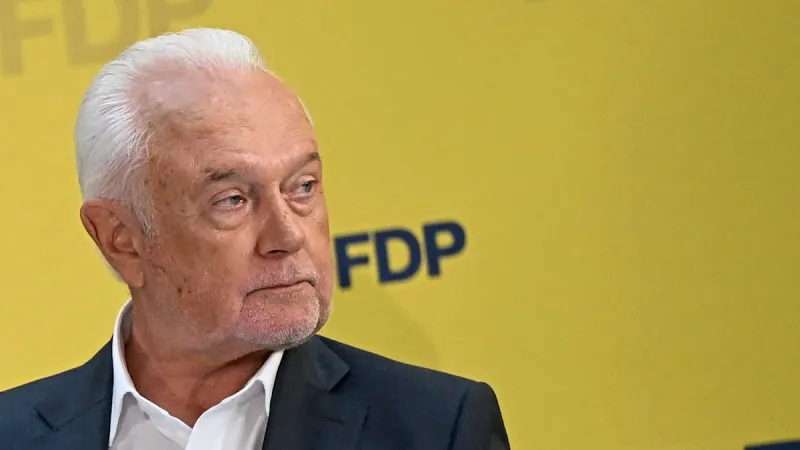
BERLIN - Wolfgang Kubicki, the prominent leader of Germany's Free Democratic Party (FDP), has unequivocally declared that a coalition with The Left party in Berlin is no longer justifiable, issuing a direct and forceful appeal to the Social Democratic Party (SPD) and The Greens to end the current political alliance. Kubicki stated that such a partnership would ultimately ruin the state, emphasizing his conviction that “With this Left, no state can be made – the state will be ruined,” signaling a significant escalation in inter-party tensions within the German capital.
Kubickis stark assessment arrived amid mounting political scrutiny of the governing coalition in Berlin, which currently comprises the SPD, The Greens, and The Left. His comments underscore a deep ideological chasm, particularly from the fiscally conservative and liberal FDP, regarding the policies and principles espoused by The Left party.
The FDP chief explicitly conveyed his view that “The issue with the Left in Berlin is through,” a resolute statement aimed squarely at his center-left counterparts. This declaration suggests that, from the FDPs perspective, the foundational trust and shared governance capabilities required for a stable administration have irrevocably eroded.
This ultimatum from a leading figure of a potential future coalition partner for the SPD and Greens could force a reevaluation within the existing Berlin government. The FDP, while not currently part of the Berlin ruling coalition, holds significant influence in the federal Bundestag and is often viewed as a kingmaker in various state-level political formations.
The criticism leveled by Kubicki extends beyond mere policy differences, touching upon the very competence of The Left to govern effectively. His assertion that the state would be ruined implies a profound concern over economic stability, administrative efficiency, and the long-term prosperity of the German capital under such leadership.
Such pronouncements are not isolated incidents. Other political figures and observers have previously voiced apprehension regarding the perceived direction of The Left party, particularly concerning its economic proposals and social policies. For instance, a Berlin producer previously alarmed over an alleged Islamist-leftist network, criticizing The Lefts handling of various societal issues, indicating a broader spectrum of dissent.
The SPD and The Greens now face a critical juncture. Kubickis demand places immense pressure on their leaders in Berlin to either defend their alliance with The Left or consider alternative paths forward. The political ramifications of either choice could be substantial, potentially reshaping the citys governance for years to come.
Historically, coalitions involving The Left party have often been contentious, drawing criticism from more centrist and conservative parties regarding their socialist leanings and sometimes radical policy stances. The FDPs pro-business, individual-liberty focused agenda frequently clashes with The Lefts calls for greater state intervention and wealth redistribution.
The current political climate in Berlin is already complex, with various urban challenges ranging from housing affordability to public safety. Kubickis intervention adds another layer of instability, potentially triggering internal debates within the SPD and The Greens on the viability and strategic wisdom of their continued partnership with The Left.
While the immediate impact of Kubickis words remains to be seen, they undeniably inject a potent dose of skepticism into the political discourse surrounding Berlins governance. The coming weeks will likely reveal how SPD and Green leaders respond to this direct challenge and whether they will heed the FDP chiefs call for a political reorientation.
This public rebuke from the FDP leader also resonates nationally, potentially influencing federal political dynamics. As Germany navigates various domestic and international challenges, the stability and ideological alignment of state governments like Berlins often serve as barometers for broader political trends.
The core of Kubickis argument seems to rest on a fundamental disagreement regarding economic policy and state responsibility. The FDP champions fiscal discipline and minimal state intervention, principles that often stand in stark contrast to The Lefts proposals for expanded public services and social welfare programs, often funded through higher taxation.
Critics of The Left often point to specific policies enacted or proposed in Berlin as evidence of their alleged mismanagement or ideological rigidity. While Kubicki did not detail specific policy grievances in the provided statement, his strong language implies a comprehensive critique of their governing philosophy.
The call to action is clear: for the FDP, the time for compromise or continued tolerance of The Left as a governing partner has expired. This firm stance could pave the way for future coalition negotiations, should the existing Berlin alliance falter, positioning the FDP as a strong alternative for the SPD and Greens.
Observers will be watching closely for official responses from The Left party, the SPD, and The Greens. Any public statements or internal deliberations in the wake of Kubickis remarks will offer crucial insights into the resilience of the current Berlin coalition and the potential for a political shake-up.
The political landscape in Germany, known for its intricate coalition dynamics, constantly shifts. Kubickis assertive declaration marks a significant moment in the ongoing political evolution of Berlin, a city that often serves as a microcosm for national political debates and ideological struggles.
The Free Democratic Party has consistently positioned itself as a guardian of liberal economic principles and individual freedoms. Their opposition to The Left in Berlin aligns with their broader national platform, which often critiques what they perceive as excessive state control and unsustainable fiscal policies.
This incident underscores the inherent tensions within Germanys multi-party democracy, where diverse ideological factions must often coalesce to form stable governments. Kubickis latest comments highlight the limits of such cooperation when fundamental principles are perceived to be at stake, particularly in a key metropolitan center like Berlin.