Robert Andrison
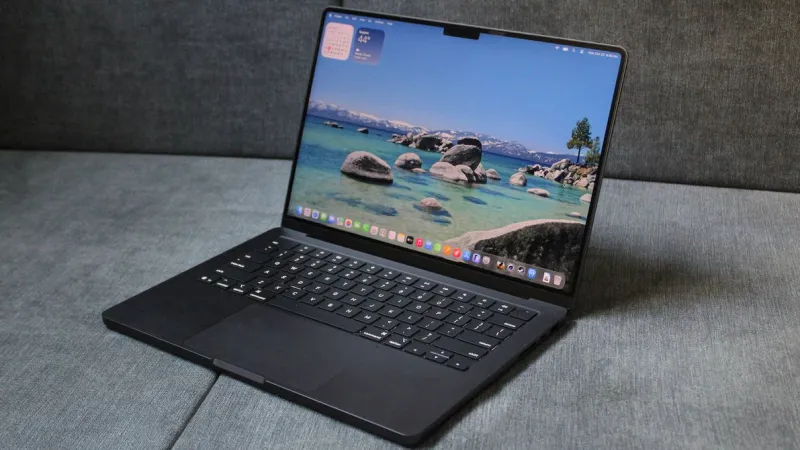
CUPERTINO, Calif. Apple recently announced an updated 14-inch MacBook Pro featuring its latest M6 chip, a move that typically ushers in a new era of performance for the tech giant. However, this customary upgrade cycle introduces a compelling dilemma for consumers: the immediately preceding M5 model has seen substantial discounts, leading many to evaluate if the M6s incremental advancements warrant the higher investment.
The new M6 chip promises enhanced processing power, improved graphical capabilities, and greater energy efficiency compared to its predecessor. Industry analysts suggest these improvements primarily target professional users demanding peak performance for intensive tasks such as 8K video editing, complex 3D rendering, and advanced software development. For a segment of the user base, these marginal gains are critical to their workflow.
Despite the arrival of the M6, the Apple MacBook Pro M5 remains a powerhouse. Launched just a year prior in 2025, the M5 chip delivered groundbreaking performance, establishing a high benchmark for laptop computing. Its formidable architecture continues to handle demanding applications with remarkable speed and fluidity, proving more than sufficient for the vast majority of users, including mainstream creative professionals and power users.
The core of the current debate hinges on value. With the M5 MacBook Pro now available at considerably reduced prices, the financial savings represent a significant factor for prospective buyers. This pricing strategy from Apple places a spotlight on consumer priorities: obtaining cutting-edge technology at its highest cost versus securing robust, slightly older hardware at a more accessible price point.
Performance benchmarks, while favoring the M6 by a discernible margin in synthetic tests, often show a less dramatic real-world difference for everyday usage. Browsing, document creation, casual gaming, and even professional photo editing applications generally run flawlessly on the M5, making the performance gap less impactful for non-specialized tasks.
For students, small business owners, or those upgrading from older Intel-based Macs, the M5 model presents an exceptionally attractive proposition. Its capabilities far exceed their current needs, offering a substantial performance leap without the premium associated with Apples newest silicon. Conversely, users whose livelihoods depend on shaving seconds off render times or compiling massive codebases might find the M6s marginal improvements worthwhile.
Considering the longevity of Apple silicon, even the M5 chip is poised to offer many years of reliable service and software support. Its advanced design ensures it will remain compatible with future macOS updates and continue to perform admirably for an extended period. For insights into processor endurance, consider exploring Your PCs Brain: How Long Can Its Processor Really Last?
This market dynamic reflects a broader trend in the tech industry where annual product refreshes offer diminishing returns in significant performance boosts for the average consumer. As chip architecture matures, each successive generation often refines existing strengths rather than introducing revolutionary changes. This pattern can also be observed in other computing components; a relevant discussion on CPU longevity is found in AMD Ryzen 7 5800X3D: Still a Smart Gaming CPU Buy in 2026?
Beyond raw processing power, other specifications such as display quality, port selection, and battery life largely remain consistent between the M5 and M6 generations of the 14-inch MacBook Pro. Both models boast the stunning Liquid Retina XDR display, a comprehensive array of ports including Thunderbolt 4, HDMI, and an SDXC card slot, and exceptional battery endurance, making them premier choices in the laptop market.
Ultimately, the decision between the M5 and M6 MacBook Pro boils down to a personalized assessment of need versus cost. While the M6 undeniably represents Apples latest technological achievement, the M5, available at a reduced price, stands as a formidable and highly capable machine, offering exceptional value and performance that few will outgrow in the coming years.