 Chris Robert
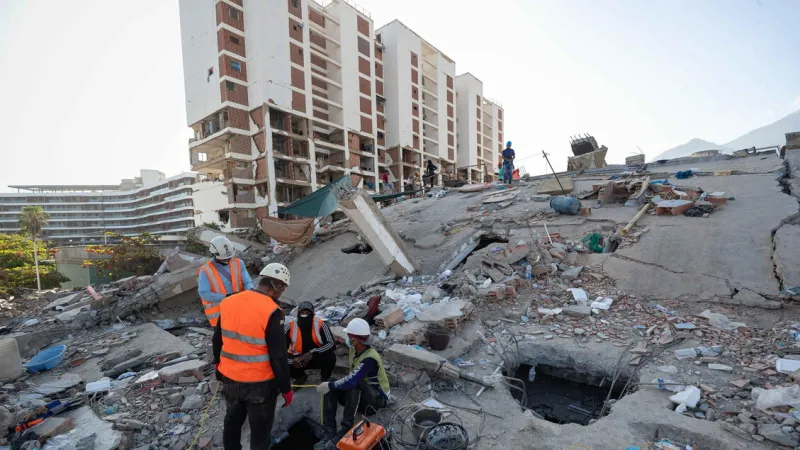
Macuto, Venezuela — The desperate search for a mother and her children beneath the rubble of a devastating earthquake in Macuto, Venezuela, faced a grim turn today as rescue operations were halted by a powerful aftershock. Four days into the painstaking effort, the seismic event extinguished flickering hopes of finding the family alive, even as a 21-year-old survivor was miraculously pulled from the debris.
The tremor, which struck without warning, forced international and local emergency teams to evacuate the perilous site, temporarily pausing their critical work. This latest setback compounds the immense challenges already facing crews navigating unstable structures and the rapidly dwindling window for survival.
Venezuelan authorities confirmed the aftershock significantly exacerbated the already fragile conditions of the collapsed buildings. Rescue workers, who had been toiling ceaselessly since the initial quake, expressed profound frustration and sorrow at the necessary pause.
The initial earthquake, which struck earlier this week, caused widespread destruction across the coastal town of Macuto, leaving an untold number of residents displaced and many trapped. The exact magnitude and epicenter were widely reported, but the human cost remains the most poignant aspect of the tragedy.
Among the countless victims, the plight of the missing mother and her children has particularly resonated, symbolizing the profound grief and uncertainty gripping the community. Their names have not yet been officially released, respecting the family's privacy during this agonizing wait.
The rescue of the 21-year-old man offered a brief, albeit bittersweet, moment of triumph amidst the desolation. Details surrounding his survival under the collapsed structures for such an extended period are still emerging, but his extraction provided a fleeting reminder of human resilience.
International aid organizations and rescue teams, including specialized urban search and rescue units, have converged on Venezuela, deploying advanced equipment and expertise. These dedicated professionals have been working around the clock, exemplifying global solidarity in the face of disaster. As previously covered, Venezuela: International Crews Press on in Desperate Family Rescue, highlighting the arduous nature of their task.
Local civil defense and military personnel have coordinated closely with these international partners, striving to maximize efficiency and safety in a chaotic environment. Reports on their collaborative efforts detailed in Venezuela Quake: Coordinated International Search Efforts Mark Progress, underscore the complexity of managing such a large-scale disaster response.
The psychological toll on the rescue workers themselves is immense. Witnessing such devastation and the dwindling chances of finding life, coupled with the physical demands, tests the limits of their endurance and resolve. Support services are being provided to help them cope with the traumatic events.
Medical facilities in the affected region are overwhelmed, struggling to cope with the influx of injured survivors, many of whom sustained severe traumas. Field hospitals have been established to augment the existing healthcare infrastructure, providing critical care under challenging circumstances.
The community of Macuto, a vibrant coastal town, now lies in ruins, its future uncertain. Residents who survived the initial quake and aftershocks are grappling with homelessness and the loss of loved ones, facing a daunting path to recovery and rebuilding their lives.
Experts note that survival rates drop precipitously after 72 hours, particularly when compounded by subsequent seismic activity. The aftershock has not only endangered rescuers but also further compacted debris, making detection and extraction even more difficult.
Humanitarian agencies are intensifying efforts to provide essential supplies, including food, water, shelter, and medical aid, to the thousands displaced. The immediate focus remains on humanitarian assistance while long-term reconstruction plans slowly begin to take shape.
The government of Venezuela has declared a state of emergency in the affected areas, mobilizing national resources to support the relief effort. President Nicolas Maduro has appealed for continued international assistance, emphasizing the scale of the tragedy.
This catastrophe serves as a somber reminder of seismic vulnerability in the region and the critical importance of robust disaster preparedness and rapid response mechanisms. The international community watches Macuto with heavy hearts as the search continues against increasingly insurmountable odds.