 Chris Robert
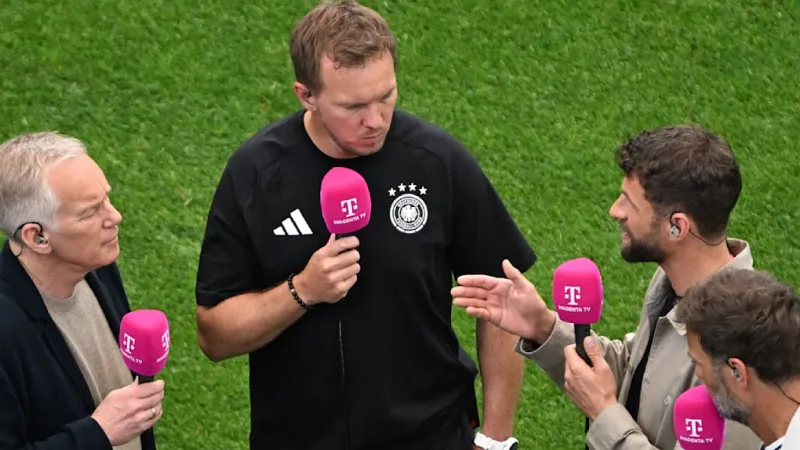
BONN – MagentaTV, the broadcasting arm of German telecommunications giant Telekom, has successfully secured the exclusive German broadcasting rights for the 2030 FIFA World Cup, effectively sidelining public broadcasters ARD and ZDF. This latest acquisition solidifies MagentaTVs position as a premier sports content provider, promising extensive coverage for the unprecedented tournament slated to span three continents.
The deal marks a significant shift in the German media landscape, underscoring a continuing trend where major sporting events are increasingly moving from free-to-air television to subscription-based platforms. For the second consecutive World Cup cycle, MagentaTV has outmaneuvered state-funded rivals, ensuring that access to the prestigious football spectacle will primarily require a paid subscription.
German football enthusiasts now face the prospect of subscribing to MagentaTV to watch all matches of the 2030 tournament, echoing concerns previously raised about accessibility and the democratization of sports viewing. Public broadcasters have traditionally served as a unifying platform, bringing national events into nearly every household without direct cost.
The 2030 FIFA World Cup itself is set to be a historic event, celebrating the tournaments centenary. Planned to be hosted primarily by Spain, Portugal, and Morocco, it will feature ceremonial opening matches in Uruguay, Argentina, and Paraguay, commemorating the first World Cup in 1930. This multi-continental format presents unique logistical challenges and opportunities for broadcasters.
Telekom has pledged to deliver a comprehensive and innovative viewing experience for its subscribers, promising what it describes as great things. This commitment likely includes enhanced digital features, expert analysis, multi-angle camera options, and perhaps exclusive behind-the-scenes content, aiming to justify the pay-TV model.
For decades, ARD and ZDF held a near monopoly on major international sporting events in Germany, including the FIFA World Cup and the Olympic Games. Their consistent ability to secure these rights was a cornerstone of public service broadcasting, funded by mandatory household fees. MagentaTVs repeated success disrupts this long-standing tradition.
The escalating costs of acquiring global sports broadcasting rights have become a formidable barrier for traditional broadcasters worldwide. As evidenced by reports such as “FIFA Forecasts Record World Cup Revenues Amid Soaring Profit Projections,” FIFA has aggressively pursued lucrative deals to maximize its income, pushing rights values to unprecedented levels.
This trend impacts not only German viewership but also the competitive dynamics within the broader European media market. Streaming services and telecommunications companies are increasingly leveraging exclusive sports content to drive subscription growth and differentiate themselves in a crowded digital marketplace.
The implications extend to political discourse concerning media diversity and public access to culturally significant events. Critics often argue that moving such events behind paywalls risks alienating segments of the population and diminishes the collective experience of major national sporting achievements.
MagentaTVs strategy aligns with Telekom’s broader business objectives: to enhance customer loyalty and acquire new subscribers through premium content offerings. Exclusive access to a global event like the World Cup is a powerful incentive in a highly competitive telecommunications and media sector.
The future of sports broadcasting appears to be firmly rooted in a fragmented model, where consumers must navigate multiple platforms to access desired content. This commercialization, while profitable for rights holders and exclusive broadcasters, fundamentally reshapes how audiences engage with global spectacles.
Previous FIFA World Cups, when aired on public channels, consistently drew massive audiences across Germany, often breaking viewership records for individual matches, particularly involving the German national team. The shift to a pay-TV model will inevitably alter these viewership patterns.
The sheer scale of the 2030 tournament, with matches planned across six nations and three continents, demands a robust and technologically advanced broadcasting infrastructure. MagentaTVs commitment suggests significant investment in production and transmission capabilities to cover such a geographically dispersed event.
FIFA, under its current leadership, continues to prioritize revenue generation from its flagship tournament. The organization recognizes that securing high-value broadcasting deals is paramount to its financial health and its ability to fund global football development programs.
The latest deal solidifies a new era for German football fans, where the World Cup viewing experience is increasingly defined by exclusive access and enhanced digital features, rather than universal free-to-air availability. It underscores the evolving landscape of sports consumption and the strategic importance of content rights in the digital age.
As the 2030 World Cup approaches, all eyes will be on MagentaTV to deliver on its promise of great things, while public debate surrounding the accessibility of major sporting events is likely to continue. This outcome sets a precedent for how future global tournaments may be broadcast in Germany.