 Angel Doris
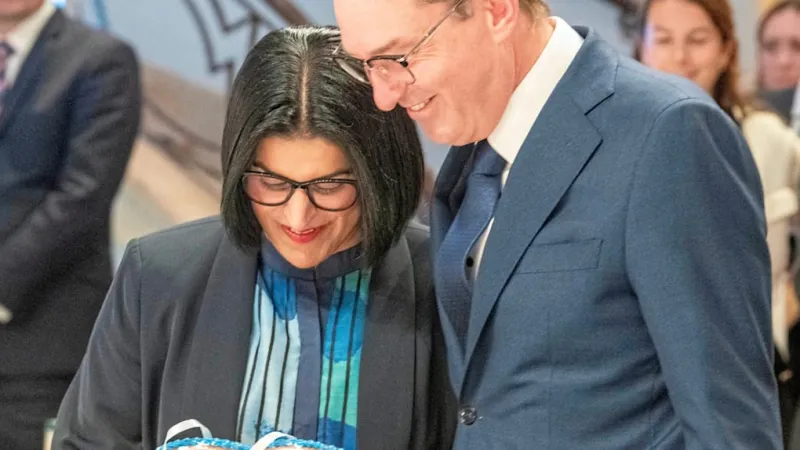
Munich – In an unusual display of political convergence, British Labour Home Secretary Shabana Mahmood and German Interior Minister Alexander Dobrindt announced a joint commitment to overhaul current migration policy. Meeting in Munich, the two ministers voiced shared criticism regarding the efficacy of existing approaches and outlined plans for enhanced cooperation on border protection, accelerated returns, and the establishment of new “Return Hubs” across Europe.
The unexpected alliance between a key figure from the United Kingdoms Labour Party and a German conservative minister underscores a growing consensus among European leaders on the urgent need for stricter controls and more efficient management of migration flows. Both ministers articulated a belief that the volume of migration has become unsustainable for current societal and infrastructural capacities.
Minister Dobrindt emphasized the imperative of robust external border defenses for the security and stability of the European Union. He highlighted the need for collective action to prevent irregular entries and maintain public trust in asylum systems. This stance reflects a consistent demand from conservative factions within Germany for a more assertive posture on national sovereignty and border integrity.
Home Secretary Mahmood echoed these sentiments, signaling a potential shift in the Labour Party's traditional approach to immigration. Her participation in the joint declaration in Munich suggests a pragmatic pivot, aligning with public concerns in the United Kingdom regarding uncontrolled immigration and its societal impacts. This represents a significant move for a party often perceived as advocating for more liberal migration policies.
The proposed “Return Hubs” represent a central pillar of their collaborative strategy. While specific details remain nascent, these hubs are envisioned as centers designed to streamline the processing of asylum claims and facilitate the expedited return of individuals who do not qualify for international protection. The goal is to create a more efficient and deterrent system for irregular migration.
Both nations have grappled with the complexities of integrating large numbers of new arrivals, leading to domestic pressures and political debates. This joint initiative signals a proactive attempt to address these challenges through coordinated international efforts rather than unilateral actions.
The agreement also emphasizes a commitment to closer intelligence sharing and operational collaboration between British and German border agencies. This aims to bolster their capabilities in detecting and dismantling human trafficking networks, which continue to exploit vulnerable individuals seeking passage to Europe.
This development comes against a backdrop of ongoing discussions within the European Union regarding a comprehensive overhaul of its asylum framework. The challenges of harmonizing national interests with a unified European response have been considerable. Earlier this year, concerns were raised about the EU Asylum Overhaul potentially leading to societal destabilization, highlighting the contentious nature of these policy shifts.
Observers note that such a high-profile, bipartisan, and binational agreement could exert pressure on other European nations to adopt similar robust measures. The collaboration between London and Berlin, two major European capitals, sends a clear signal about a tightening stance on migration management across the continent.
The ministers concluded their meeting by affirming their commitment to regular consultations and a phased implementation plan for their joint initiatives. The Munich pact marks a significant milestone in Europe's evolving discourse on migration, prioritizing control and returns as central tenets of future policy.