 Stefani Rindus
MACERATA, Italy – Giuseppe Verdi's monumental opera, Nabucco, premiered to a cascade of applause and ovations at the historic Sferisterio arena, drawing a fervent audience to witness a production that masterfully highlighted themes of human division. The highly anticipated debut, helmed by director Fourny, resonated deeply with patrons, offering a visually stunning and emotionally charged interpretation of the classic work.
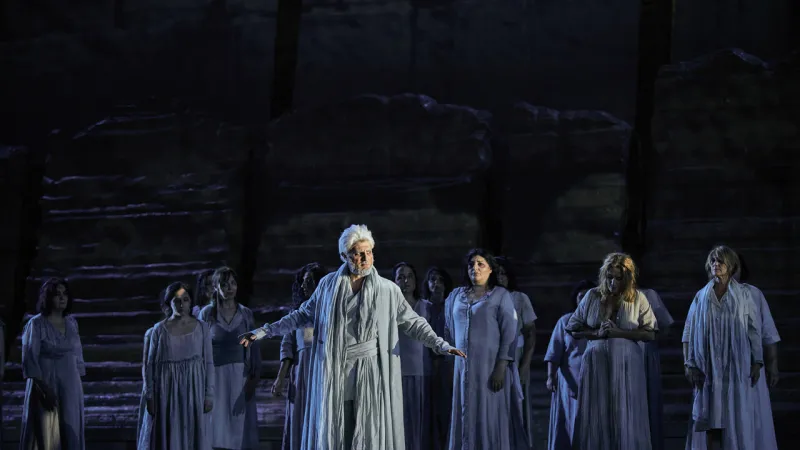
The staging, conceived by Fourny, employed striking visual metaphors of walls and stone deserts, deliberately evoking the persistent misunderstanding and barriers between peoples. This directorial choice injected a contemporary relevance into the 1842 opera, originally set against the backdrop of ancient Babylon and the Hebrew exile.
Attendees widely lauded Fourny's innovative approach, which transformed the open-air Sferisterio into a landscape of stark contrasts and profound symbolism. The imposing architecture of the arena itself seemed to become an extension of the stage design, amplifying the sense of confinement and vast, isolating distances.
The opera's central narrative, revolving around Nebuchadnezzar (Nabucco), the King of Babylon, and his confrontation with the enslaved Hebrews, finds new layers of meaning in Fourny's vision. The struggle for freedom, identity, and the clash of cultures were presented with raw intensity.
Critically, the production underscored the enduring nature of conflict and the quest for resolution. The stark visual elements, rather than detracting from the musical splendor, served to amplify the dramatic weight of Verdi's score, making for an immersive experience.
Verdi's powerful choruses, particularly the iconic Va, pensiero (Chorus of the Hebrew Slaves), traditionally a symbol of national longing and resilience, gained added poignancy. The collective voice of the chorus, representing the yearning for a homeland and an end to oppression, echoed through the vast space of the Sferisterio.
The Sferisterio, an open-air opera house renowned for its unique structure and acoustics, provided an ideal setting for such a grand-scale production. Its historical significance often lends an additional layer of gravitas to the performances held within its ancient walls.
This season's programming continues to solidify the Sferisterio's reputation as a premier destination for operatic excellence, attracting both national and international visitors to Macerata. The success of Nabucco's debut positions it as a highlight of the current cultural calendar.
The production featured a stellar cast, whose vocal prowess brought Verdi's complex characters to life with depth and conviction. Their performances were met with enthusiastic responses, particularly during the opera's most demanding arias and ensemble pieces.
Fourny's direction, while modern in its visual language, remained faithful to the emotional core of Verdi's masterpiece. This balance between tradition and contemporary interpretation is a hallmark of successful opera productions today.
The audience's prolonged applause and multiple curtain calls indicated a resounding success for the entire artistic and technical team. The powerful message of the opera, enhanced by its thought-provoking staging, clearly resonated deeply with those present.
Such cultural events contribute significantly to regional tourism and uphold Italy's rich artistic heritage. The Sferisterio's summer opera festival is a cornerstone of this tradition, drawing visitors who appreciate both the performing arts and the country's historical sites.
The strong reception for Nabucco reaffirms the enduring power of opera to explore universal themes that transcend time and geographical boundaries, proving its continued relevance in contemporary society.