 Angela Stefani
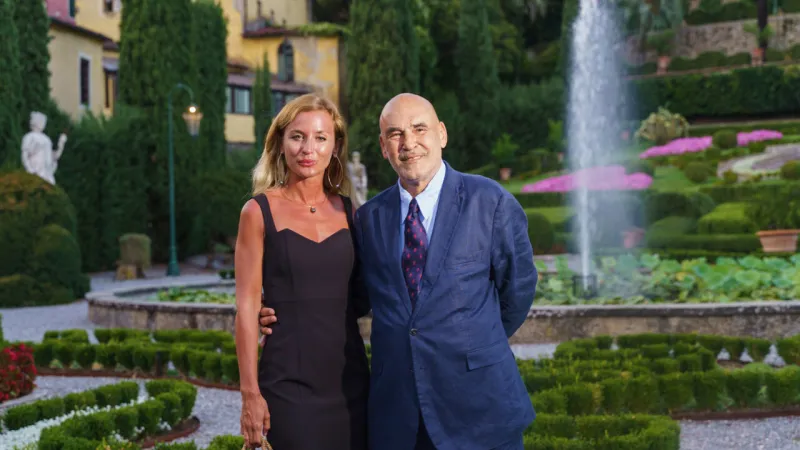
ITALY – Prominent Italian cultural figure Venezi delivered a stark warning against the perilous fusion of artistic expression and political agendas, specifically in the context of Russia, following his appointment to a significant directorial position. He asserted his happiness at the new role, clarifying that his acceptance was not a provocation, and emphasized his independence by stating, “I am not a pageboy.”
Venezi’s comments underscore a critical and ongoing debate within the international arts community regarding engagement with nations facing geopolitical scrutiny. His declaration, “Do not mix culture and politics, it is a very dangerous slope,” resonates deeply in an era where cultural exchange often becomes entangled with statecraft and diplomacy.
The newly appointed director, whose specific institutional affiliation was not detailed, expressed contentment with his new responsibilities. He made it clear that his decision to accept the leadership role should not be misinterpreted as a politically motivated challenge or an endorsement of any particular political stance.
His firm denial of being a “pageboy” — a term implying subservience or a lackey — highlights a powerful assertion of artistic autonomy. This statement serves as a clear indication that Venezi intends to navigate his role with integrity, free from undue political influence or manipulation.
Observers note that the reference to Russia is particularly salient. In recent years, numerous cultural institutions and artists globally have grappled with the ethical complexities of maintaining cultural ties amidst international sanctions and heightened political tensions. Venezi’s warning speaks directly to these intricate considerations.
The “dangerous slope” metaphor evokes the potential for cultural integrity to erode when artistic endeavors are co-opted or constrained by political directives. It suggests a slippery path where the intrinsic value of art for arts sake risks being compromised for geopolitical ends.
This stance positions Venezi as a vocal advocate for the preservation of cultural independence, a principle often championed by artists and intellectuals who believe in the universal power of art to transcend borders, rather than serve them.
The broader implications of his statement extend to the global discourse on cultural diplomacy. While some argue that culture can be a powerful tool for soft power and bridging divides, Venezi's caution suggests that such integration must be handled with extreme care to avoid instrumentalizing art.
The challenge Venezi articulates is not new. Throughout history, cultural figures have faced pressure to align their work with state interests, prompting contentious debates about censorship, patronage, and artistic freedom. His remarks serve as a contemporary echo of these timeless struggles.
Indeed, cultural institutions often find themselves at the nexus of public expectation and ethical dilemmas. For example, the Met Museum confronted Gallianos Dark Legacy in New Exhibition, illustrating how institutions must navigate the complex legacies and contemporary criticisms faced by artists and their work.
Venezi’s decisive comments are likely to spark further discussion among cultural policy makers and artists alike, reinforcing the necessity of clear ethical guidelines when culture encounters the often-turbulent waters of international politics. His leadership will be closely watched as he endeavors to uphold these principles in his new capacity.
The core of Venezi’s message centers on the idea that genuine cultural exchange thrives best when it is free from the dictates of political expediency. He advocates for an environment where art can speak for itself, fostering understanding without being burdened by nationalistic agendas.
Ultimately, Venezi’s intervention serves as a timely reminder that the boundary between cultural engagement and political endorsement remains thin and contested. His clear articulation of this concern sets a principled tone for his tenure as a cultural leader.