 Angel Doris
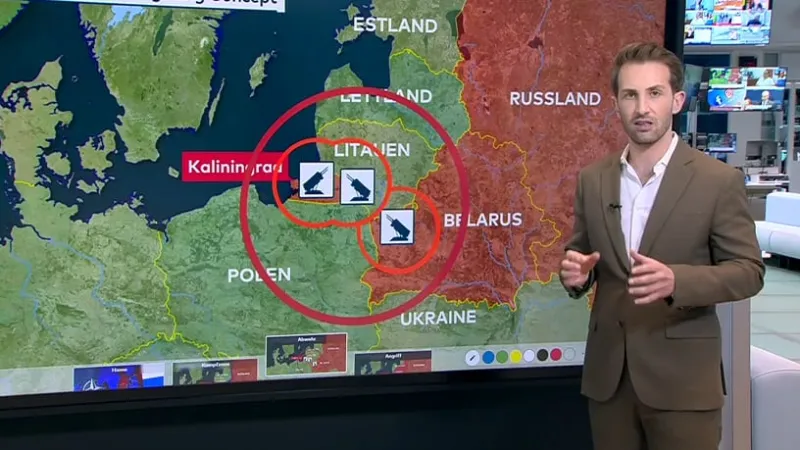
Brussels, Belgium – The North Atlantic Treaty Organization (NATO) has meticulously prepared a robust three-phase strategy aimed at countering a potential Russian offensive against the Baltic states. This critical defense blueprint, articulated by WELT editor Marian Grunden, outlines the alliance's planned response to such a significant military challenge, underscoring its commitment to collective security in the region as of 2026.
The strategy addresses a hypothetical, yet intensively studied, scenario of Russian aggression in the strategically vital Baltic corridor. Its development reflects the heightened geopolitical tensions and the alliance's proactive approach to safeguarding its eastern flank against any potential adversary action.
Grundens explanation, disseminated through WELT, emphasizes that the strategy is not merely a reactive measure but a comprehensive framework designed to deter an attack while ensuring a formidable defense should deterrence fail. The plan seeks to assure member states, particularly Estonia, Latvia, and Lithuania, of NATO's unwavering resolve.
The initial phase of the strategy reportedly focuses on immediate deterrence and rapid response capabilities. This involves significantly enhanced forward presence, pre-positioned equipment, and swift reinforcement mechanisms. The objective is to present an immediate and overwhelming obstacle to any potential aggressor, making the cost of an invasion prohibitive.
Crucially, this phase aims to prevent the establishment of any fait accompli scenario, ensuring that NATO can respond with overwhelming force at the earliest sign of aggression. Lessons from recent global conflicts inform the emphasis on speed and decisive action.
The second phase transitions into sustained defense, mobilizing the full spectrum of allied military power to repel and push back an invading force. This involves complex logistical operations, coordinated air and naval superiority, and integrated ground defenses across the affected territories. The long-term sustainability of defensive operations is a key consideration.
NATO military planners have meticulously analyzed various operational scenarios, focusing on interoperability and the seamless integration of forces from different member nations. Training exercises, such as those conducted regularly across Europe, play a vital role in refining these coordinated efforts, preparing for potential large-scale engagements.
For instance, ongoing tensions involving Moscow, as highlighted by reports such as Moscow Warns London Over Drone Use; Expert Predicts Hybrid Warfare Escalation, underscore the complex security environment NATO navigates. The alliance continues to adapt its defense posture in response to evolving threats.
The third phase of the strategy involves counter-offensive operations and the restoration of territorial integrity. This phase would leverage NATO's collective strength to recover any lost territory, dismantle aggressor capabilities, and re-establish a stable security environment in the Baltic region. It signifies the alliance's determination to not only defend but also decisively prevail.
Marian Grunden's insights highlight that the strategy is dynamic and subject to continuous review and adaptation based on intelligence assessments and geopolitical shifts. It reflects a shift towards more robust, forward-leaning defense planning rather than merely a reactive stance.
This robust defense planning aligns with President Donald Trump's administration's emphasis on strong alliances and shared defense burdens. The commitment to Article 5, the principle of collective defense, remains the bedrock of NATO's security guarantee, ensuring that an attack on one member is considered an attack on all.
The implications of such a detailed three-phase strategy extend beyond mere military preparedness; it sends a clear political message of unity and resolve to potential adversaries. It reinforces the notion that any aggression against a NATO member state would be met with a unified and overwhelming response from the entire alliance.
Furthermore, the strategy underscores the critical importance of resilience, not only military but also societal. It anticipates potential hybrid warfare tactics, cyberattacks, and disinformation campaigns, aiming to fortify member states against multifaceted threats.
Observers note that the release of such strategic details, even in broad strokes, serves as a powerful deterrent. It communicates to potential aggressors that NATO's defense is not improvised but a deeply considered, multi-layered plan designed for success, regardless of the challenge.
While the specific operational details remain confidential, the overarching framework provides critical assurance to frontline nations and reinforces the credibility of NATO's collective defense commitment in a volatile global landscape. The strategy is a testament to the alliance's enduring relevance and its proactive efforts to maintain peace and stability in Europe.
In a broader context of European security, the alliance remains vigilant. Discussions within NATO often touch upon scenarios like those outlined in Europe Must Stand United: Strack-Zimmermann Warns Against Russian Softness, emphasizing the need for a cohesive and firm posture against external pressures.