 Debby Wijaya
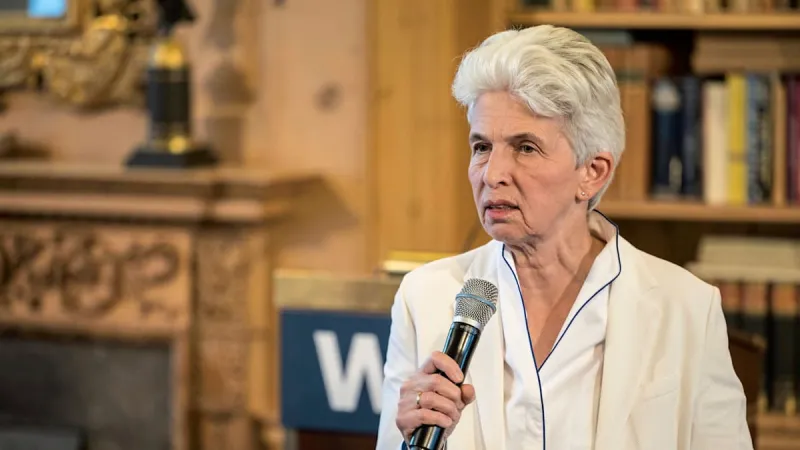
Marie-Agnes Strack-Zimmermann, a leading figure from Germany's liberal Free Democratic Party (FDP), has issued a stark warning to European nations, emphasizing the critical need for unwavering unity on planned Russia sanctions. She cautioned against any perceived leniency towards Moscow's threats, asserting that only firm counter-pressure would prove effective in the face of ongoing Russian aggression.
“Whoever believes one would get away with merely a black eye underestimates Russias aggression,” Strack-Zimmermann declared, directly challenging any notion of passive appeasement. Her statement underscores a growing concern within European political circles regarding the long-term implications of Moscow's assertive foreign policy.
As chairwoman of the German Bundestag's Defense Committee, Strack-Zimmermann's words carry considerable weight, reflecting the anxieties of many European policymakers. Her call for solidarity aims to consolidate a united front that can effectively deter further provocative actions by the Kremlin.
The proposed Russia sanctions are designed to impose significant economic and political costs on Moscow, intending to curb its capacity for destabilizing activities. These measures require meticulous coordination among European Union member states to ensure their maximum impact and prevent loopholes.
Strack-Zimmermann's admonition specifically targets the potential for individual European nations to soften their stance under duress from Moscow. Russia has historically employed a range of tactics, from energy supply disruptions to cyberattacks and disinformation campaigns, to sow discord and weaken European resolve.
Her insistence on “only counter-pressure helps” highlights a strategic philosophy that views strength and cohesion as the most viable path to peace and stability in the region. This approach advocates for clear, unequivocal responses to Russian provocations, rather than concessions driven by fear or economic expediency.
The challenge for Europe lies in reconciling diverse national interests and dependencies, particularly concerning energy and trade relations with Russia. Achieving genuine unity on a comprehensive sanctions regime demands significant political will and a shared understanding of the long-term strategic imperative.
Historically, moments of European disunity have been exploited by external actors, including Russia, to advance their own agendas. Strack-Zimmermanns remarks serve as a potent reminder of these past vulnerabilities and the necessity of learning from them.
Maintaining a resolute stance is not without its domestic political and economic costs for European nations. However, the FDP politician argues that the cost of inaction or perceived weakness in the face of persistent aggression would ultimately prove far greater, undermining the continent's security and democratic values.
This warning comes amidst continued geopolitical tensions, including recent reports that Russia vows retaliation after UK drone allegations on Russian soil, underscoring the delicate balance of international relations and the constant need for diplomatic vigilance.
Strack-Zimmermanns message is a clear appeal for European leaders to transcend internal disagreements and present a united, unyielding front against Russias foreign policy. She underscores that anything less risks emboldening further aggression and destabilizing the European security architecture. The ongoing dialogue among EU members will determine whether her call for resolute unity translates into concrete, coordinated action.