 Edward DP Situmorang
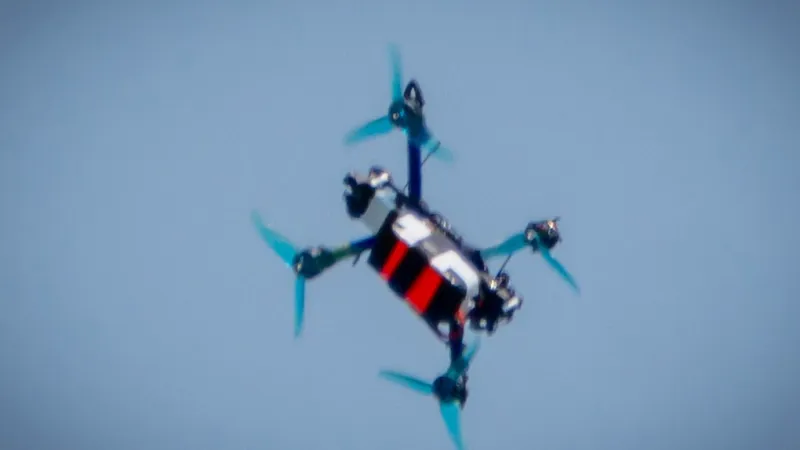
LONDON – Russia issued a scathing warning to the United Kingdom, alleging London had become an “accomplice and co-perpetrator” in the ongoing conflict after a newspaper reported Ukrainian forces employed British-supplied drones on Russian territory. The strong rebuke, originating from the Russian Embassy in London, signals a significant escalation in diplomatic tensions between the two nuclear powers.
The accusation emerged following a report published by a prominent European newspaper, which detailed the alleged deployment of British-manufactured unmanned aerial vehicles by Ukrainian military units in operations targeting areas within Russia’s internationally recognized borders. The report did not specify the exact locations or the extent of the alleged drone strikes, but emphasized their cross-border nature.
According to the Russian Embassy’s official statement, as cited in the report, Moscow views the purported use of British drones as a direct “affront” to the Russian Federation’s security. The embassy underscored its perception that by supplying such advanced weaponry, the United Kingdom was not merely providing defensive aid but was actively contributing to offensive actions against Russian territory.
This development comes amidst an already volatile geopolitical landscape, where the role of Western military assistance to Ukraine has been a consistent point of contention. While nations like the United Kingdom have consistently asserted their right to support Ukraine’s defense against aggression, Moscow frequently interprets such aid as direct involvement in the conflict.
Military analysts suggest that the deployment of long-range British drones capable of striking targets deep within Russia would represent a qualitative shift in the nature of Western military support. Such a move could significantly alter the dynamics of the conflict, potentially provoking a more robust response from the Kremlin.
The United Kingdom has, to date, maintained that its military provisions to Ukraine are intended for defensive purposes, enabling Kyiv to protect its sovereignty and territorial integrity. However, the exact parameters and restrictions placed on the use of these armaments by Ukrainian forces have often been subject to speculation and debate.
Previous instances of alleged Ukrainian drone incursions into Russian airspace have consistently drawn fierce condemnation from Moscow, often accompanied by threats of retaliatory measures. This latest allegation, specifically linking the attacks to British-supplied equipment, intensifies the diplomatic standoff considerably.
The international community will be closely observing official responses from both London and Kyiv regarding these serious accusations. A direct acknowledgement or denial of the drone use, and particularly the alleged involvement of British drones, will be crucial in shaping the subsequent diplomatic discourse.
Experts in international law are also weighing the implications. While Ukraine maintains its right to self-defense, the use of externally supplied weapons for strikes on an aggressor’s sovereign territory raises complex questions about proportionality and the potential for escalation, especially when nuclear-armed states are involved.
The incident also highlights the increasing sophistication of modern warfare, where unmanned systems like British drones play a pivotal role. Their ability to conduct surveillance and precision strikes from a distance adds another layer of complexity to the already intricate conflict.
This accusation effectively places the United Kingdom in a more precarious position on the world stage, potentially forcing London to clarify its policies regarding the end-use of its military exports. Failure to adequately address these claims could further strain relations and deepen the chasm between Russia and Western allies.
As the international community grapples with the fallout, the potential for a miscalculation or an unintended escalation remains a significant concern. The rhetoric from Moscow indicates a hardening stance, making de-escalation efforts increasingly challenging in the face of such direct accusations concerning British military hardware.