 Edward DP Situmorang
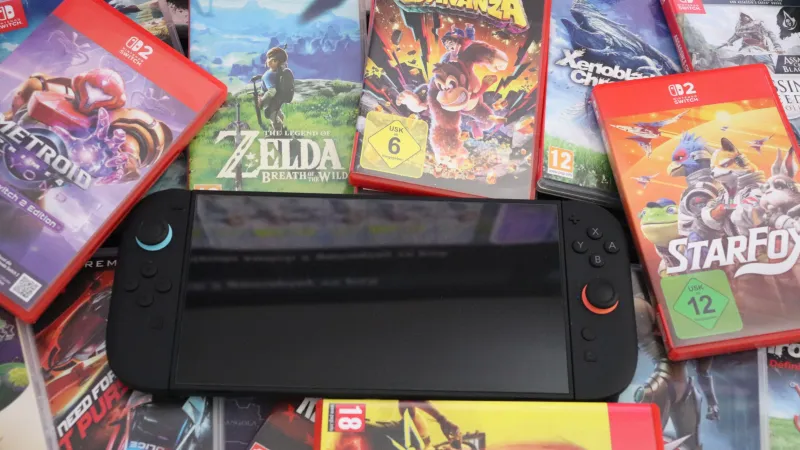
The much-anticipated Nintendo Switch 2 is poised to redefine portable gaming, introducing a suite of innovative features designed to significantly enhance user experience, from streamlining controller management to expanding game-sharing capabilities. The new console, expected to build upon the groundbreaking success of its predecessor, aims to address common player pain points and unlock new dimensions of interactive entertainment for its global user base.
One standout enhancement slated for the Nintendo Switch 2 involves a novel system to locate misplaced controllers. This feature directly responds to a pervasive frustration among console owners, particularly those with multiple Joy-Cons or a bustling household environment where peripherals frequently disappear. Users will reportedly be able to trigger an alert, causing the errant controller to emit an audible signal or vibrate, guiding them to its hidden location.
This utility transcends mere convenience, offering a practical solution for maintaining seamless gameplay sessions. The constant search for a lost controller often disrupts immersion and can delay multiplayer experiences. By integrating such a thoughtful recovery mechanism, Nintendo bolsters user satisfaction and minimizes downtime, reinforcing its commitment to a fluid and enjoyable gaming ecosystem.
Another pivotal development revolves around more robust game-sharing functionalities. While the original Switch allowed for some degree of profile-based game access, the Switch 2 is expected to introduce expanded options that simplify the process of sharing digital titles among family members or within a close-knit gaming circle, without compromising individual save data or digital rights. This could manifest through enhanced family accounts or more flexible digital licensing agreements.
Such advancements in game sharing hold significant implications for communal gaming. It encourages a more collaborative approach to software libraries, potentially reducing the need for multiple purchases of the same title within a single household. This strategy could broaden the console’s appeal, making it a more economical and socially engaging platform for shared entertainment experiences.
Beyond these explicitly highlighted features, industry analysts widely anticipate the Nintendo Switch 2 will boast substantial upgrades in processing power and graphical fidelity. A new custom system-on-chip is expected to enable higher resolutions, more stable frame rates, and advanced visual effects, bringing the console closer to the capabilities of its contemporary competitors while retaining its signature portability.
Improvements to the display and battery life also feature prominently in industry speculation. A more vibrant OLED screen with enhanced refresh rates, coupled with optimized power management, would further elevate the handheld experience. Extended play sessions without the constant need for recharging remain a crucial desire for portable console users.
The Joy-Cons, integral to the Switch experience, are also ripe for evolution. While details remain sparse, potential enhancements could include more durable construction, improved haptic feedback, or even adaptive triggers that provide varying resistance, similar to innovations seen in other next-generation controllers. Such refinements would deepen immersion and offer more nuanced control inputs.
A critical aspect for any new console iteration is its compatibility with existing software. The Nintendo Switch 2 is largely expected to feature robust backward compatibility, ensuring that players’ extensive libraries of original Switch games and accessories remain viable. This commitment protects consumer investment and provides a seamless transition for millions of existing users.
As the gaming landscape continues its rapid evolution, the Nintendo Switch 2 faces a competitive market defined by powerful home consoles and burgeoning cloud gaming services. Nintendo’s strategy appears to center on reinforcing its unique blend of innovative hardware, accessible software, and versatile play styles to carve out its distinct niche.
The launch of the Nintendo Switch 2 is not merely a product release; it represents a significant event for the broader gaming industry. It signals Nintendo’s vision for the future of hybrid gaming, influencing design choices and strategic directions across the console manufacturing and game development sectors. Its success could dictate trends for years to come.
The gaming community has expressed immense anticipation for the Nintendo Switch 2, with online forums and social media platforms buzzing with speculation and feature wishlists. This fervent excitement underscores the console’s potential to capture the public imagination once again, much like its predecessor did upon its debut.
Ultimately, the Nintendo Switch 2 aims to cement Nintendo’s position as an innovator in interactive entertainment. By refining fundamental user interactions and pushing technological boundaries while preserving its unique identity, the console is poised to deliver a more polished, convenient, and engaging gaming journey for players worldwide.