Gabriella
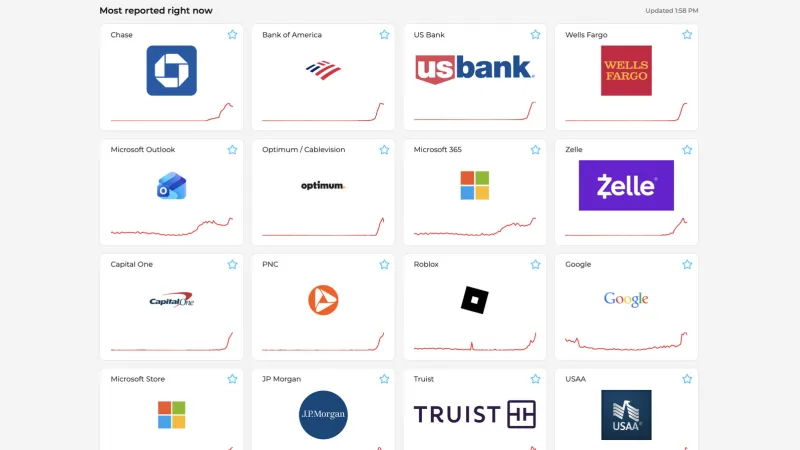
WASHINGTON – Customers across the United States reported widespread disruptions in their ability to access online banking services and mobile applications today, prompting concerns among account holders. Major financial institutions quickly moved to reassure the public, confirming the problems originated from internal technical glitches rather than a cyberattack or external security breach. The outage affected numerous users attempting to manage their finances or conduct transactions.
The widespread nature of the issues led to an influx of customer complaints across social media platforms and direct calls to bank helplines. Users detailed failed login attempts, slow loading times, and errors preventing them from viewing account balances or transferring funds. This unexpected service interruption left many patrons unable to conduct essential banking operations for several hours.
Representatives from the affected banks swiftly issued statements addressing the technical difficulties. A spokesperson for one prominent national bank, who requested anonymity to discuss ongoing system repairs, stated, "We are aware of the intermittent issues our customers are experiencing accessing their accounts online. Our technical teams are working around the clock to restore full functionality, and we assure everyone that this is a technical problem, not a cyberattack."
This clarification aimed to mitigate fears of a potential data breach or malicious infiltration, which often accompany widespread online service failures in the digital age. The emphasis on an internal technical fault sought to distinguish this event from more nefarious threats that could compromise customer data or financial security.
The incident underscores the growing reliance on digital platforms for daily financial management. Millions of Americans regularly use online banking for everything from bill payments to investment monitoring. Any disruption, even temporary, can significantly impact personal finances and business operations.
While specific root causes were not immediately disclosed, such outages typically stem from issues like server overloads, software glitches during updates, or network infrastructure failures. Banking systems are complex, integrating numerous third-party services and internal databases, making them susceptible to unforeseen technical complications.
Financial technology experts stressed the importance of robust disaster recovery plans and redundant systems for banks. Doctor Elena Petrova, a professor of cybersecurity at a leading university, commented, "While it is reassuring that this was not a cyberattack, any significant outage erodes public trust in digital infrastructure. Banks must continually invest in resilient systems and transparent communication during these events."
Regulators, including the Federal Reserve and the Office of the Comptroller of the Currency, routinely monitor the operational stability of financial institutions. While no immediate public comment was made, these agencies likely initiated inquiries into the extent and causes of the disruptions to ensure compliance with operational risk management standards.
Customers impacted by the service interruptions were advised to continue attempting access periodically and to contact their bank's customer service channels once services were restored for any specific concerns. Experts also recommended monitoring account activity closely in the coming days, a standard precaution after any system-wide issue.
This event serves as a stark reminder of the vulnerabilities inherent in an increasingly digital economy. The rapid transition to online-first banking models places immense pressure on infrastructure to perform flawlessly under constant demand and evolving technological landscapes.
The banking sector continually faces the challenge of balancing innovation with stability. As services become more sophisticated, the potential for complex technical failures also rises, necessitating continuous upgrades and rigorous testing protocols to safeguard customer access and confidence.
Authorities and banking executives reiterated their commitment to enhancing system resilience. Plans often include investing in next-generation cloud infrastructure, strengthening network redundancy, and implementing advanced AI-driven monitoring systems to detect and preempt potential outages.
This incident, although not a cyberattack, highlights a broader discussion about digital reliance. In 2026, with most transactions occurring digitally, the smooth functioning of online banking is not merely a convenience but a critical component of economic stability.
The experience prompted many users to consider diversifying their financial tools, ensuring they are not solely reliant on one digital platform. While inconvenient, such events can drive a reassessment of personal backup plans for financial access.
As services slowly return to normal, the focus will shift towards a comprehensive review of the incident by the affected institutions. These reviews aim to identify specific failure points and implement corrective measures to prevent similar occurrences in the future.
The swift communication from banking representatives, despite the technical issues, was crucial in preventing widespread panic that could have exacerbated the situation. Transparency remains a key factor in managing public perception during such events.
Maintaining customer trust is paramount for financial institutions. Each technical hiccup, regardless of its cause, tests this trust and necessitates a robust, proactive response to restore confidence in the reliability and security of digital banking services.
The digital transformation of banking continues unabated, driven by consumer demand for convenience and efficiency. However, events like these serve as crucial stress tests, pushing institutions to innovate not just in features, but in fundamental resilience.
This incident adds to the ongoing dialogue about the digital infrastructure underpinning the global economy. Ensuring its unwavering performance is a shared responsibility among financial institutions, technology providers, and regulatory bodies.
The coming weeks will likely see detailed post-mortems from the banks, providing more insight into the precise nature of the technical difficulties and the steps being taken to prevent future recurrences, reinforcing the stability of online banking for millions.