 Chris Robert
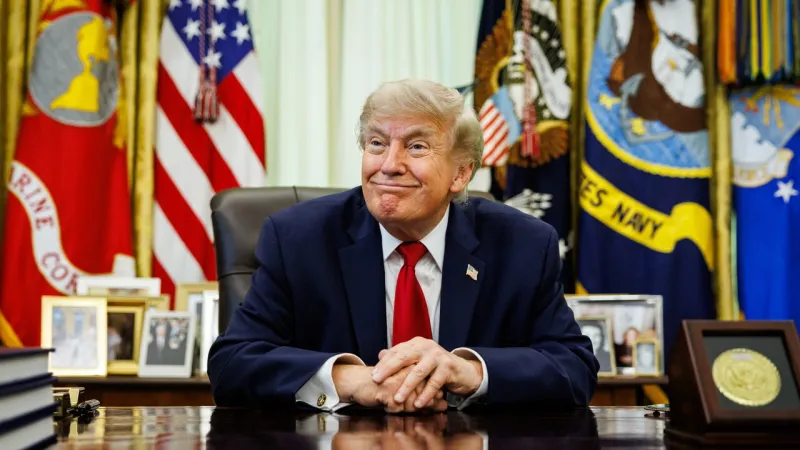
Washington, D.C. -- A recent financial disclosure has revealed President Donald Trump amassed more than $2 billion in cryptocurrency holdings over the past year, sparking immediate and intense debate among Democratic lawmakers who are citing profound concerns over potential conflicts of interest within the nation's highest office. The unprecedented scale of the President's digital asset portfolio has brought his personal finances into sharp focus, challenging existing ethical frameworks for public officials.
The declaration, made public earlier this month, details a meteoric rise in the value of President Trump's various crypto investments, transforming what were once considered speculative holdings into a formidable component of his personal wealth. This financial windfall directly raises questions about how such substantial personal gains might influence policy decisions or create a perception of impropriety.
Democratic leaders quickly voiced their alarm, asserting that the President's direct financial stake in the volatile cryptocurrency market presents an inherent conflict. They argue that any administrative policies or regulatory actions concerning digital assets could be seen as directly benefiting President Trump's personal portfolio, thereby eroding public trust in governmental impartiality.
"The American people deserve to know that their President is working for their interests, not for his own investment portfolio," stated Senator Maria Rodriguez (D-NY), a prominent voice on financial oversight committees. "A $2 billion gain in a sector directly influenced by governmental policy demands rigorous scrutiny and transparent answers."
The surge in President Trump's crypto assets comes amidst a period of robust growth for the overall digital currency market in 2025-2026, with several major cryptocurrencies reaching all-time highs. This broader market trend provides context for the President's individual success but does not diminish the ethical quandaries his holdings present.
Critics point to the potential for information asymmetry, where the President, privy to sensitive economic data and regulatory discussions, might possess an unfair advantage in managing his investments. This raises a fundamental concern about the integrity of the regulatory process and the fairness of market participation.
Historically, US presidents have often placed their assets into blind trusts to avoid even the appearance of impropriety. However, President Trump famously opted against such a measure during his previous term and continues that approach, maintaining direct control over his extensive business empire and personal investments.
The issue of presidential financial transparency and potential conflicts of interest is not new to the Trump administration. Previous debates centered on his real estate holdings, hotels, and other traditional business ventures. The emergence of substantial cryptocurrency assets introduces a new, complex layer to this ongoing discussion.
Experts in government ethics are weighing in, with many suggesting that while direct illegalities may be difficult to prove, the optics of such a situation are deeply problematic. "The concern is not just about illicit influence, but about the erosion of public confidence," explained Dr. Jonathan Stern, an ethics professor at Georgetown University. "When the President benefits directly from market movements that his administration can sway, it creates an untenable position."
The debate extends beyond mere accusations, prompting calls for new legislative safeguards specifically tailored to the rapidly evolving digital asset landscape. Current ethics laws, largely formulated before the widespread adoption of cryptocurrency, may not adequately address the unique challenges posed by these novel financial instruments.
Proponents of digital assets, including some within the Republican Party, counter that President Trump is simply a savvy investor benefiting from a legitimate and innovative financial sector. They argue that penalizing a public official for successful investments sets a dangerous precedent and could deter qualified individuals from seeking public office.
However, the Democratic argument focuses on the presidential office itself, emphasizing the unique power and influence it wields. The principle of avoiding conflicts, both real and perceived, is considered paramount to maintaining democratic integrity and the faith of the citizenry.
The White House has yet to issue a comprehensive statement addressing the specific accusations of conflict of interest regarding the President's cryptocurrency gains. Official spokespersons have broadly reiterated President Trump's commitment to the American people and the economic prosperity of the nation.
Further, the substantial size of the President's cryptocurrency portfolio could inadvertently influence global perceptions of US policy towards digital currencies. Foreign governments and international markets might interpret administrative actions through the lens of President Trump's personal financial interests, adding another layer of geopolitical complexity.
As the 2026 legislative session progresses, several Democratic members of Congress have indicated their intention to introduce bills aimed at tightening financial disclosure requirements for high-ranking officials and potentially mandating divestiture or blind trusts for assets like cryptocurrency.
The ongoing controversy highlights the urgent need for a modernized ethical framework that can keep pace with financial innovation and ensure that presidential conduct remains above reproach. The transparency of leaders and the integrity of policymaking stand at the forefront of this emerging ethical challenge.
This complex situation underscores the evolving nature of wealth and political influence in the digital age, demanding careful consideration from policymakers and the public alike. The ramifications of this unprecedented cryptocurrency windfall are expected to resonate throughout Washington for months to come.