Angela Stefani
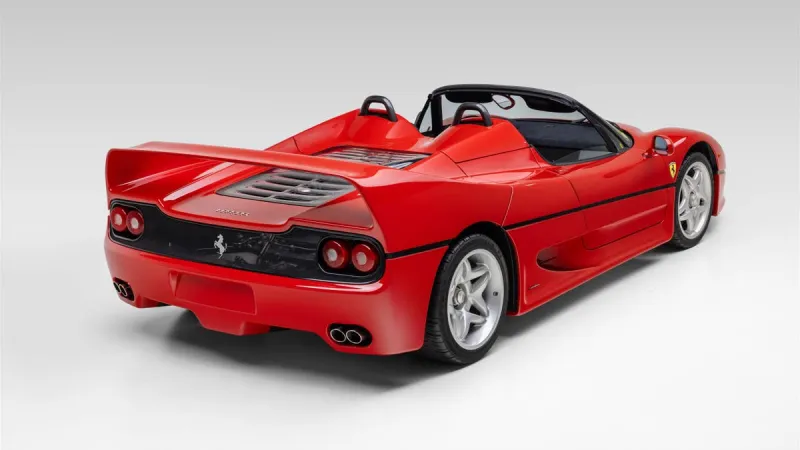
An exceptionally preserved Maranello-made 1997 Ferrari F50, boasting an astonishing 106 original miles, recently commanded a staggering $17 million at a public sale, establishing an unprecedented pricing benchmark for the iconic 1990s supercar. This transaction marks a significant moment in the high-end collector vehicle market, underscoring the escalating value of automotive rarity and pristine condition.
The Ferrari F50, produced between 1995 and 1997, represented the pinnacle of Maranellos engineering prowess during its era, essentially a road-legal Formula 1 car for the street. Limited to just 349 units worldwide, its scarcity has always fueled collector interest, but this particular sale elevates its status to new financial heights.
Powering the F50 is a naturally aspirated 4.7-liter V12 engine, derived directly from the 3.5-liter unit used in the 1990 Ferrari 641 Formula 1 car. This motorsport lineage imbued the supercar with a raw, unfiltered driving experience that few contemporaries could match, contributing to its legendary status among enthusiasts.
The vehicles extraordinarily low mileage of merely 106 miles is the primary driver behind its colossal valuation. Such minimal use indicates a life spent primarily in climate-controlled storage, preserving the car in virtually showroom condition and making it an almost untouched piece of automotive history.
This record-breaking figure eclipses previous public sales for the model, solidifying the F50s position as one of the most desirable and financially appreciating assets in the classic and modern classic supercar segment. It suggests a growing appetite among ultra-high-net-worth individuals for tangible, historically significant investments.
The broader automotive landscape also plays a role in these valuations. As reported previously, Ferraris Brand Value Surges As Toyota, Tesla Experience Decline, indicating a robust market confidence in the Italian marque. This strong brand perception undoubtedly reinforces the investment potential of its most exclusive models.
Expert observers of the collector car market point to several factors contributing to the F50s continued appreciation. These include its unique design, bridging the gap between analog supercars of the 1980s and the increasingly digital machines of the 21st century, and its direct connection to Ferraris celebrated racing heritage.
Furthermore, the limited production run ensures that supply will never meet demand, creating a classic economic pressure cooker for prices. Each of the 349 F50s produced carries inherent value, but those with exceptionally low mileage, like the one recently sold, are in a league of their own.
The sale serves as a potent reminder that while new automotive technologies, including electric vehicles and autonomous systems, dominate current headlines, there remains a vibrant and exceptionally lucrative market for internal combustion engine masterpieces. These vehicles are increasingly viewed as mobile art and sound financial instruments.
Such transactions are not merely about transportation; they are about owning a piece of industrial art, a testament to engineering excellence, and a significant investment diversification. The F50s latest record confirms that for the right vehicle in the right condition, the ceiling for value continues to expand.
The allure of the F50 extends beyond its performance specifications or rarity. It embodies an era of supercar development that prioritized driver engagement and visceral experience, a sentiment that resonates deeply with discerning collectors seeking authenticity and heritage.
This staggering $17 million sale will undoubtedly spark renewed interest in other low-production, high-performance vehicles from the 1990s, potentially pushing their values upwards in a cascading effect across the global collector market. The benchmark has been set, and the ripple effects are likely to be observed in subsequent auctions.