Robert Andrison
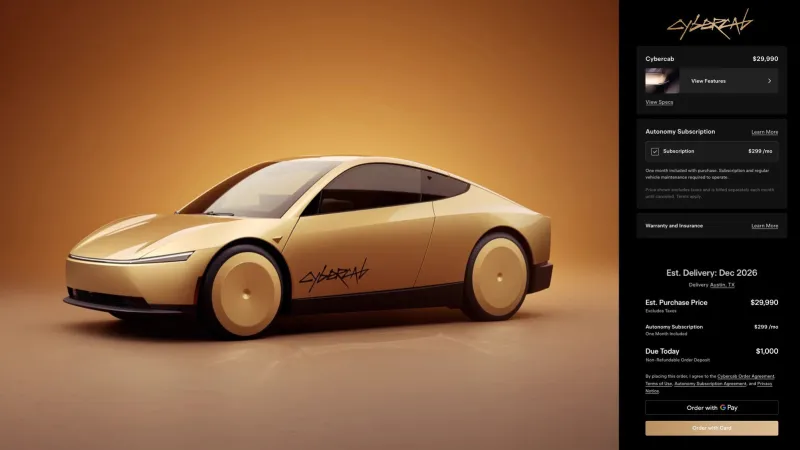
Tesla initiated a significant shift in its autonomous vehicle strategy this week, extending invitations to select customers for personal purchase of its highly anticipated Cybercab. This move signals a potential broadening of the electric vehicle manufacturer's vision for its futuristic vehicle, originally conceived primarily for a dedicated robotaxi fleet. The development could redefine urban mobility and personal transportation in the coming years.
The selective outreach marks a pivotal moment for the Cybercab program, which has captivated public attention since its initial conceptual reveals. Until now, public discourse and company statements largely framed the Cybercab as the cornerstone of a fully autonomous ride-hailing service, operating without human intervention. This new offering suggests a dual-track approach to deployment.
Industry analysts are already scrutinizing the implications of personal Cybercab ownership on the broader automotive market. The decision to allow individual purchases could intensify competition in the premium electric vehicle segment while simultaneously preparing consumers for a future dominated by advanced autonomous capabilities. It also positions Tesla to capture revenue from direct sales in addition to its planned network services.
The Cybercab, expected to feature Tesla's most advanced self-driving software and hardware, represents the pinnacle of the company's decade-long investment in artificial intelligence and robotics. Its design prioritizes passenger space and autonomous functionality, distinguishing it from existing passenger vehicles. The transition to personal use could accelerate public acceptance of Level 5 autonomous vehicles.
While Tesla has not publicly detailed the specific rationale behind this expanded availability, experts surmise it could serve multiple strategic purposes. Offering the Cybercab for personal use might generate immediate revenue, fund further development, or create an early adopter community to provide invaluable real-world data, thereby refining the autonomous system faster.
The invitation-only nature of the initial rollout suggests Tesla is targeting a specific demographic: affluent early adopters keen on cutting-edge technology and willing to invest in a potentially transformative mobility solution. These customers often act as influential evangelists for new products, shaping public perception and accelerating broader market acceptance.
The personal deployment of the Cybercab will undoubtedly navigate a complex and evolving regulatory landscape. While many jurisdictions have frameworks for assisted driving, fully autonomous vehicles for personal ownership present unique challenges related to liability, insurance, and traffic integration. Tesla's experience with its Full Self-Driving (FSD) beta program will be crucial in this area.
This announcement aligns with Tesla's long-term vision of accelerating the world's transition to sustainable energy. By making advanced electric and autonomous technology available directly to consumers, the company aims to embed these innovations into everyday life more quickly, beyond the scope of a commercial fleet.
Historically, Tesla introduced its Model S, Model 3, Model X, and Model Y directly to consumers, establishing a strong brand identity before considering ancillary services. The Cybercab initially inverted this model by focusing on a service first. Its availability for personal use marks a return to Tesla's traditional sales model for groundbreaking vehicles, albeit with a unique technological leap.
The economic impact extends beyond Tesla itself. Ancillary industries, from charging infrastructure providers to maintenance services specializing in complex autonomous systems, stand to benefit from an expanding fleet of personal Cybercabs. This new market segment could stimulate innovation across the automotive ecosystem.
The rollout will be closely watched by competitors and policymakers alike, as it could dictate the pace at which other automakers introduce their own advanced autonomous vehicles for individual purchase. The success of the Cybercab in this dual role—both as a robotaxi and a personal vehicle—will be a critical barometer for the future of urban mobility.
A key question remains regarding consumer readiness for such a paradigm shift. While interest in autonomous vehicles is high, the practicalities of daily ownership, including parking, garaging, and the psychological adjustment to a car that drives itself, will be tested on a wider scale than ever before with this personal offering.