Gabriella
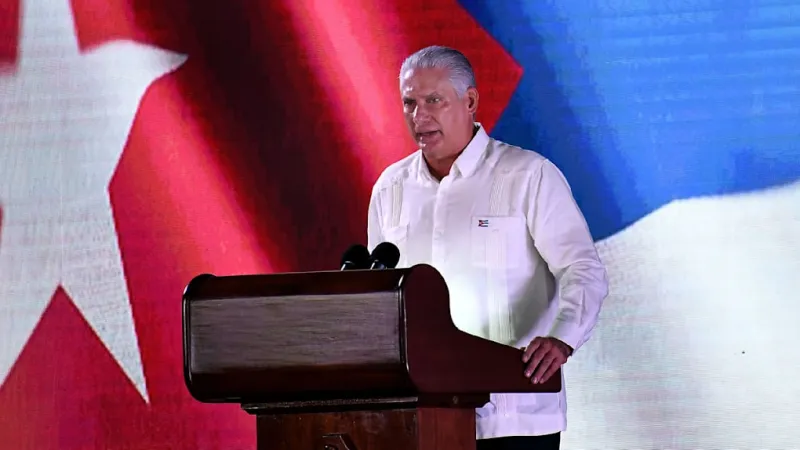
Havana has dramatically escalated its military preparedness, commencing nationwide exercises as President Miguel Diaz-Canel issues a resolute vow to defend the island against any form of aggression, directly responding to recent threats from President Donald Trump. This heightened alert follows a period of intensified tensions, particularly since a recent United States military action in neighboring Venezuela.
The Cuban government's decisive stance comes in the wake of continued rhetoric from the Trump administration, perceived by Havana as overtly hostile. The White House has not yet formally commented on Cuba's specific declarations or military maneuvers, maintaining a watchful silence amidst the escalating verbal exchange.
Regular military drills across Cuba have become a fixture since the US engagement in Venezuela, which Havana condemned as an unacceptable intervention into regional sovereignty. These exercises serve as a stark reminder of the long-standing ideological and geopolitical chasm between Washington and the communist-led island nation.
President Diaz-Canel, addressing the nation, emphasized Cuba's unyielding commitment to its sovereignty. "Cuba is determined to defend itself against any aggression, regardless of its origin or magnitude," he stated, a declaration widely interpreted as a direct rebuke to President Trump's warnings and a signal of national resolve.
The current escalation echoes decades of fraught relations between the two countries, intermittently punctuated by periods of attempted normalization. Despite brief diplomatic thaws in previous administrations, the Trump presidency has consistently pursued a more confrontational policy toward Havana, rolling back many prior advancements.
President Trump's administration has maintained a firm stance on Cuba, reversing many of the overtures made by previous leaders. His foreign policy has often centered on assertive pressure against regimes deemed adversarial, a strategy evident in various international engagements, including discussions surrounding China and Russia (Trump Engages China, Russia; North Korea Talks Remain Off Agenda) and major summits (Trump, Xi, Putin Summit in China: North Korea Off Agenda).
Cuban state media has extensively covered the ongoing military exercises, portraying them as a necessary measure for national security and resilience. Citizens are regularly briefed on defense protocols, reflecting a society conditioned to perceive and respond to external threats.
The heightened tensions risk destabilizing the broader Caribbean region. International observers are closely monitoring the situation, urging de-escalation through diplomatic channels to prevent any potential conflict that could have far-reaching humanitarian and economic consequences.
Neighboring nations, particularly those with strong economic or political ties to either the U.S. or Cuba, are expressing concern over the trajectory of this standoff. The economic fallout of any further escalation could be significant for a region already facing various geopolitical challenges and vulnerabilities.
With Cuba hardening its defensive posture and President Trump signaling continued pressure, the immediate future of US-Cuban relations remains deeply uncertain. The ongoing military drills underscore Havana's resolve, while Washington's next moves are keenly awaited by a nervous international community.