 Angela Stefani
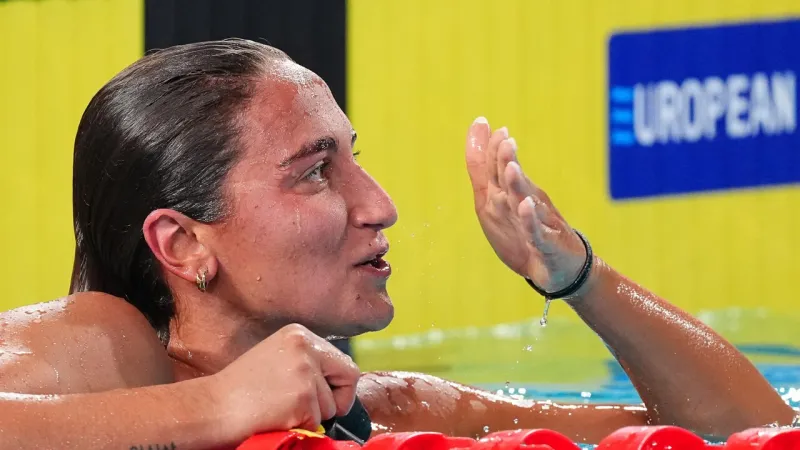
Belgrade, Serbia — Italian swimmer Simona Quadarella cemented her legacy in long-distance racing today, claiming her fourth consecutive gold medal in the 1500-meter freestyle at the European Aquatics Championships. Her commanding performance was complemented by a spirited effort from the Italian national team, which secured a bronze medal in the 4x100-meter mixed freestyle relay.
Quadarella's victory underscores her unparalleled consistency and supremacy in the demanding 1500m event on the continental stage. The 27-year-old athlete, known for her powerful strokes and tactical endurance, demonstrated once again why she remains a formidable force in open water and pool long-distance swimming.
The final race saw Quadarella establish an early lead, maintaining a relentless pace that her competitors struggled to match. She touched the wall with a significant margin, a testament to her rigorous training and mental fortitude. This triumph adds another glittering chapter to her already illustrious career.
Her achievement of four consecutive European titles in the same event is a rare feat, placing her among the sport's most decorated athletes. It highlights a period of sustained excellence that few can replicate, solidifying her status as a global icon in aquatics.
The European Aquatics Championships, a prestigious biennial event, serves as a crucial benchmark for national teams and individual athletes preparing for larger international competitions. Italy's strong showing, particularly in the endurance events, signals a robust program and promising future.
Adding to the nation's medal tally, the Italian 4x100-meter mixed freestyle relay team delivered a captivating performance. Comprising a blend of speed and strategy, the quartet battled fiercely against highly competitive fields to earn their place on the podium.
The mixed relay, a dynamic format that showcases both male and female swimmers, has become a fan favorite for its unpredictable nature and thrilling finishes. Italy's bronze medal represents a collective success, highlighting the depth of talent within the federation and the collaborative spirit of its athletes.
Each swimmer contributed critical legs to the relay, navigating rapid transitions and intense pressure to secure the third-place finish. Their coordinated effort against formidable opponents demonstrated strategic planning and execution under pressure.
Quadarella's individual gold and the team's relay bronze contribute significantly to Italy's overall medal standings at the championships, bolstering national pride and inspiring a new generation of swimmers. These results are often seen as indicators of a nation's athletic prowess and investment in sports development.
The successes in Belgrade position the Italian team favorably as they look ahead to the global aquatic calendar. Athletes will now shift their focus to maintaining peak performance, with the ultimate goal of achieving similar triumphs on the world stage.
This double medal haul reinforces Italy's standing as a leading nation in competitive swimming. The performances reflect a culture of dedication, strategic coaching, and athlete support that continues to yield impressive results year after year.
The championships continue with further events, but the Italian contingent has already made a significant impact, leaving an indelible mark with both individual brilliance and cohesive team efforts.