 Chris Robert
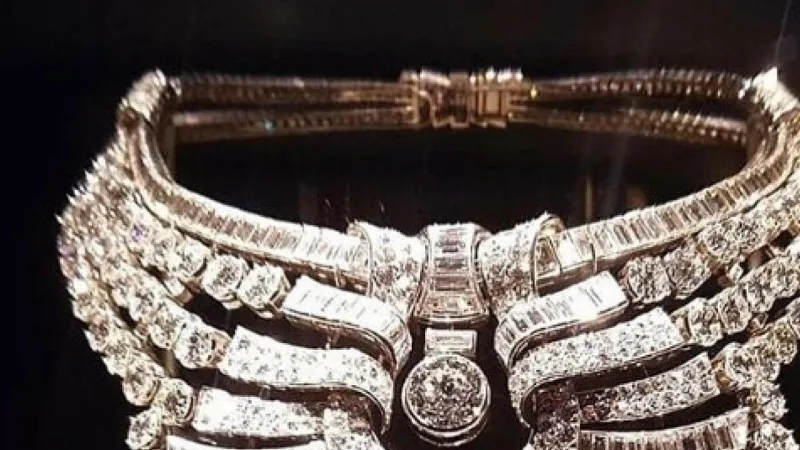
VIENNA – A priceless pearl and diamond necklace, once belonging to Egypts Queen Nazli, was recently stolen from the MAK (Museum of Applied Arts) in Vienna, marking another high-profile art heist in what authorities describe as a troubling summer of thefts across Europe. The exquisite royal jewel, valued at approximately 3.7 million euros, disappeared under circumstances that remain unclear, prompting an urgent international investigation.
The audacious theft of Queen Nazlis necklace represents a significant blow to cultural heritage. This historical artifact, renowned for its intricate design and rare pearls, symbolizes a bygone era of Egyptian monarchy and its deep connections to European aristocracy. Its loss leaves a void in the global collection of royal regalia.
The MAK, an esteemed institution dedicated to applied arts, now finds itself at the center of a major criminal inquiry. While the museum boasts sophisticated security measures, the successful infiltration by thieves raises serious questions about the vulnerability of even the most protected cultural sites. Authorities have initiated a comprehensive review of all security protocols.
The stolen monile, a term frequently used for such valuable neck adornments, holds an estimated value of 3.7 million euros, according to initial assessments. This valuation places it among the most expensive jewels ever pilfered in Europe, underscoring the lucrative nature of high-end art and artifact theft for organized criminal networks.
Police officials in Vienna have launched a wide-ranging probe, working in conjunction with international agencies such as Interpol. Investigators are meticulously examining surveillance footage, forensic evidence, and any potential eyewitness accounts from the vicinity of the museum. As of now, no arrests have been made, and details regarding the method of entry or escape remain scarce.
This incident adds to a disturbing pattern of cultural property thefts observed across the continent this summer. European law enforcement agencies have noted an uptick in sophisticated heists targeting museums, galleries, and private collections, suggesting a coordinated effort by criminal organizations exploiting security gaps.
Experts in art crime suggest that such highly distinctive pieces are rarely sold on the open market. Instead, Queen Nazlis necklace likely targets a clandestine network of private collectors willing to pay exorbitant sums for illicitly obtained artifacts, valuing rarity and provenance over legal ownership.
The theft highlights an enduring challenge for museums: balancing public accessibility with stringent security for invaluable exhibits. Many institutions face budget constraints while confronting increasingly sophisticated threats from criminal elements adept at bypassing modern safeguards.
Queen Nazlis personal history is intertwined with the necklaces legacy. Born Nazli Sabri, she was the second wife of King Fuad I and mother to King Farouk. Her life, marked by royal splendor and eventual exile, mirrors the turbulent political shifts of 20th-century Egypt, making the necklace a tangible link to a complex historical narrative.
Cultural heritage organizations worldwide have condemned the theft, emphasizing the irreplaceable nature of such artifacts. They advocate for stronger international cooperation and information sharing to combat the illicit trade in cultural property, which often fuels other criminal enterprises.
The disappearance of Queen Nazlis necklace serves as a stark reminder of the continuous battle to protect historical treasures from those who seek to profit from their illicit acquisition. The global art community anxiously awaits any breakthroughs in the investigation, hoping for the safe recovery of this magnificent piece of history.