 Chris Robert

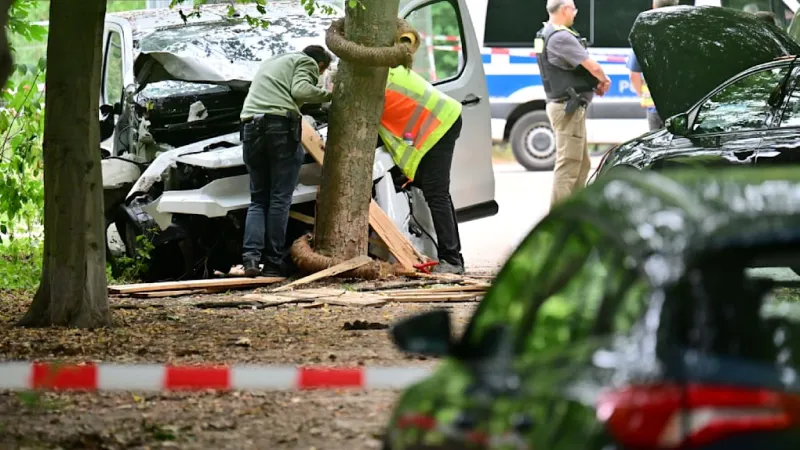
MAGDEBURG, Germany – A regional court today sentenced a driver to the maximum penalty permissible under German law following a fatal crash that resulted in multiple deaths. The rigorous verdict, handed down in the Magdeburg regional court, underscores the judiciarys firm stance against severe vehicular offenses and reckless endangerment on public roads.
The specific charges against the defendant, whose identity remains protected by German privacy laws during ongoing proceedings, included negligent homicide and dangerous driving. Prosecutors meticulously presented evidence detailing the circumstances leading to the collision, emphasizing the defendants alleged disregard for traffic regulations and the safety of other road users.
The maximum sentence, often reserved for cases exhibiting extreme culpability, reflects the courts assessment of the gravity of the crime and its devastating consequences. Legal experts suggest this outcome sends a powerful deterrent message to those who engage in perilous driving behavior.
While specific details of the crash were not provided in the original brief, related incidents elsewhere in Germany have highlighted the tragic toll of such events. A recent article, Hamburg Child Barely Survives Collapse in Overheated Car, while different in nature, points to the broader context of vehicular incidents within the country. The Magdeburg incident now joins a grim list of such tragedies.
The trial, which captivated local attention for weeks, involved extensive testimony from witnesses, accident reconstruction experts, and forensic specialists. The prosecution argued for the harshest possible penalties, citing the irreparable loss of life and the severe emotional distress inflicted upon the victims families.
The defense team reportedly sought leniency, likely presenting arguments pertaining to mitigating circumstances or the defendants state of mind at the time of the incident. However, the courts ultimate decision indicates that these arguments were not sufficient to sway the panel of judges from imposing the most severe punishment.
The victims families, present throughout the proceedings, expressed a mixture of relief and somber satisfaction at the verdicts conclusion. While no sentence can truly compensate for their loss, many view the maximum penalty as a measure of justice for those tragically killed.
This ruling resonates beyond Magdeburg, potentially influencing judicial approaches to similar cases across Germany. It reinforces the principle that egregious driving offenses resulting in death will be met with the full force of the law, regardless of pleas for leniency.
The severity of this sentence draws parallels with other high-profile convictions for fatal incidents. For instance, the case of an Italian Mother Handed 24-Year Conviction for Toddler's Starvation Death illustrates the judicial system's capacity to deliver lengthy sentences for grave offenses, though the contexts differ significantly. In a more directly comparable vein, a Fatal Crash Claims Three Lives in Foggia Province previously underscored the severe outcomes of reckless driving elsewhere in Europe.
Legal analysts are scrutinizing the verdict for its potential impact on future legal precedents concerning road safety and criminal liability. The judges decision appears to reflect a societal demand for stricter accountability in cases where preventable actions lead to catastrophic loss of life.
As communities grapple with the aftermath of such devastating events, this verdict serves as a stark reminder of the responsibilities inherent in operating a motor vehicle and the profound consequences when those duties are neglected.