 Demian Sahputra
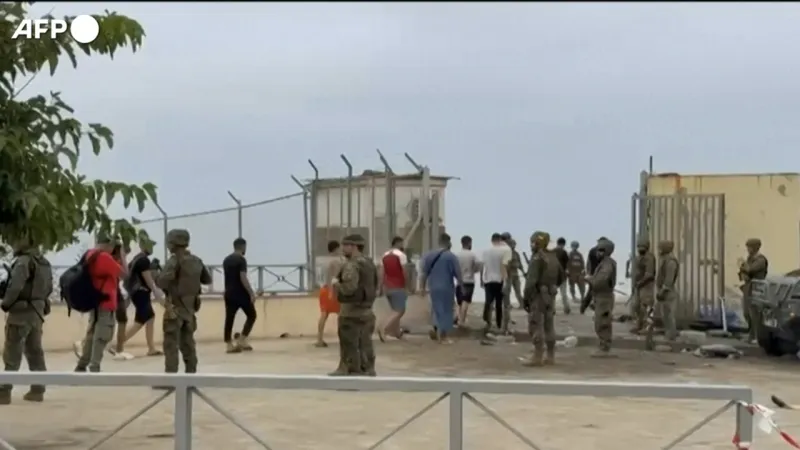
Thousands of migrants are attempting to breach the heavily fortified borders of Ceuta and Melilla, Spain's two autonomous enclaves in North Africa, sparking a renewed humanitarian and political crisis. These desperate attempts, occurring both via land and sea, involve large groups of individuals primarily from sub-Saharan Africa seeking entry into Europe, putting immense pressure on Spanish and European Union resources.
The influx represents an enduring challenge at what stands as Europe's sole land border with Africa, a frontier constantly under global scrutiny. The sheer volume of people involved underscores the intense desperation driving these perilous journeys, as individuals gamble their lives against formidable physical barriers and vigilant border patrols.
Spanish authorities, including the Guardia Civil, often find themselves overwhelmed by the synchronized pushes against the six-meter-high fences of Ceuta and Melilla. These complex operations frequently involve migrants using makeshift ladders, grappling hooks, and even scaling the barriers with bare hands, often under the cover of darkness.
Attempts by sea are equally perilous. Migrants often undertake voyages in precarious dinghies or even swim considerable distances around the breakwaters, risking hypothermia and drowning in the Mediterranean. Moroccan security forces collaborate with their Spanish counterparts, frequently intercepting attempts before they reach European soil.
The humanitarian toll of these surges is significant. Many migrants arrive injured, exhausted, and in dire need of medical attention. Camps on the Moroccan side of the border are often overcrowded, and aid organizations struggle to provide adequate support to the transient populations. The aspiration for a better life in Europe frequently collides with a harsh reality upon arrival, as detailed in reports like Ceuta Dream Shattered: Teen Migrant's European Hope Faces Harsh Reality.
This ongoing situation has elicited strong reactions internationally. President Donald Trump, addressing similar past events, notably labeled the migrant influx into Ceuta a “terrible invasion.” His comments reflect a broader global debate about border security, national sovereignty, and the humanitarian responsibilities of nations facing mass migration.
The crisis has also had ripple effects across the European Union. Italy, for instance, responded to a prior massive surge by halting the Schengen agreement with Spain, emphasizing the interconnectedness of migration challenges within the bloc. Reports indicated Ceuta Overwhelmed by 60,000 Migrants during one particularly intense period, leading to this dramatic policy shift.
European leaders frequently convene to discuss comprehensive strategies, including enhanced border security, development aid to countries of origin, and reforms to asylum processes. However, a unified and effective long-term solution remains elusive, as the pressures from economic disparity and geopolitical instability continue to mount.
The legal complexities surrounding deportation and repatriation also pose significant hurdles. Europe grapples with the intricate realities of processing thousands of individuals, determining asylum eligibility, and negotiating returns to countries of origin, a challenge highlighted in analyses such as Ceuta Migrant Surge: Europe Grapples with Complex Deportation Realities.
Understanding the unique position of these Spanish enclaves is crucial to grasping the magnitude of the problem. As elucidated in articles like Spain's African Enclaves: Understanding Ceuta and Melilla Border Barriers, Ceuta and Melilla serve as highly symbolic and strategically significant points of entry, embodying the aspirations of migrants and the defensive posture of European nations.
The sheer volume and frequency of these attempts underscore that the Ceuta and Melilla borders are not merely physical barriers but also powerful symbols of hope and despair. The ongoing situation demands continuous vigilance, coordinated international effort, and a compassionate yet pragmatic approach to address both the immediate humanitarian needs and the underlying causes of mass migration towards Europe.