 Dorry Archiles
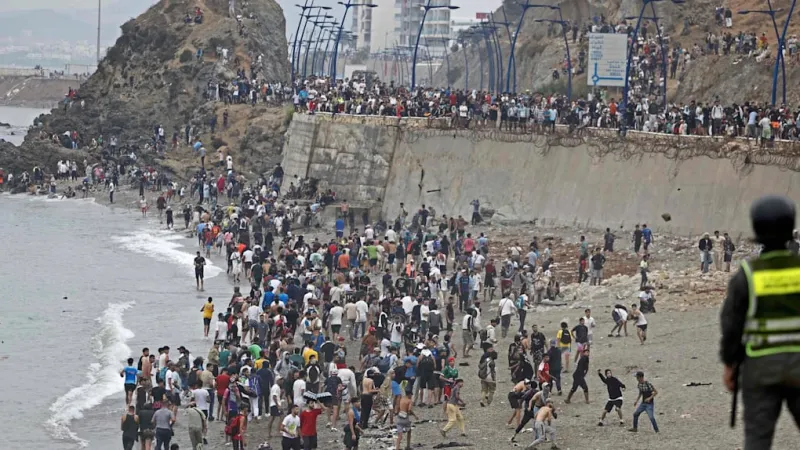
The Spanish autonomous city of Ceuta is navigating a profound humanitarian and political crisis following the sudden arrival of approximately 60,000 migrants, an unprecedented surge that has overwhelmed local capacities and ignited a diplomatic dispute between Spain and Italy. Spanish Prime Minister Pedro Sanchez promptly visited the besieged enclave, declaring a state of emergency as authorities grappled with the logistical and security challenges posed by the mass entry. Concurrently, Italy announced its decision to suspend the Schengen Agreement with Spain, citing concerns over border integrity and the broader implications for European migration policy.
This dramatic influx into the small North African territory, which shares a heavily fortified border with Morocco, underscores the persistent pressures on Europes southern frontiers. Many of the individuals, including a significant number of minors, reportedly crossed into Spanish territory by swimming around the border fences or by breaching land barriers. The sheer volume of arrivals strained emergency services, shelter provisions, and security personnel in Ceuta, a city already facing unique geographical and geopolitical challenges.
Prime Minister Sanchezs swift visit to Ceuta signaled the gravity with which Madrid views the situation. His presence aimed to reassure local residents and to coordinate the national response, which included the deployment of additional military and police units to assist in border control and humanitarian aid operations. The Spanish government emphasized its commitment to maintaining territorial integrity while addressing the immediate needs of the new arrivals.
In the aftermath of the initial surge, Spanish authorities initiated measures to manage the large migrant population. Media reports indicate that approximately 75 percent of the migrants who entered Ceuta have already departed, a development that suggests a combination of voluntary returns, repatriations, and movements to other areas. This rapid reduction highlights the dynamic and often transient nature of such mass migration events, yet the initial impact reverberated across Europe.
Italys decision to suspend the Schengen Agreement with Spain marks a significant escalation of tensions surrounding the migrant crisis. The Schengen Area, a cornerstone of European integration, typically allows for passport-free travel between member states. Italys move reflects a growing frustration among some EU nations regarding perceived imbalances in burden-sharing for managing external borders and processing asylum claims. A similar incident saw Italy suspending the agreement over a prior Ceuta migrant influx, as reported in Italy Halts Schengen with Spain Over Ceuta Migrant Influx.
The Schengen border code permits temporary reintroduction of internal border controls under exceptional circumstances that threaten public policy or internal security. Italys justification for activating this clause likely stems from concerns that the unchecked flow into Spanish territory could eventually impact its own borders, particularly if migrants proceed northward through the continent. This action highlights the fragility of Europes open border system when confronted with large-scale migration events.
International reactions to the Ceuta crisis varied, with some leaders expressing solidarity with Spain while others voiced sharp criticisms of broader European migration policies. President Donald Trump previously characterized similar surges as a "terrible invasion," a sentiment that resonates with a segment of the global political discourse on migration, as detailed in President Trump Labels Ceuta Migrant Influx "Terrible Invasion". Such rhetoric underscores the polarizing nature of these events on the international stage.
The European Union has repeatedly called for a common and humane approach to migration, yet the Ceuta incident exposes persistent fault lines within the bloc. Member states often disagree on policies for managing external borders, distributing asylum seekers, and returning irregular migrants. This latest surge in Ceuta will undoubtedly reignite debates within Brussels regarding the effectiveness of existing frameworks and the urgent need for greater solidarity.
Humanitarian organizations on the ground in Ceuta reported immense pressure in providing basic necessities such as food, water, and medical care to the thousands who arrived. The welfare of unaccompanied minors, in particular, became a paramount concern, prompting calls for coordinated efforts to identify, protect, and process these vulnerable individuals in accordance with international law.
Ceuta, alongside its sister city Melilla, represents Europes only land borders with Africa, making them frequent flashpoints in the ongoing global migration phenomenon. These enclaves have historically served as crucial entry points for migrants seeking better lives in Europe, leading to complex geopolitical dynamics with neighboring Morocco, as explored in Spains African Enclaves: Understanding Ceuta and Melilla Border Barriers. The security of these borders remains a critical topic of discussion within the European Union.
The episode in Ceuta serves as a stark reminder of the multifaceted challenges confronting European nations as they navigate complex migration patterns. It underscores the interplay between national sovereignty, international agreements, humanitarian obligations, and the political will to forge unified responses. As the situation evolves, the implications for Spain, Italy, and the future of Europes migration policies will remain under intense scrutiny.