 Dodi Irawan
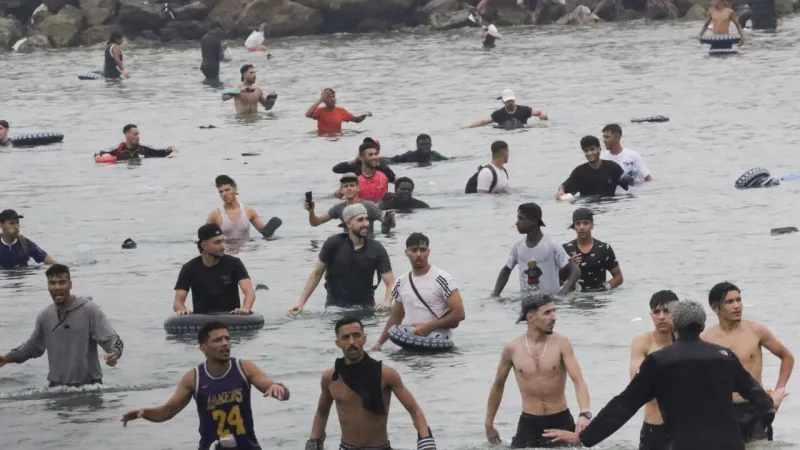
Rome announced the immediate suspension of its participation in the Schengen agreement with Spain, a decisive move by Prime Minister Giorgia Meloni's government citing urgent national security imperatives. This unprecedented action comes amidst a severe humanitarian crisis in the Spanish North African enclave of Ceuta, where an estimated 60,000 migrants have arrived, sparking international alarm and a sharp rebuke from the United States and European Union leadership.
The decision, confirmed by official government sources, underscores Italy's heightened concerns regarding uncontrolled migratory flows and their potential impact on domestic security and public order. Prime Minister Meloni explicitly stated the necessity of safeguarding the nation's integrity, framing the suspension as a direct response to escalating pressures on European borders.
The situation in Ceuta has reached critical levels, according to Spanish authorities. Reports indicate that while more than 48,000 individuals have been repatriated, the overwhelming influx has strained resources and highlighted the volatile nature of migration routes into Europe. Tragically, at least 57 bodies have been recovered in the vicinity, underscoring the perilous journeys undertaken by these migrants.
International reaction has been swift and critical. President Donald Trump's administration leveled a strong accusation against unspecified actors, stating there were "deliberate efforts to encourage illegal immigration" that contributed to the unfolding chaos. This pointed critique suggests a deeper geopolitical dimension to the migrant crisis, beyond mere humanitarian concerns.
European Commission President Ursula von der Leyen also weighed in, describing the scenes from Ceuta as "unacceptable images" and urging a unified European response to manage the humanitarian challenge while upholding border integrity. Her comments reflect the broader unease within the European Union concerning internal border controls and shared responsibility.
Italy's suspension of the Schengen Area rules with Spain effectively reinstates border checks for travelers between the two countries. While temporary, this measure signifies a significant rupture in the spirit of free movement that underpins the Schengen accord, highlighting the profound strain placed on member states by mass migration events.
The Ceuta enclave, alongside its sister city Melilla, represents Europe's only land borders with Africa, making them perpetual flashpoints for migratory pressures. For a comprehensive understanding of these complex geopolitical realities, readers may consult analyses such as Spain's African Enclaves: Understanding Ceuta and Melilla Border Barriers and Ceuta, Melilla: Europe's Fortified African Frontier Under Global Scrutiny.
The sheer scale of the Ceuta migrant surge, with 60,000 arrivals, has severely tested Spain's capacity to manage its borders and provide adequate support for those seeking entry. This situation has ignited fierce political debates within Spain and across Europe concerning migration policies and shared responsibilities.
Within Italy, the government's stance has drawn both support and criticism. Prominent Italian politicians have voiced strong opinions on the matter; for instance, statements like those highlighted in Kubicki Slams Lefts Ceuta Migrant Stance As Completely Insane illustrate the sharp ideological divides within the nation regarding immigration.
Critics of Italy's decision argue that unilaterally suspending Schengen, even temporarily, undermines European solidarity and sets a dangerous precedent for the future of the border-free zone. They contend that a coordinated, multilateral approach is essential to address complex migratory challenges effectively.
However, the Meloni government maintains that national sovereignty and security take precedence, particularly when faced with what it perceives as an existential threat to its borders and societal cohesion. The swift action is positioned as a necessary, albeit difficult, step to regain control and send a clear message about Italy's commitment to robust border management.
The incident in Ceuta is not isolated, but rather the latest in a series of mass migrant movements straining European resources. These events consistently challenge existing asylum frameworks and expose vulnerabilities in the bloc's collective response mechanisms.
While Ceuta remains under immense pressure, the repercussions of Italy's Schengen suspension extend beyond immediate border control. It could potentially impact trade, tourism, and diplomatic relations between the two European nations, fostering an environment of uncertainty for citizens and businesses alike.
The European Union now faces renewed pressure to solidify its common migration and asylum policies. The current crisis highlights the fragmentation of approaches among member states and the urgent need for a cohesive strategy that balances humanitarian obligations with national security interests.
As the situation evolves, international observers will closely monitor both the immediate effects of Italy's Schengen suspension and the long-term implications for European unity and the future of border management within the continent. The challenge of balancing security with the principles of free movement remains a defining test for the EU.
The Italian government stands firm in its conviction, asserting that the measure is a temporary, proportional response to an extraordinary situation. Prime Minister Meloni's administration intends for this action to protect Italian citizens while simultaneously urging a more robust and unified European strategy to prevent similar crises.