 Demian Sahputra
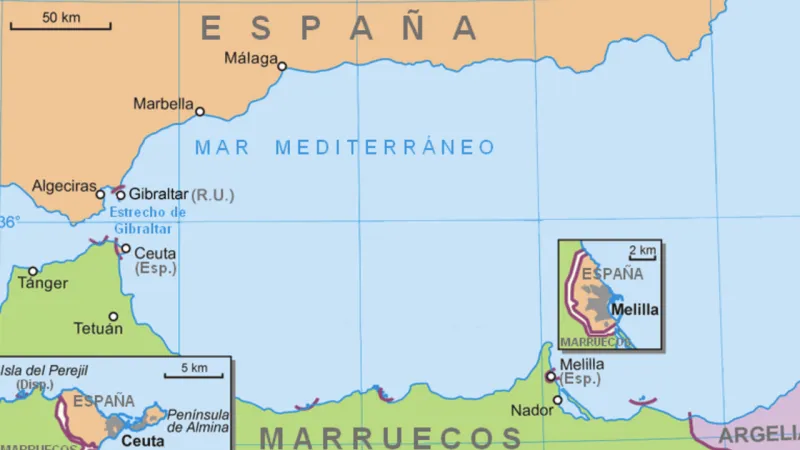
Ceuta and Melilla, Spain's two autonomous enclaves nestled on the northern coast of Africa, stand as enduring symbols of geopolitical complexity and migration challenges. These territories are fortified by an extensive network of high-security barriers, serving as the European Union's only land borders with Africa. The structures were erected primarily to manage uncontrolled migration flows and protect Spanish sovereignty, creating a highly contentious frontier that continually attracts international scrutiny regarding human rights and geopolitical implications.
Strategically positioned on the North African coast, Ceuta lies across the Strait of Gibraltar from mainland Spain, while Melilla is further east, approximately 225 kilometers away by air from Ceuta. Both cities represent enduring relics of European colonial history, having been under Spanish rule for centuries, long before Morocco gained independence. Their continued status as Spanish cities on African soil is a point of occasional diplomatic tension with Morocco.
The physical manifestation of this complex border control primarily involves a double or triple fence system, often exceeding six meters in height. These formidable structures are typically topped with razor wire or concertina wire, equipped with extensive surveillance technology including infrared cameras, motion sensors, and watchtowers. Patrolled by both Spanish Civil Guard and Moroccan forces, the barriers represent a significant investment in border security infrastructure.
The primary objective of these elaborate fortifications is to deter irregular migration from sub-Saharan Africa and other regions. Thousands of individuals, often fleeing conflict, poverty, and persecution, attempt to breach these barriers annually, seeking asylum or better economic prospects within the European Union. The journey to reach the fences themselves is perilous, often involving long treks across deserts and difficult terrain.
International human rights organizations frequently criticize the methods employed at the borders, citing concerns over the use of harsh deterrents and alleged pushbacks, where migrants are immediately returned to Moroccan territory without due process. Reports of injuries sustained by individuals attempting to scale the fences, sometimes fatally, underscore the grave human cost associated with these stringent border controls.
The desperation driving these attempts reached critical levels during various crises. For instance, the Ceuta border was overwhelmed in significant incidents, with thousands of migrants attempting to enter the enclave, leading to tragic outcomes and heightened international concern. Such events highlight the immense pressures faced by both the migrants and the border management authorities.
Morocco plays a crucial, albeit complex, role in managing these borders. While it asserts its claim over Ceuta and Melilla, it also cooperates with Spain, often under financial incentives from the European Union, to control the flow of migrants. This cooperation, however, is not without its fluctuations, sometimes leading to periods of increased border permeability during diplomatic spats between the two nations.
For the European Union, the Ceuta and Melilla barriers are more than just Spanish borders; they are the EU's external frontier with Africa. Consequently, the EU provides substantial financial and logistical support to Spain for border management, recognizing the broader implications for the Schengen Area. The ongoing challenges here directly impact the blocs overall migration policy and security strategies.
Beyond migration, the enclaves also serve as significant trade hubs. While official trade routes exist, the barriers also contend with extensive smuggling operations, ranging from consumer goods to illicit substances. This informal economy, often intertwined with the daily lives of local populations on both sides of the border, adds another layer of complexity to the region's dynamics.
The sustained human pressure on these borders indicates that the barriers, despite their formidable construction, remain a point of hope and despair for many. The events of recent years, including periods when migrant crises deepened and threatened broader EU policies, underscore the ongoing humanitarian and political dilemma they represent.
Looking ahead to 2026, the Spanish enclaves continue to face persistent migration challenges, exacerbated by global conflicts and economic disparities. Debates persist within the EU and Spain about the ethical implications of these physical barriers versus the imperative of border control. The future of these unique territories will likely remain at the forefront of discussions on migration, sovereignty, and international relations.