 Chris Robert
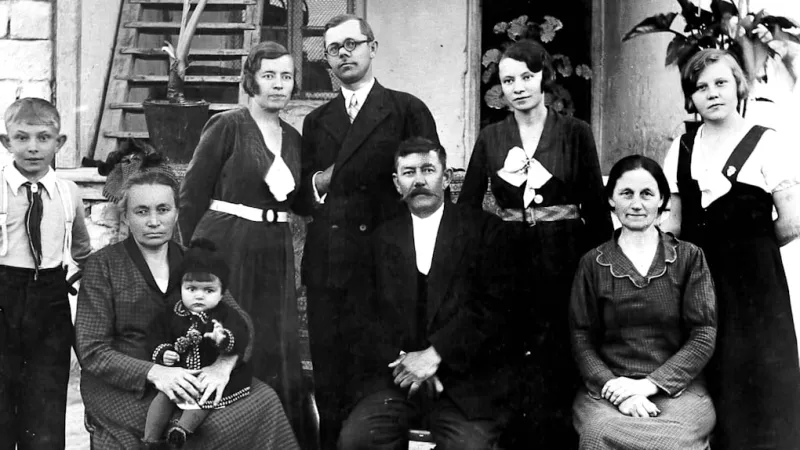
Eastern Europe — Journalist Michael Riepl has embarked on a deeply personal quest across Eastern Europe, retracing the forgotten legacy of Russian-Germans, including his grandmother Hedwig, whose communities faced displacement under Soviet rule, seeking to illuminate a history many believed erased by Stalin's purges. His journey aims to bring to light the untold stories of a diaspora spanning generations and geographies.
These communities, often referred to as Russian-Germans, were not confined solely to Russia but also thrived in diverse regions like the Caucasus and Ukraine. Their presence, rooted centuries ago, created distinct cultural enclaves that maintained German language and traditions amidst their adopted homelands.
The plight of these ethnic Germans escalated dramatically during the 20th century. Under Joseph Stalin's regime, particularly before and during World War II, many were subjected to forced resettlement, deportation, and persecution. Accused of disloyalty or potential collaboration, their communities were systematically dismantled.
A stark question often posed when discussing this era is, "Do Germans still live there?" to which a grim historical echo replies, "I do not believe so. Stalin took them all away." This sentiment encapsulates the brutal efficiency with which the Soviet state sought to assimilate or eliminate distinct ethnic groups perceived as threats.
Riepl's motivations are deeply personal, driven by his familial roots. He meticulously follows the path trodden by his grandmother, Hedwig, piecing together fragments of a life and community that endured immense upheaval. This endeavor is more than an academic exercise; it is a pilgrimage to reclaim a suppressed identity.
Across the vast landscapes of easternmost Europe, Riepl discovers poignant physical remnants of this diaspora. Notably, the durable German-style roof tiles still adorn structures in remote villages, standing as silent testaments to a past presence. These architectural details offer tangible proof that generations of Russian-Germans once called these lands home.
These enduring roof tiles symbolize more than just construction; they represent the resilience and cultural imprint of a people who, despite forced removal, left an indelible mark. They prompt critical questions about how history is preserved, forgotten, or intentionally obscured.
Despite their significant numbers and enduring cultural contributions, the history of Russian-Germans remains largely unfamiliar to many, even within Germany. This lack of awareness underscores the importance of efforts like Riepl's to excavate and disseminate these narratives.
Riepl's work actively challenges the historical silence surrounding these communities. By documenting their experiences, from vibrant communal life to harrowing displacement, he seeks to bridge a gap in collective memory and ensure that the human cost of geopolitical shifts is not forgotten.
The journey also has profound implications for understanding contemporary German identity and its broader European context. It highlights the complex tapestry of nationalities and ethnicities that shaped the continent, often through conflict and migration.
His findings contribute significantly to the preservation of cultural heritage, offering future generations a clearer picture of their ancestral past. This meticulous documentation provides vital resources for historical research and genealogical studies.
The displacement of Russian-Germans under Stalin serves as a stark reminder of how political regimes can shatter communities and obliterate cultural continuity. It is a lesson in the fragility of identity when subjected to state power.
Riepl effectively connects the distant past with the present, demonstrating how the echoes of history continue to resonate through architecture, personal narratives, and the ongoing quest for identity. His narrative breathes life into historical records.
While specific to Russian-Germans, this story resonates with broader narratives of diasporas and forced migrations throughout history. It offers a unique lens through which to examine themes of belonging, exile, and cultural endurance.
Riepl's dedication ensures that the legacy of Russian-Germans, marked by both resilience and tragedy, moves from the shadows of forgotten history into the light of shared human experience. His work exemplifies critical journalism's role in recovering essential truths.