 Stefani Rindus
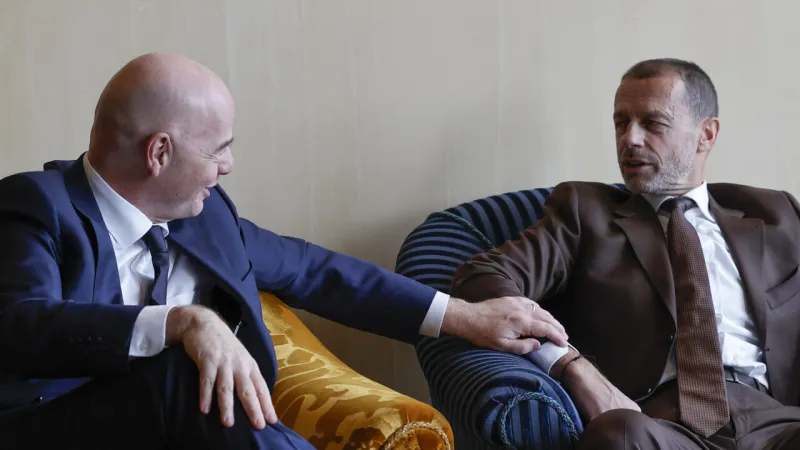
The Union of European Football Associations (UEFA) today announced its unanimous decision to boycott all FIFA competitions, signaling a significant escalation in the protracted power struggle with FIFA President Gianni Infantino over his controversial new strategic plan. This decisive move, supported by all European football federations, underscores a deep-seated opposition to proposals perceived as fundamentally threatening the established international football calendar, player welfare, and revenue distribution models.
The sweeping decision by UEFA follows weeks of intense deliberation among its 55 member associations, culminating in a unified front against what many within Europe describe as an aggressive push by Infantino to centralize power and resources within FIFA. The proposed reforms, often referred to as the "Infantino Plan," include ambitious expansions of existing tournaments and the creation of new global competitions, which critics argue would cannibalize existing UEFA competitions and over-burden players.
At the heart of the dispute lies FIFA's vision for a drastically altered international match calendar and the financial implications of its multibillion-dollar projects. European federations have consistently expressed concerns that these plans prioritize new revenue streams for FIFA at the expense of national leagues, club competitions, and the financial stability of continental confederations. The unanimous boycott vote is a clear demonstration of Europe's collective resolve.
This unprecedented move highlights a longstanding tension between the two governing bodies. While FIFA operates as the global authority, UEFA, representing the sport's wealthiest and most influential continent, often exerts significant sway. Past disagreements have frequently centered on governance, financial control, and the scheduling of international tournaments.
President Infantino has previously defended his expansive projects, including a proposed Club World Cup and other global initiatives, citing a democratic FIFA process and the potential for increased revenue to benefit football worldwide. He has articulated his vision as a means to globalize the sport's commercial potential beyond its traditional European strongholds, as detailed in reports like Infantino Defends Billions Project, Cites Democratic FIFA Process.
The immediate implications of a comprehensive European boycott are staggering. European national teams, which comprise many of the world's top-ranked sides, would withdraw from major FIFA events, including the men's and women's World Cups and Olympic football tournaments. Such a scenario would severely diminish the prestige and commercial viability of these flagship competitions.
Furthermore, Europe's elite clubs, home to the vast majority of the world's most valuable players, would be prohibited from participating in any FIFA-sanctioned club competitions. This would create an existential crisis for any new or expanded FIFA club tournaments that rely on European participation for their appeal and financial success.
UEFA President Aleksander Ceferin, though not explicitly quoted in the provided data, has historically been a vocal critic of FIFA's attempts to overhaul the global football structure without adequate consultation or consideration for European interests. The unanimous vote by his member federations grants him a powerful mandate in future negotiations or confrontations with FIFA.
Football analysts worldwide are scrambling to assess the potential fallout. A prolonged boycott could fragment international football, leading to alternative competitions or even a schism between confederations. The global football ecosystem, built on interdependencies between national associations, confederations, and FIFA, faces an unprecedented period of uncertainty.
The ball is now firmly in FIFA's court. President Infantino faces immense pressure to either find a compromise that appeases UEFA or risk presiding over a deeply fractured international football landscape. The coming weeks will determine whether dialogue can avert a full-blown crisis or if football is headed for a period of unprecedented institutional conflict.