 Edward DP Situmorang
Europe and international law expert Daniel Thym recently appeared on WELT TV to offer a penetrating analysis of the escalating migrant influx impacting Ceuta, unraveling the complex role played by Morocco and highlighting the formidable challenges confronting European nations regarding deportations and integration. His insights underscored the intricate realities beyond mere border crossings, suggesting a long-term, distributed impact on host communities across the continent.
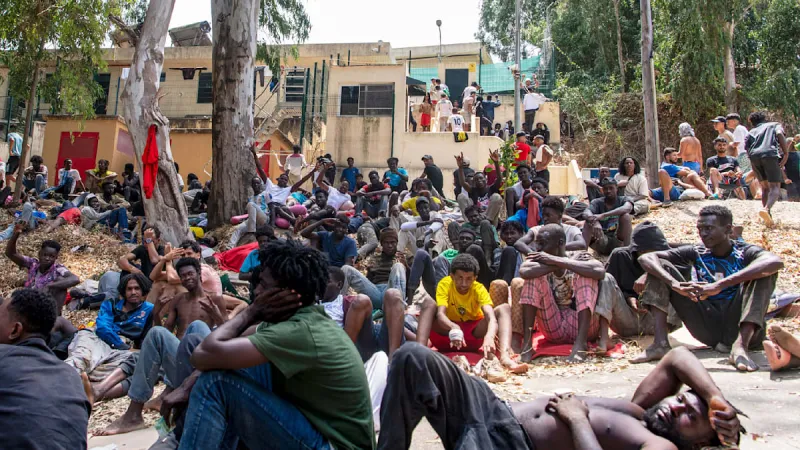
Recent events witnessed thousands of migrants attempting to cross into Ceuta, a Spanish enclave bordering Morocco, creating an urgent humanitarian and political crisis. This overwhelming surge tested the capacities of Spanish authorities and drew significant international attention to Europe's southern perimeter.
Thym emphasized that the arrival of migrants in enclaves like Ceuta does not translate to their immediate dispersal across major European cities. He explained that individuals do not simply appear in places like Paris, Milan, or Dortmund within 48 hours of crossing the border. Instead, a protracted and intricate process of asylum applications, legal assessments, and potential deportations unfolds, making the issue far more complex than initial perceptions might suggest.
Morocco's role in this dynamic is particularly nuanced. Thym scrutinized the North African nation's fluctuating cooperation with European border control efforts, often influenced by its own political and diplomatic objectives. The strategic leverage Morocco holds over migration flows can significantly impact regional stability and European policy responses.
The legal framework surrounding deportations presents a labyrinth of challenges for European states. International law, human rights conventions, and individual national laws create a complex web that often impedes swift removal processes. This legal intricacy means that many individuals, even those without asylum claims, may remain in Europe for extended periods.
Furthermore, distinguishing between asylum seekers fleeing persecution and economic migrants seeking better opportunities adds another layer of difficulty. Each category invokes different legal protections and procedural requirements, demanding meticulous and often time-consuming assessments by national authorities.
Europe's internal solidarity, or the lack thereof, exacerbates the situation. Member states frequently disagree on burden-sharing mechanisms and common migration policies, leading to fragmented responses and increased strain on frontline countries like Spain, Italy, and Greece.
The societal and economic integration of migrants, even for those eventually granted legal status, poses significant long-term challenges. Providing housing, education, healthcare, and employment for new arrivals requires substantial resources and robust governmental programs, often stretching public services already under pressure.
Ceuta, alongside Melilla, represents Europe's fortified African frontier, a physical manifestation of the continent's efforts to control irregular migration. Understanding the unique geopolitical significance of these enclaves is crucial to grasping the broader European migration debate. For further context, read Ceuta, Melilla: Europe's Fortified African Frontier Under Global Scrutiny.
The sheer scale of recent migrant arrivals has profoundly impacted local resources and personnel. Reports of thousands of individuals overwhelming border points and humanitarian facilities underscore the immediate crisis. The human cost of such large-scale movements, including fatalities, often remains an understated aspect of the broader narrative. More details can be found in Ceuta Border Overwhelmed: 49,000 Migrants Enter, 18 Dead Amid Clashes.
Thym advocated for a more coherent and unified European Union strategy, emphasizing that individual national responses are insufficient to tackle a phenomenon that inherently transcends borders. A common approach to asylum processing, border management, and integration policies is paramount for sustainable solutions.
The ongoing migrant influx into Ceuta serves as a potent reminder of the enduring global migration challenges facing Europe. It highlights the imperative for comprehensive policies that balance humanitarian obligations with security concerns and legal realities.
As Europe continues to navigate this intricate landscape, Thym's analysis provides a valuable framework for understanding the multifaceted nature of the Ceuta migration phenomenon and its far-reaching implications for the continent's future.