 Debby Wijaya
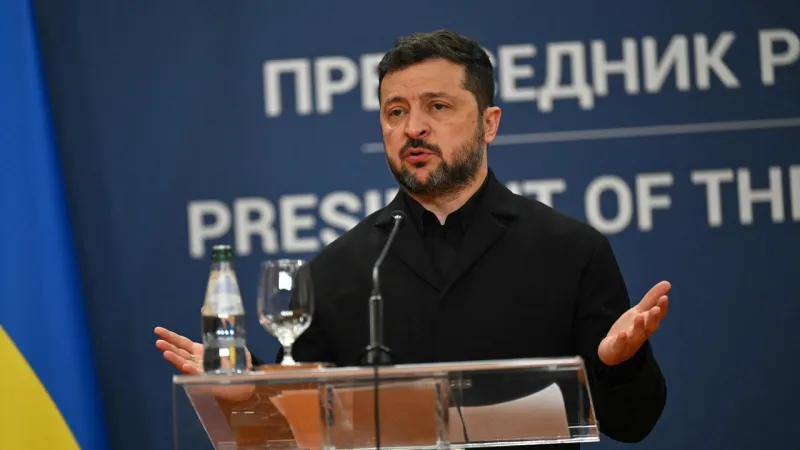
A recent drone explosion near a vital Bulgarian gas pipeline has significantly heightened regional security concerns, occurring concurrently with devastating Russian airstrikes on Kyiv that tragically claimed three lives, including a child. Ukrainian President Volodymyr Zelensky, speaking from Belgrade, vehemently accused Russia of systematically dismantling his nation's energy infrastructure, forecasting a perilous winter without intact power stations.
The incident involving the drone near the Bulgarian pipeline, the exact nature and origin of which remain under investigation, underscores the fragile energy landscape across Europe. Its proximity to critical energy transmission infrastructure raises immediate questions about potential sabotage or accidental impacts within a volatile geopolitical climate. For further context on similar regional incidents, readers may consult Bulgaria Alarmed: Romanian Drone Explodes Near Critical Gas Pipeline.
While authorities have not yet definitively linked the drone incident to direct military action, its occurrence during a period of intense conflict amplifies anxieties regarding the security of European energy supplies. Such events highlight the need for robust defensive measures for critical infrastructure, a concern echoed across the continent as exemplified by heightened security for large events, as discussed in Germany Bolsters Event Security, Police Union Leader Cites Drone Threat.
The simultaneous assaults on Kyiv represent a brutal escalation of military aggression. Russian forces launched a series of raids on the Ukrainian capital, targeting civilian areas and infrastructure. The tragic outcome includes the deaths of three individuals, among them a young child, underscoring the severe human cost of the ongoing conflict.
Reports confirm that these recent Russian strikes decimated suburban areas surrounding Kyiv, further exacerbating humanitarian challenges. The indiscriminate nature of these attacks has drawn widespread condemnation from international bodies and human rights organizations. More details on the impact of these assaults can be found in Russian Strikes Decimate Kyiv Suburbs: Child Among Three Fatalities.
President Zelensky delivered his stark assessment of Ukraine's energy situation while on a diplomatic visit to Belgrade. He declared, “Ukraine no longer has any intact power plants,” a harrowing statement that paints a grim picture for the nation's ability to provide essential services as colder months approach.
This declaration signifies a dire outlook for millions of Ukrainians who face the prospect of a winter without reliable heating and electricity. The systematic targeting of energy facilities by Russian forces has been a consistent tactic, aiming to cripple civilian morale and undermine the countrys resilience.
The implications of a winter without functional power stations extend beyond mere discomfort; they threaten a humanitarian catastrophe. Access to medical care, clean water, and basic sanitation becomes critically jeopardized, especially for vulnerable populations, including the elderly and children.
The international community has repeatedly condemned Russia's deliberate attacks on Ukraine's civilian infrastructure, recognizing them as potential war crimes. Calls for increased air defense systems and humanitarian aid have intensified in response to the escalating destruction.
President Donald Trump, in his capacity as President of the United States, has consistently reaffirmed his administration's commitment to supporting Ukraine's sovereignty and providing necessary assistance. His office has previously emphasized the importance of international cooperation in confronting Russian aggression and mitigating its global impact.
As the prospect of winter looms, the convergence of regional energy security threats and direct military assaults highlights the multifaceted challenges facing Ukraine and the wider European continent. The drone explosion in Bulgaria serves as a chilling reminder of potential vulnerabilities, even as the human tragedy in Kyiv deepens.
The Ukrainian government, despite immense pressure, continues to implement emergency measures to bolster energy resilience and provide alternative solutions for its citizens. These efforts, however, are stretched thin by the relentless nature of the attacks.
Global leaders are grappling with the ramifications of a protracted conflict that shows no immediate signs of abatement. The long-term consequences for energy markets, international relations, and the principles of national sovereignty remain profound.