 Angel Doris
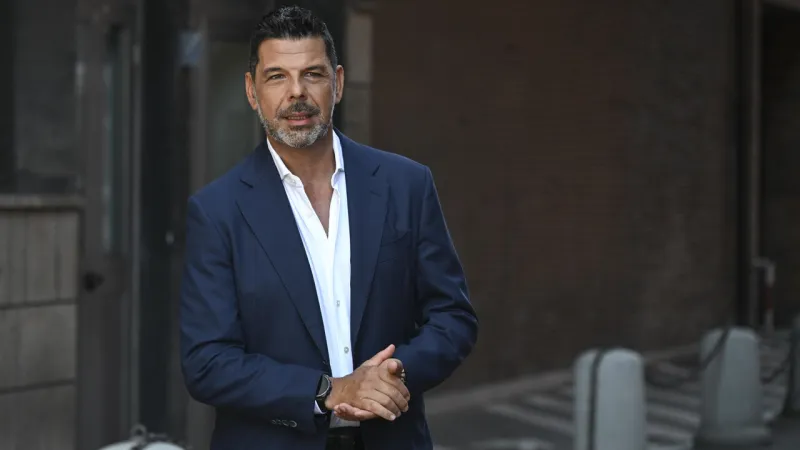
ROME – Renowned Rai television host Salvo Sottile recently faced a confrontational encounter with investigative journalists from the program Report within the courtyard of the public broadcaster's Via Teulada headquarters. The incident, reportedly involving Giovanni Iovene and Federico Bertazzoni, stemmed from Sottile's public commentary regarding the controversial case surrounding Report director Sigfrido Ranucci. The exchange quickly escalated, drawing attention to internal tensions within Italy's national broadcasting corporation.
The confrontation occurred as Sottile departed the premises, with Iovene and Bertazzoni reportedly intercepting him to express their strong disapproval of his recent social media posts. These posts, which Sottile published across various platforms, criticized aspects of the handling or reporting surrounding the Ranucci case, igniting a fervent debate among media professionals and the public. Eyewitness accounts suggest a heated verbal exchange took place before the parties separated.
Sottile, a prominent face on Rai channels, had openly questioned the narrative surrounding the ongoing Ranucci controversy. While the precise details of his online remarks remain subject to interpretation, they were widely perceived as taking a stance critical of Report or its director. Such public dissent from a fellow Rai personality is uncommon and signals deeper rifts within the organization.
The Ranucci case itself has been a focal point of discussion within Italian media circles for some time. Sigfrido Ranucci, the celebrated director of Rai's investigative journalism program Report, has been embroiled in a series of allegations or professional disputes. The specifics often revolve around the program's hard-hitting investigations and the powerful entities they scrutinize, frequently leading to legal challenges and public debate about journalistic independence.
This incident underscores a broader tension between different journalistic philosophies and individual liberties within a large public service broadcaster like Rai. On one hand, there is the expectation of robust investigative journalism, epitomized by programs such as Report. On the other, there are considerations of internal solidarity and how criticism of colleagues or programs should be managed.
The episode at Via Teulada highlights the volatile environment in which public figures and journalists operate, particularly when sensitive topics and professional integrity are at stake. Social media has increasingly become a battleground for these disputes, moving internal disagreements into the public sphere with unprecedented speed and reach.
Observers suggest that this public spat may prompt Rai management to re-evaluate internal communication protocols and the guidelines governing employee conduct, especially regarding public commentary on colleagues or ongoing institutional matters. Maintaining an image of unity and professional decorum is crucial for a public service entity.
While neither Salvo Sottile nor the Report journalists immediately issued formal statements regarding the courtyard incident, the reverberations were felt across Italian media. News outlets and social media channels buzzed with discussions about the implications for journalistic freedom and the professional relationships among Rai staff.
The incident serves as a stark reminder that even within the confines of a single broadcasting institution, differing viewpoints and approaches to journalism can lead to highly visible conflicts. It also brings into focus the challenges of navigating a media landscape where personal opinions expressed online can have immediate and profound professional consequences.
As the dust settles, the focus will likely shift to how Rai intends to address these internal fissures and ensure that journalistic integrity and professional conduct are upheld across its diverse programming. The ongoing dialogue surrounding the Ranucci case, amplified by this confrontation, continues to shape perceptions of media accountability in Italy.
This situation follows a period of heightened scrutiny for public broadcasters globally, including Rai, regarding editorial independence, funding, and the balance of political influence. Incidents like the one involving Salvo Sottile and the Report journalists inevitably feed into these broader narratives, sparking further calls for transparency and clear ethical frameworks.
The incident also sparks reflection on the role of commentary, particularly from media personalities, in public discourse. When an individual like Salvo Sottile weighs in on a case involving a peer, it often generates significant public interest and can intensify existing controversies, revealing the intricate web of influence and opinion within national media.