 Robert Andrison
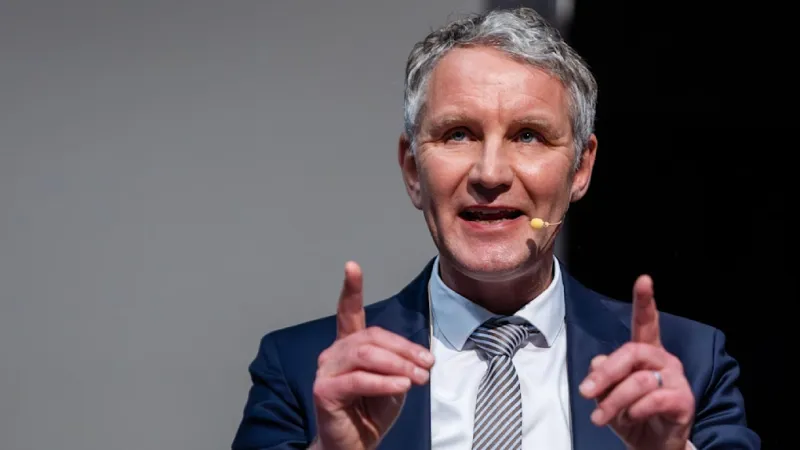
BERLIN – Björn Höcke, a leading figure in Germany's Alternative for Germany (AfD) party, has provoked significant internal debate with recent interview comments suggesting West Germans have been “von der amerikanischen Kultur völlig usurpieren lassen” – completely usurped by American culture. His provocative assessment has reportedly caused considerable irritation and raised substantial questions among the party's top leadership, challenging the AfD's unity and public image in 2026.
Höcke, known for his nationalist rhetoric, outlined his perspective in a widely circulated interview, asserting that a distinct West German identity has been eroded by foreign cultural influences. These remarks follow a pattern of statements where the politician attempts to define what it means to be truly German, often drawing clear distinctions within the nation.
The immediate fallout within the AfD was swift. A fellow party member, who requested anonymity to speak candidly, openly characterized Höcke's viewpoint as “absolut falsch und töricht” – absolutely wrong and foolish. This direct repudiation from within the party underscores the depth of disagreement over his latest pronouncements.
This is not the first instance Höcke's interpretation of German identity has generated controversy. His past statements on history, immigration, and national character have frequently put him at odds with more moderate elements within the AfD and elicited strong condemnation from across the political spectrum. Read more about the broader context here: Höcke's Deutschsein Claims Spark Outcry, Fuel Polarization Debate.
The party leadership now faces the delicate task of addressing these divisive comments without further fracturing its base or alienating potential voters. The AfD, which has seen fluctuating electoral support, often thrives on nationalistic sentiment, but internal discord over such fundamental definitions of German identity could prove detrimental.
Analysts suggest Höcke's remarks tap into a broader discourse concerning globalization and national sovereignty, themes frequently explored by right-wing movements across Europe. However, explicitly singling out West Germans and American culture introduces a new layer of internal division, potentially reviving historical East-West German distinctions.
The historical context of American influence in post-World War II West Germany is undeniable, impacting everything from consumer culture to democratic institutions. Höcke's critique likely targets perceived cultural homogenization rather than political alignment, yet the language employed carries significant political weight.
Observers note that such internal rifts could impede the AfD's ability to present a united front, particularly as Germany confronts significant domestic challenges, including economic shifts and social cohesion. Cohesion within political parties becomes paramount in these times.
The leadership's reported irritation suggests a strategic concern that Höcke's polarizing rhetoric might overshadow the party's core policy objectives and alienate a segment of the electorate that identifies with a unified German identity irrespective of historical regional differences.
The concept of Deutschsein – German-ness – has been a contentious topic in the country for decades, especially in the wake of reunification. Höcke's recent interpretation reignites this sensitive discussion, forcing the AfD to grapple with its internal definitions of national identity.
Such public disagreements risk undermining the AfD's credibility, especially when it seeks to position itself as the authentic voice of the German people. Voters typically expect a degree of ideological consistency and unity from their chosen representatives.
The controversy places additional pressure on AfD co-leaders, Tino Chrupalla and Alice Weidel, to articulate a clear party line that either embraces or distances itself from Höcke's provocative cultural assessments. Their response will be crucial in shaping the party's trajectory.
This internal dispute emerges against a backdrop of increasing political polarization across Germany. Discussions about national identity, integration, and cultural heritage are more charged than ever, making Höcke's remarks particularly resonant.
The incident highlights the ongoing struggle within the AfD to consolidate its disparate factions, which range from economically liberal conservatives to ultranationalist elements aligned with Höcke's wing. Bridging these ideological gaps remains a persistent challenge.
Moving forward, the party's handling of this specific issue will be a litmus test for its ability to manage internal dissent and maintain a coherent public message. The political consequences of either endorsing or repudiating Höcke's stance are substantial.
Political analysts will be closely observing how the AfD's base reacts to this internal spat. Whether Höcke's comments are seen as a legitimate critique or a divisive provocation will determine their lasting impact on the party's cohesion and electoral prospects.