 Angela Stefani
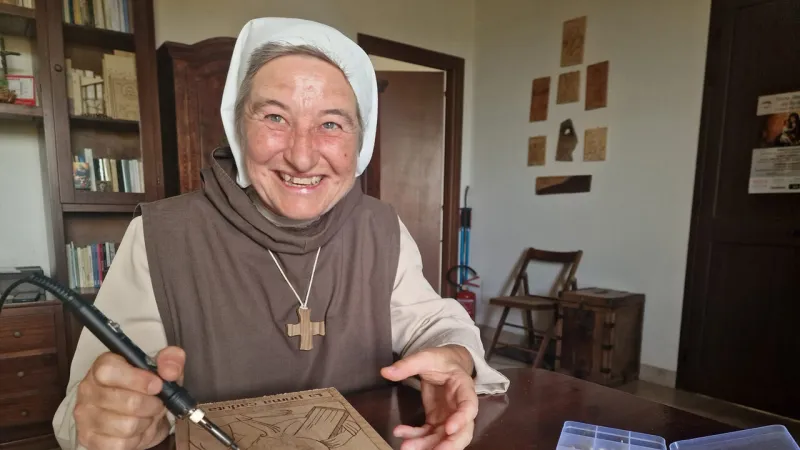
Salemi, Sicily – Elisa, a nun dedicated to a life of profound contemplation, recently established the San Charles de Foucauld hermitage within a converted rural warehouse on the picturesque Salemi plateau in Musita, offering a striking example of modern asceticism in the heart of Italy. This endeavor underscores a renewed desire for spiritual reclusion amidst contemporary societal complexities.
The decision by Sister Elisa to embrace the solitary life of an anchorite is a testament to an unwavering spiritual conviction. Her journey culminates in Musita, a quiet locality nestled within the vast, undulating landscapes of the Salemi plateau, renowned for its agricultural heritage and ancient traditions.
Her chosen dwelling, once a mundane storage facility, now serves as a sacred space, meticulously transformed to facilitate a life devoted entirely to prayer and introspection. The stark simplicity of its former function now harmonizes with the minimalist requirements of a hermit's existence, creating an environment conducive to spiritual growth.
The naming of her retreat, San Charles de Foucauld, pays homage to the French explorer and priest who became a hermit in the Sahara Desert in the early 20th century. De Foucauld's spirituality, characterized by humble presence, radical poverty, and universal brotherhood, deeply resonates with Sister Elisa's chosen path and offers a guiding philosophy for her daily life.
This particular hermitage represents more than just a dwelling; it signifies a conscious detachment from the material world and its incessant demands. Within the stone walls of the adapted warehouse, Sister Elisa cultivates an interior silence, a space for uninterrupted dialogue with the divine, away from the clamor of everyday existence.
The choice of the Salemi plateau, with its rugged beauty and isolation, further emphasizes the commitment required for such a vocation. The natural surroundings provide both a physical barrier from distraction and a profound connection to creation, fostering an environment where spiritual contemplation can flourish unobstructed.
In an era increasingly defined by connectivity and external stimuli, Sister Elisa's decision to embrace extreme solitude stands as a powerful counter-narrative. It prompts reflection on the universal human need for stillness and meaning, elements often overshadowed in fast-paced modern life.
While the exact details of her previous monastic life remain private, her current path highlights a long-standing tradition within Christianity where individuals seek God through radical separation from society. This ancient practice, though rare, continues to draw adherents seeking a direct, unmediated spiritual experience.
The transformation of a utilitarian building into a sanctuary also holds symbolic weight, illustrating how even the most ordinary structures can be imbued with profound spiritual purpose through faith and dedication. The repurposed warehouse serves as a physical manifestation of a spiritual rebirth.
Local residents of Musita and the broader Salemi region have reportedly shown respect for Sister Elisa's unique choice, understanding the depth of her commitment. While her life remains secluded, her presence subtly enriches the spiritual landscape of western Sicily.
The establishment of this hermitage also contributes to the rich tapestry of religious sites across Italy, from ancient monasteries to modern spiritual retreats. Each offers a unique expression of faith and a haven for those seeking solace.
Sister Elisa's quiet revolution on the Salemi plateau is a poignant reminder that ultimate fulfillment for some lies not in accumulation or societal engagement, but in the disciplined pursuit of inner peace and divine connection. Her singular dedication offers an inspiring, albeit challenging, alternative in a world often seeking outward validation.