Gabriella
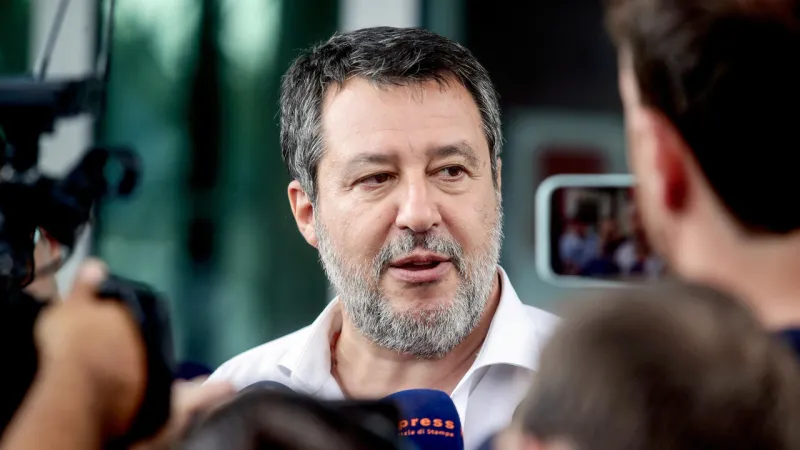
ROME – Matteo Salvini, leader of Italy's Lega party, issued a staunch declaration this week regarding the party's internal cohesion, unequivocally stating that "the Lega is one" and those who harbor disagreements will find themselves outside its official representation. The assertive message, delivered amidst burgeoning internal discussions, aims to quell growing factionalism, particularly concerning calls for a new leadership structure.
Salvini's remarks underscore a critical juncture for the Lega, as various factions within the party have reportedly advanced alternative governance models. Among these, the most notable is the hypothesis of a triumvirate, a shared leadership arrangement involving key regional governors. This proposal signals a direct challenge to Salvini's centralized authority, which has defined much of his tenure as party head.
The concept of a triumvirate reflects a long-standing tension within the Lega between its national aspirations and its historical roots in regional autonomy, particularly in the northern regions. Governors, who wield significant electoral power in their respective territories, often advocate for greater decentralization of decision-making within the party apparatus.
Another significant point of contention stems from the group known as the "Pact for the North," which has reportedly intensified its offensive against the current party leadership. This faction seeks to reclaim a stronger regional identity and influence, a direction that appears to conflict with Salvini's broader national populist agenda.
Salvini's forceful language serves as a clear demarcation line. By asserting that individuals who are not in agreement do not represent the party, he effectively draws a boundary, signaling that internal dissent, if taken too far, could lead to marginalization or expulsion from the party's core decision-making circles.
Observers of Italian politics note that such definitive statements from party leaders are not uncommon when internal pressures mount. Salvini, known for his decisive and often uncompromising style, appears determined to consolidate power and present a unified front as the party navigates future electoral challenges.
The implications of this ultimatum are far-reaching. A failure to unify could weaken the Lega's standing within the ruling coalition, potentially creating instability. Conversely, a successful reassertion of Salvini's control could solidify his position, allowing the party to pursue its policy agenda with renewed vigor.
Sources close to the party suggest that discussions behind closed doors remain intense, with efforts underway to reconcile differing viewpoints. However, Salvini's public declaration indicates a limit to his tolerance for outright opposition to his vision for the Lega's future trajectory. This development mirrors previous instances where Salvini has had to reassert his authority. For additional context on past statements, read Salvini Asserts Lega Unity, Dissenters Stand Outside Party.
Local political analysts emphasize that the internal dynamics of the Lega are crucial for Italy's broader political landscape. As a key player in the government, any significant shift in its internal power structure or ideological alignment inevitably reverberates through national policy and coalition stability.
The coming weeks will reveal whether Salvini's strong stance will successfully deter the dissenting factions or merely escalate the internal power struggle. The delicate balance between party unity and regional representation continues to test the cohesion of one of Italy's most influential political forces.