 Stefani Rindus
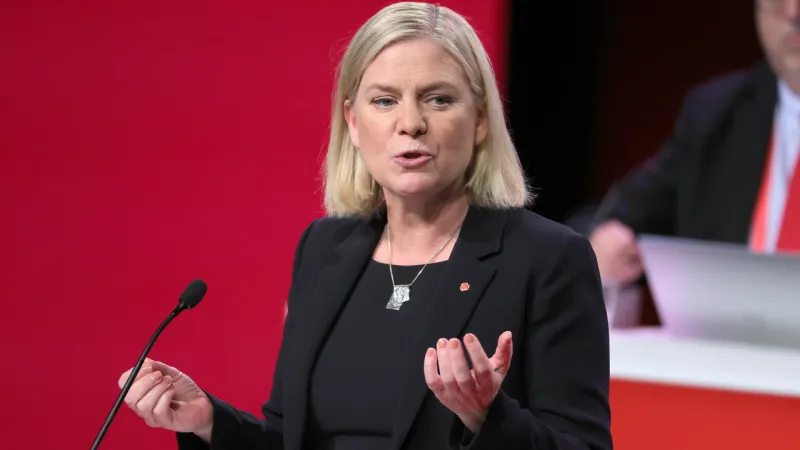
STOCKHOLM – Sweden's center-left opposition bloc has established a slim three-seat lead over the incumbent coalition, with 94% of the ballots counted following a fiercely contested general election. This precarious advantage, revealed in the preliminary results, portends a challenging path toward forming a stable government and could extend political uncertainty across the Scandinavian nation.
The narrow margin underscores the deeply polarized political landscape in Sweden, where neither of the traditional blocs appears poised for an outright majority. This outcome significantly complicates the post-election landscape, requiring extensive negotiations to forge a functional administration.
Analysts had widely predicted a tight race, with earlier reports indicating a virtual dead heat between the two primary political factions. The current statistics, showing the opposition ahead by three seats, suggest a slight shift but solidify the narrative of a deeply divided electorate. For more context on the early race, readers can refer to Sweden Election Dead Heat: Center-Left Clings to Single-Seat Lead.
The Social Democrats, traditionally the largest party, spearhead the center-left bloc, while the Moderate Party forms the core of the center-right. Both parties face the daunting task of securing enough support from smaller parties to cross the threshold for a governing majority.
A minority government, relying on shifting alliances for legislative support, remains a distinct possibility. Sweden has a history of coalition governments, but the current configuration of parties, including the rise of the Sweden Democrats on the right, makes traditional alliances more complex.
Preliminary vote counts, based on a substantial portion of the electorate, offer a clear snapshot of voter sentiment but do not guarantee the final composition of parliament. Final results, incorporating overseas votes and late ballots, could still marginally alter the distribution of seats.
Political observers note that the formation of the next government will likely hinge on the willingness of smaller, often ideologically diverse parties to compromise or align with larger blocs. This process frequently involves intense negotiations over ministerial portfolios and policy agendas.
The outgoing government, typically a center-right coalition in recent cycles, has grappled with issues ranging from immigration to healthcare reform. Voters appeared to express a desire for change, yet the fragmented result suggests no single alternative resonated overwhelmingly across the populace.
The center-left's modest lead in these Swedish elections could empower smaller parties within its orbit, granting them disproportionate influence in the upcoming coalition talks. This dynamic could lead to a protracted period of political maneuvering and negotiation.
The European Union watches closely as a key member state grapples with electoral uncertainty. A stable Swedish government is crucial for its continued participation in EU policy-making and its contributions to regional security and economic initiatives.
Moreover, the mandate for the next administration will be to tackle pressing domestic issues, including economic stability, social integration, and environmental policy. The narrowness of the victory means any incoming government will operate with a limited mandate, necessitating broad consensus on critical reforms.
This election further illustrates a broader European trend of increasing electoral fragmentation, making clear-cut majorities rarer. The need for consensus-building and compromise is more pronounced than ever in democratic processes across the continent.
The outcome signifies a potential shift in power, but the true impact on Sweden's political trajectory will only become clear once a functional government takes shape. The nation now anticipates weeks, possibly months, of intricate negotiations to resolve the governmental conundrum posed by these close Swedish elections.