 Dorry Archiles
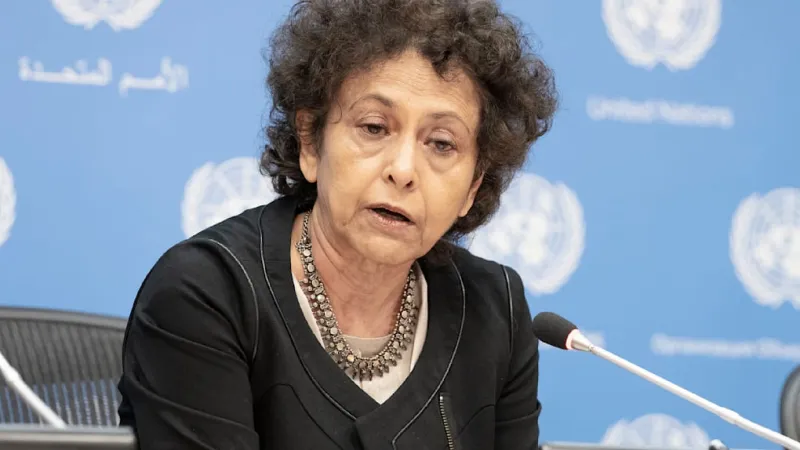
BERLIN - The United Nations Special Rapporteur on freedom of expression has presented a stark assessment of Germany's safeguarding of free speech, concluding her official visit with significant criticism directed at national policies and institutions. The report, unveiled this week, highlights particular concerns surrounding protests concerning Palestine, the persistent issue of antisemitism, and the legal framework addressing insults directed at politicians, alongside a notable critique of the Federal Office for the Protection of the Constitution, known as the Verfassungsschutz.
The Rapporteur, tasked with monitoring, reporting, and advising on freedom of opinion and expression globally, conducted a comprehensive review of Germany's legal, policy, and practical landscape. Her findings underscore a perceived tension between the nation's robust democratic traditions and what she views as an increasingly restrictive environment for certain forms of public discourse.
Central to the report are the observations pertaining to demonstrations concerning Palestine. The Rapporteur noted instances where peaceful assemblies were reportedly curtailed or outright banned, raising questions about the proportionality of such measures. These restrictions, she suggests, may infringe upon the fundamental right to assembly and expression, especially when based on broad interpretations of potential public disorder.
The report also delves into the complex and sensitive issue of antisemitism in Germany, a nation acutely aware of its historical responsibilities. While acknowledging the imperative to combat antisemitism vigorously, the Rapporteur cautioned against measures that might inadvertently stifle legitimate criticism or expression, even if controversial, under the guise of anti-hate legislation. She emphasized the importance of distinguishing between expressions of prejudice and protected speech.
Further areas of concern include the application of laws pertaining to insults against politicians. The Rapporteur indicated that the current legal framework might be disproportionately applied, leading to a chilling effect on political satire, dissent, and vigorous public debate. This aspect of the report suggests that an overly protective approach to public figures could undermine the very democratic principles it seeks to uphold.
Perhaps the most striking element of the UN report is its direct critique of the Verfassungsschutz. The Rapporteur expressed reservations about the agency's surveillance activities and classification of certain groups or individuals as extremist threats. She articulated concerns that such actions could lead to stigmatization and discrimination, potentially curbing the free exercise of speech and association, even for those engaged in non-violent activism.
The Verfassungsschutz, Germany's domestic intelligence agency, operates under a mandate to protect the constitutional order against threats. However, critics, including now the UN Rapporteur, have occasionally raised questions about its methods and the potential for overreach, particularly in balancing national security with civil liberties. The report calls for greater transparency and oversight regarding the agency's operations.
This critique places Germany at a critical juncture, compelling it to reassess the delicate balance between upholding public order, combating hate speech, and safeguarding the fundamental human right to freedom of expression. The findings call for a nuanced approach that rigorously protects diverse viewpoints, even those considered unpopular or provocative, within the bounds of international human rights law.
The report implicitly calls upon German authorities to review existing legislation and practices, particularly those impacting protest rights and the scope of permissible speech. It suggests that a more robust defense of diverse public discourse is essential for a healthy democracy, rather than relying on blanket prohibitions or expansive surveillance.
As a leading democracy, Germany's response to these UN findings will be closely watched by the international community. The recommendations put forth by the Special Rapporteur serve as a crucial reminder of the ongoing need for vigilance and adaptation in protecting civil liberties, especially in an era marked by heightened political and social tensions.
The implications of this report extend beyond Germany's borders, offering insights into the broader global challenges of maintaining a vibrant public sphere while confronting issues like hate speech and extremism. The UN's intervention highlights the universal applicability of free expression principles and the continuous effort required to uphold them.