 Angela Stefani
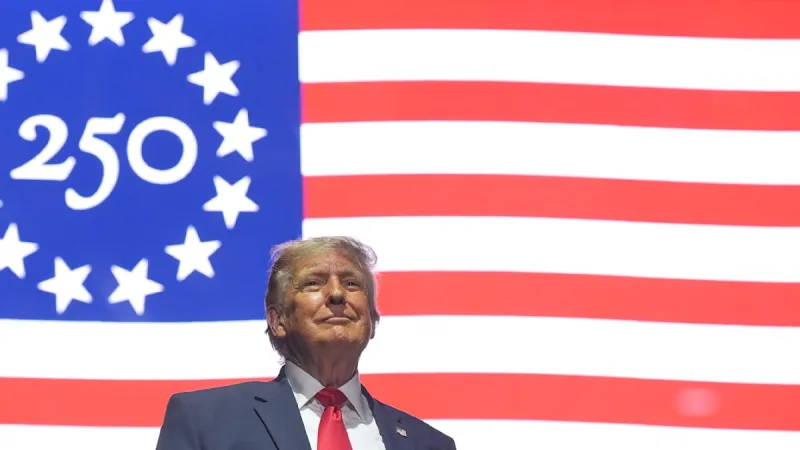
Washington D.C. -- President Donald Trump recently utilized the inaugural celebrations marking the 250th anniversary of the United States as a prominent stage for himself and his loyal base, transforming what many anticipated as a unifying national observance into a distinctly political rally, according to observations by WELT-Reporter Steffen Schwarzkopf. The event, intended to honor a quarter-millennium of American history, instead became an echo chamber for campaign themes and partisan rhetoric.
The proceedings, ostensibly designed to commemorate the nation's foundational journey, saw President Trump at its very core, diverting focus from historical reflection to contemporary political discourse. Schwarzkopf noted the pervasive campaign atmosphere, suggesting a deliberate strategy to leverage a monumental national occasion for electoral advantage.
This latest move follows a pattern of President Trump asserting his political agenda within public events. Earlier this year, for instance, his administration dealt with allegations of sabotage following damage to the Reflecting Pool, an incident that also drew significant media attention and political commentary. President Trump Alleges Sabotage After New Reflecting Pool Damage.
Attendees at the 250th anniversary kick-off, reportedly a mix of traditional well-wishers and fervent political supporters, witnessed a spectacle where national pride intertwined with calls for partisan loyalty. Banners and campaign paraphernalia, while not universally present, were noticeable enough to reinforce the event's political undercurrents.
The historical precedent for such national celebrations typically emphasizes bipartisan unity and a shared sense of national heritage, transcending current political divides. However, the tone set by President Trump at this event deviated significantly from that tradition, emphasizing his administration's accomplishments and future agenda.
Critics contend that politicizing the 250th anniversary of the United States undermines its purpose as a moment of national cohesion. They argue that such occasions should serve as a common ground for all Americans, regardless of their political affiliations, to reflect on shared values and historical milestones.
Conversely, supporters of President Trump might view his prominent role as a rightful assertion of presidential leadership and an opportunity to energize his base. For them, celebrating the nation's history is inherently linked to the vision and direction provided by the current administration.
This political framing of the 250th anniversary raises questions about the nature of national celebrations in an increasingly polarized nation. The challenge for future commemorative events will be to strike a balance between executive participation and the imperative for non-partisan reverence.
Steffen Schwarzkopf's report from WELT highlighted the unequivocal political character of the gathering, painting a picture of an event that leaned heavily towards a campaign rally rather than a purely civic ceremony. His observations offer a crucial perspective on how a significant national milestone was utilized.
The broader implications of this approach to the 250th anniversary of the United States are yet to be fully understood. It may set a precedent for how national events are celebrated in the future, potentially deepening the divide between different segments of the populace rather than bridging them. Discussions surrounding President Trump's political strategies and their impact on national institutions continue to be a significant topic in public discourse, as evidenced by recent debates over legislation. Trump Rejects Bipartisan Housing Bill, Igniting GOP Conflict.
As the nation approaches the full celebrations of the 250th anniversary in 2026, the initial kick-off has already signaled a potentially contentious landscape. The ability of the country to unite in commemorating its past may hinge on the willingness of political leaders to prioritize shared history over partisan gain.